Full moonBuddhist
Buddha Purnima / Vesak
Next date
Thursday, 20 May 2027
- Tithi at sunrise
- Full Moonuntil 16:28
- Nakshatra
- Vishakhauntil 13:20
- Lunar month
- Vaishakh
- Sunrise
- 05:55Sunset 19:16
In short
Buddha Purnima, widely known as Vesak, is the most important annual Buddhist observance connected with Gautama Buddha.
The story
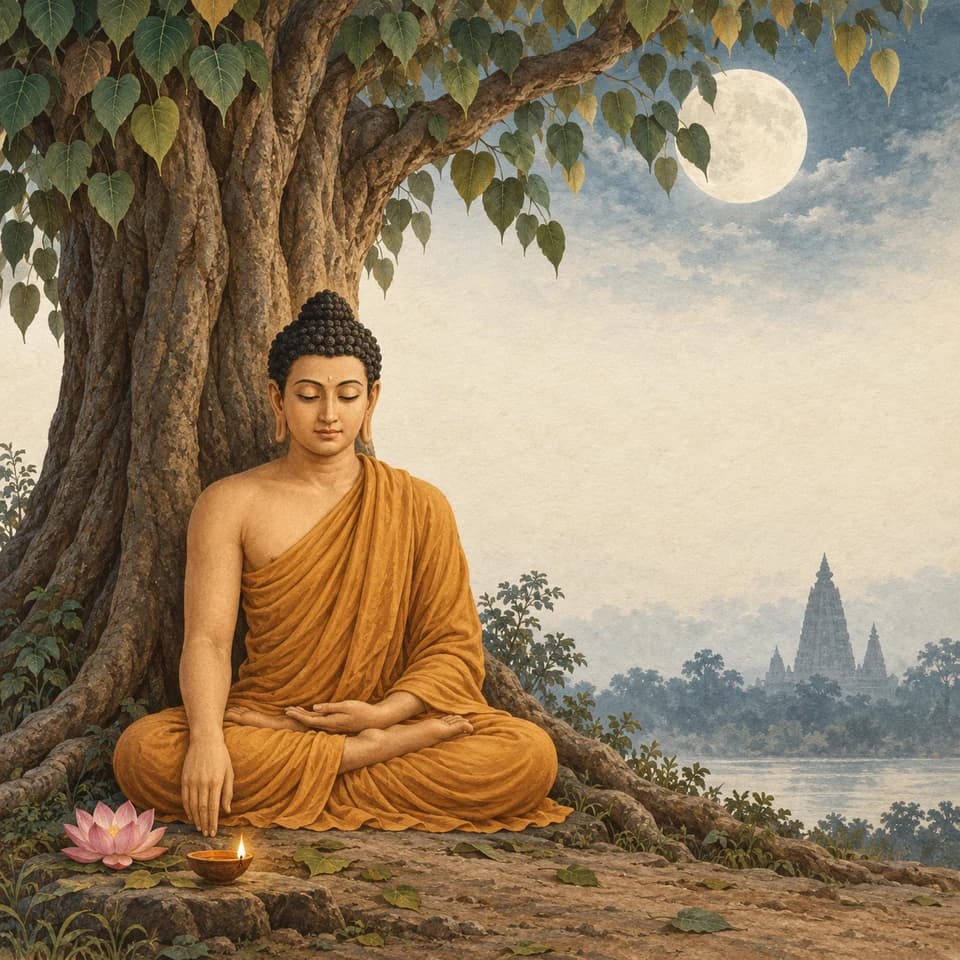
Buddha Purnima, widely known as Vesak, is the most important annual Buddhist observance connected with Gautama Buddha. In many Buddhist traditions the full-moon day is associated with three defining moments of his life: his birth as Prince Siddhartha at Lumbini, his awakening beneath the Bodhi tree at Bodh Gaya, and his final passing into Mahaparinirvana at Kushinagar. The day therefore gathers an entire spiritual journey into one remembrance—from a sheltered royal life, through the search to understand suffering, to enlightenment and the teaching of a path based on wisdom, ethical conduct and compassion. Devotees visit monasteries and temples, listen to teachings, meditate, offer lamps and flowers and practise generosity. Acts of kindness, feeding the needy and avoiding harm are especially valued. Rather than celebrating worldly triumph, Vesak invites reflection on impermanence, compassion and the possibility of inner freedom.
Retold from the Gujarati household practice
Why it matters
Buddha Purnima / Vesak is significant to the community that observes it and helps preserve religious, family and cultural continuity.
What people do
White is worn and the day is kept without meat. Lamps and lanterns are lit, the Bodhi tree is watered, and caged birds are released. In India the day is a public holiday and Bodh Gaya, Sarnath and Sanchi fill up; in Sri Lanka and Southeast Asia it is the largest day of the year.
Retold from the Gujarati household practice
Told differently elsewhere
Theravada countries - Sri Lanka, Thailand, Myanmar, Cambodia, Laos - keep all three events on this one full moon as Vesak. Mahayana traditions in China, Korea and Vietnam separate them across the year, and Japan keeps the birth alone as Hanamatsuri on 8 April.
This text has not been checked by a reviewer yet.

Tithi Calendar on your phone
The panchang for your own city, with the choghadiya, festivals and reminders. It works without the internet.