Navratri as it falls in 2041.
Next date: 30 September 2027Navratri 2041
Thursday, 26 September 2041, in Ahmedabad
FestivalGujarati · Hindu
Panchang on the day
26
Thursday
Waxing First
until 16:25
Virgo
- પPa
- ઠTha
- ણNa
- Sunrise
- 06:28
- Sunset
- 18:33
- Moonrise
- 07:07
- Nakshatra
- Hasta
- until 20:29
- Yoga
- Brahma
- until 21:29
- Karana
- Bava
- until 16:25
- Rahu Kalam 14:01 to 15:31
- Yamaganda 06:28 to 07:59
- Abhijit muhurat 12:06 to 12:54
Why this date
Aso Waxing First, taken at sunrise
Runs from 25 Sep 14:11 IST to 26 Sep 16:25 IST.
In short
Sharad Navratri begins on the first day of the bright fortnight of Ashwin and is a nine-night festival of worship of the Goddess. Gujarat celebrates with Garba and aarti, Bengal with Durga Puja, and other regions with their own traditions. These are the Devi Mahatmya’s two distinct stories of Mahishasura and Shumbha–Nishumbha.
The story
The gods and asuras had fought for a hundred years. Mahishasura led the asuras, while Indra led the gods. At last Mahishasura defeated them. He took Indra’s place and seized the authority of the other gods too. Driven from their own realms, the gods began wandering on earth.
With Brahma, they went to Shiva and Vishnu. They told them about Mahishasura’s cruelty and their own suffering. A fierce radiance shone from the faces of Shiva and Vishnu. Light also emerged from the other gods. It gathered in one place, becoming a mountain of brightness. From that light the Goddess appeared.
The gods gave her their weapons. Shiva gave a trident, Vishnu a discus, Varuna a conch and noose, Agni a spear, and Vayu a bow and arrows. Indra gave a thunderbolt and a bell from Airavata. Other gods offered weapons, clothes and ornaments. Himalaya gave her a lion to ride. Her laughter and mighty cry filled the sky. The gods hoped that Mahishasura’s tyranny would now end.
Mahishasura was startled by the sound. He saw the Goddess’s radiance spread everywhere. Taking his commanders, he attacked. A huge army of chariots, elephants, horses and soldiers entered the battle. The Goddess met them with her weapons. Her lion fought fearlessly among the troops. Warriors born from her breath joined the battle too.
The commander Chikshura showered arrows at her. She cut his arrows, broke his bow and put his chariot out of action. He advanced with a sword and other weapons, but could not withstand her. Chamara came riding an elephant. The Goddess and her lion fought him. The lion climbed onto the elephant, confronted Chamara and defeated him. The other commanders also fell one after another.
Seeing his army break, Mahishasura entered the battlefield as a huge buffalo. He attacked with horns, hooves and tail. The earth shook beneath his charge. He hurled mountains with his horns and rushed at the lion. The Goddess threw a noose and caught him.
But Mahishasura would not stay in one form. He left the buffalo’s body and became a lion. As the Goddess attacked him, he became a man carrying a sword. When she stopped him with arrows, he became a great elephant. With his trunk he pulled at her lion. She cut off the trunk. He became a buffalo again, roaring and throwing mountains. The Goddess shattered those mountains with her arrows.
The Goddess drank a little wine from her cup and turned towards Mahishasura. She told him to roar for a little longer; when she ended his life, the gods would raise their own cries of victory. Then she leapt upon him, pressed his neck with her foot and struck with her trident. Mahishasura began emerging from the buffalo’s mouth in his other form. Before he could come out completely, she killed him with her sword.
When Mahishasura fell, the rest of his army fled. The gods rejoiced. Sages offered praise, and gandharvas sang. The gods prayed that the Goddess would protect them again whenever they remembered her in trouble. She accepted their prayer. Mahishasura’s oppression ended, and she was worshipped as Mahishasuramardini, the slayer of Mahishasura.
In another story of the Devi Mahatmya, the asura brothers Shumbha and Nishumbha take over the gods’ realms. They seize their treasures and authority. Remembering the Goddess’s promise, the gods go to the Himalaya and praise her.
Parvati arrives there to bathe in the Ganga. She asks whom the gods are praising. A radiant Goddess emerges from her body and says that they are praying to her. This form becomes known as Kaushiki.
Shumbha’s servants Chanda and Munda see the Goddess. They tell Shumbha that they have never seen anyone so beautiful. Shumbha thinks that, just as he has acquired all the other treasures, she too should belong to him. He sends a messenger named Sugriva to deliver his demand.
The messenger describes Shumbha’s wealth and power. He asks the Goddess to accept either Shumbha or Nishumbha as her husband. She calmly says she has made a promise: she will accept only someone who defeats her in battle, overcomes her pride and matches her strength. The messenger threatens her, saying that even the gods could not face the brothers. She holds to her promise and tells him to carry back her answer.
Hearing her reply, Shumbha sends Dhumralochana with an army. If she will not come, he must bring her by force. Dhumralochana arrives and threatens her too. As he moves forward to seize her, her mighty cry turns him to ashes. Her lion confronts his army.
Chanda and Munda are sent next with a large force. They surround the Goddess. In her anger, Kali’s fierce form emerges from her forehead. Kali enters the army and fights. Chanda shoots arrows and Munda attacks, but neither can withstand her. She kills them both and brings the news to the Goddess. The Goddess tells her that, for destroying Chanda and Munda, she will be known as Chamunda.
Shumbha now gathers his great army. To help the Goddess, the powers Brahmani, Maheshvari, Kaumari, Vaishnavi, Varahi, Narasimhi and Aindri appear. One of the Goddess’s powers sends Shiva as a messenger with a final warning: return the gods’ authority and abandon the war. This form is called Shivaduti. Instead of accepting the message, the asuras attack again.
Among them is Raktabija. His special power makes the battle harder: whenever a drop of his blood touches the ground, another warrior as strong as him appears. As the Goddess’s powers strike him, his blood falls and more asuras rise. Soon the battlefield seems full of Raktabijas.
The Goddess tells Chamunda not to let his blood fall on the ground, and to stop the warriors born from it too. Chamunda catches the blood in her mouth before it reaches the earth. The Goddess continues striking him with her weapons. Now his blood cannot create another army. At last Raktabija loses his strength and falls.
After Raktabija’s death, Nishumbha advances and strikes the Goddess’s lion. She breaks his shield and sword. He takes other weapons and fights again. Though brought down by one blow, he rises. He creates many arms and attacks, but she keeps cutting his weapons. At last her spear pierces his chest. Another powerful man emerges from it and challenges her. She destroys him too. Nishumbha’s battle ends there.
Seeing his brother fall, Shumbha becomes furious. He accuses the Goddess of relying on other powers in battle and then boasting about her strength. She replies, “All these powers are my own forms.” As she speaks, Brahmani and the other powers merge into her. Now she stands alone on the battlefield.
Shumbha and the Goddess fight again. She defeats his weapons one after another. When they break, he attacks with his fist. She knocks him down, but he rises again. He seizes her and leaps high into the sky. Even there she fights him without needing any support. Then she swings him around and throws him to the ground.
Shumbha charges again with his fist raised. This time the Goddess pierces his chest with her spear. He falls and dies. The sky clears, rivers flow in their courses and the gods raise joyful cries. Through the Goddess’s protection, their stolen authority is restored and the brothers’ oppression comes to an end.
Why it matters
Sharad Navratri celebrates the Divine Mother through nine nights of worship, courage and regionally distinct devotional customs.
What people do
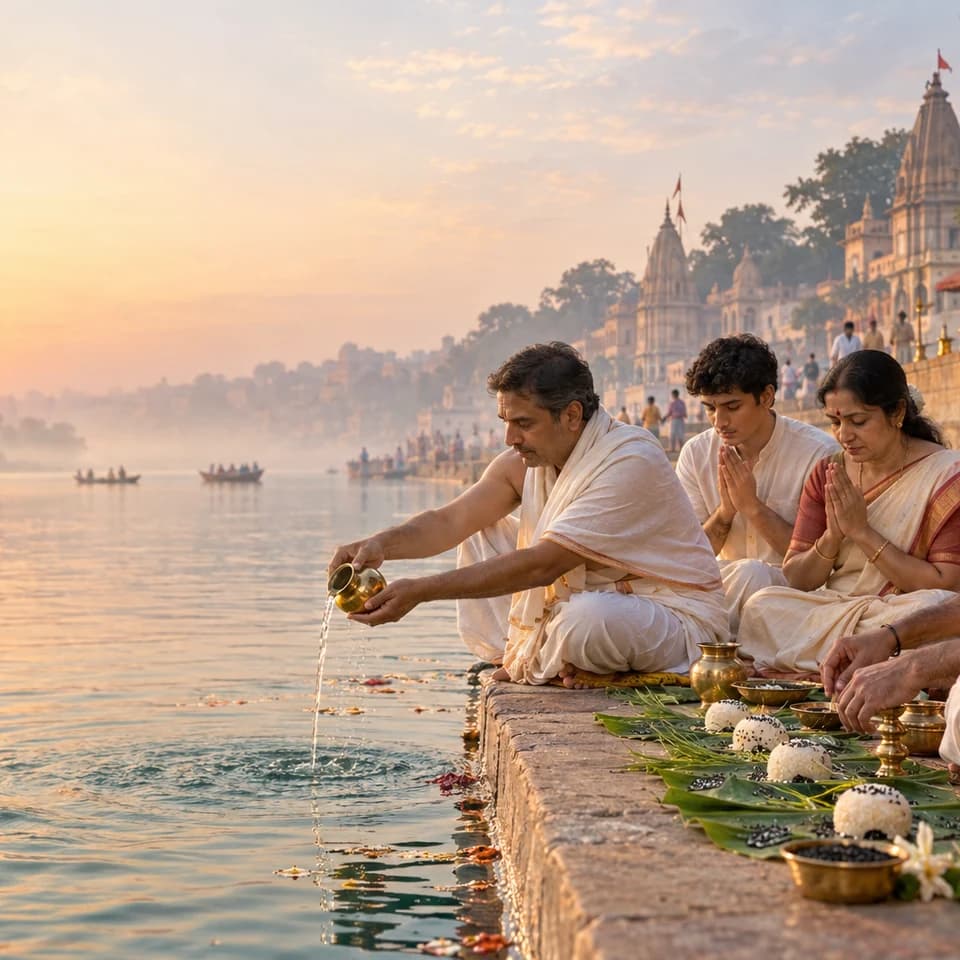
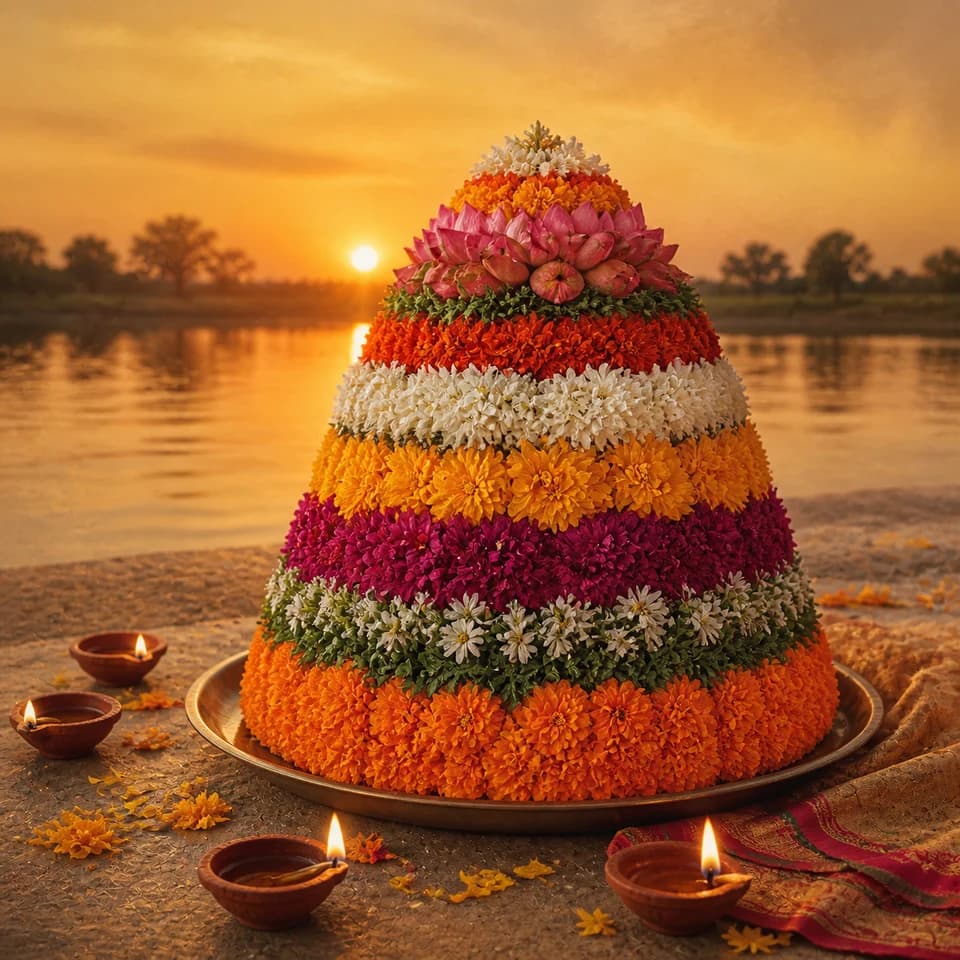
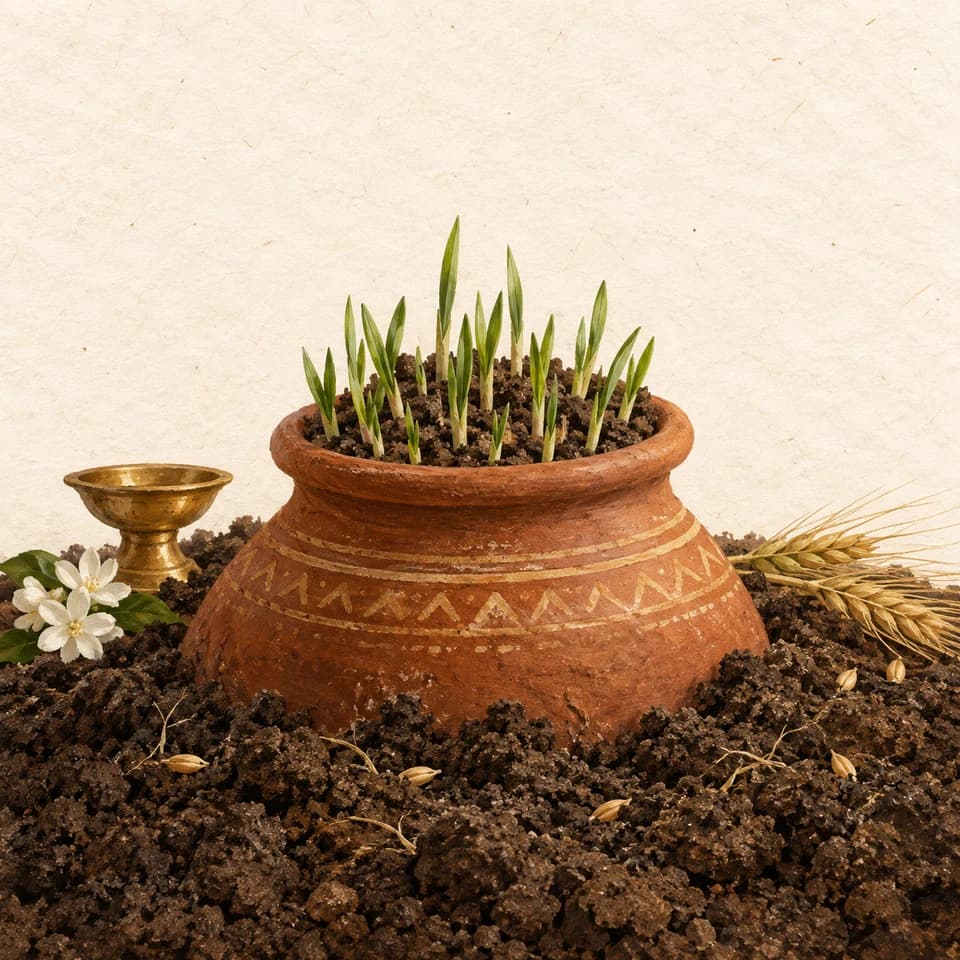
Families follow their traditions with Ghatasthapana, lamps, aarti, readings about the Goddess, fasting and Kanya Puja, honouring young girls. Gujarat celebrates with devotional Garba and Raas. Many devotees remember the nine Navadurga forms. Bengal’s Durga Puja and southern India’s Golu have their own practices. The stories above are distinct episodes of the Devi Mahatmya; their battles need not be assigned to individual numbered Navratri nights.
Told differently elsewhere
Gujarat is known for Garba and Raas; Bengal for Durga Puja; northern India for Ramlila and fasting; southern India for Golu.
Questions people ask
- When is Navratri in 2041?
- On Thursday, 26 September 2041 in India. Runs from 25 Sep 14:11 IST to 26 Sep 16:25 IST.
- Why does the date change every year?
- It is kept by the lunar calendar, so its day on the civil calendar moves from year to year.
- Is the date the same everywhere?
- Yes. It is kept everywhere on the day it falls on in India.
Dates in the coming years
- 2027Thursday, 30 SeptemberAso Sud 1
- 2028Tuesday, 19 SeptemberAso Sud 1
- 2029Monday, 8 OctoberAso Sud 1
- 2030Saturday, 28 SeptemberAso Sud 1
- 2031Friday, 17 OctoberAso Sud 1
Last kept11 October 2026