FestivalWorld Cultural
Nowruz
No rule yet
Nobody has written a rule for this observance yet, so the calendar does not put it on a day. A name with a made-up date beside it would be worse than a name on its own.
In short
The new year of the spring equinox, kept across Iran and Central Asia.
The story
The new year of the spring equinox, kept for some three thousand years across Iran, Afghanistan, Central Asia, the Kurdish regions and by Parsis in India as Jamshedi Navroz. It begins at the exact moment the sun crosses the equator, which is a different clock time each year and sometimes a different date - a fixed 21 March would be wrong often enough to matter, which is why this entry carries no rule.
Retold from the Gujarati household practice
Why it matters
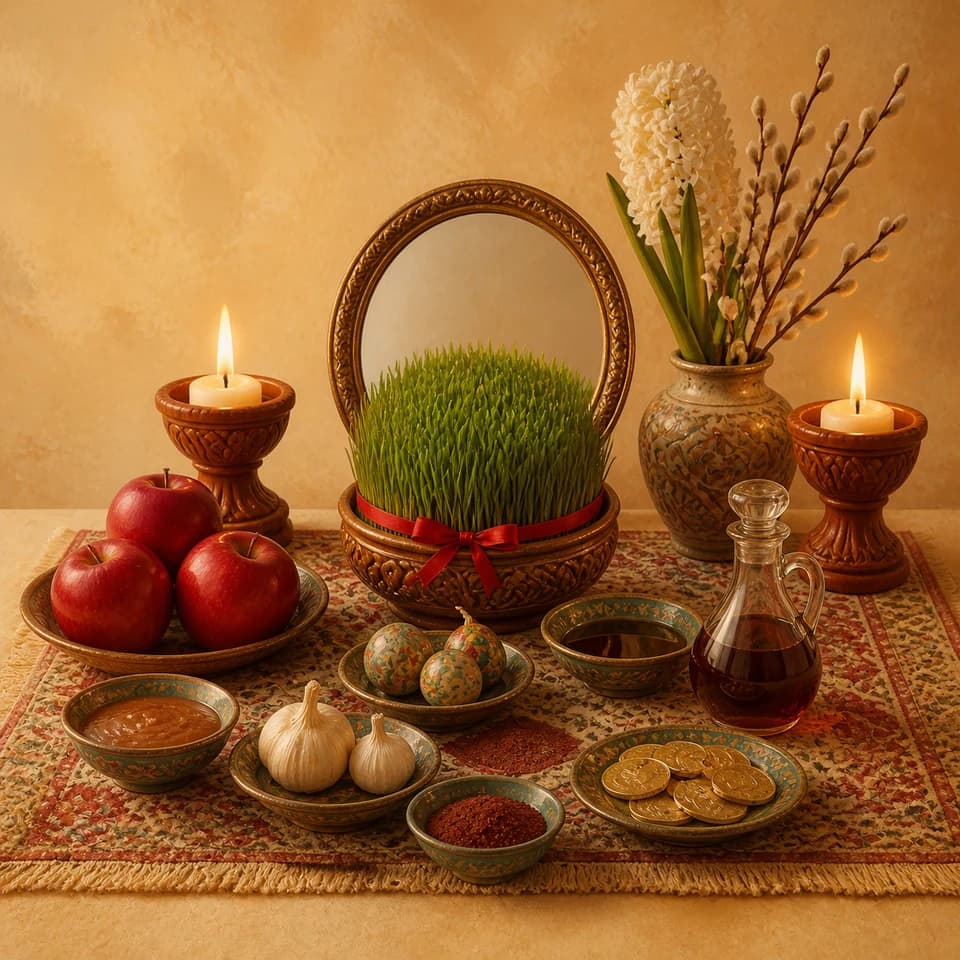
The new year at the instant of the vernal equinox, kept for some three thousand years and older than any of the religions now practised around it. The haft-sin is laid with seven things whose names begin with the letter S, each standing for something wanted in the year, and the family sits at the table for the exact moment of the turn.
What people do
The haft-sin table is laid with seven things beginning with the letter s, each standing for something wanted in the year. The house is cleaned beforehand, wheat is sprouted in a dish, and the family sits together at the turn of the year. Visiting runs for thirteen days and ends outdoors.
Retold from the Gujarati household practice
Told differently elsewhere
Iran, Afghanistan, Tajikistan, Azerbaijan, the Kurdish regions, Central Asia and the Caucasus, as a national rather than religious new year. Indian Parsis keep the same equinox as Jamshedi Navroz. Chaharshanbe Suri jumps the fires on the last Wednesday eve, and Sizdah Bedar takes everyone outdoors on the thirteenth day.
This text has not been checked by a reviewer yet.

Tithi Calendar on your phone
The panchang for your own city, with the choghadiya, festivals and reminders. It works without the internet.