Obon as it was kept in 2000.
Next date: 13 August 2027Obon 2000
Sunday, 13 August 2000, in Ahmedabad
FestivalEast Asia · Japan
Panchang on the day
13
Sunday
Waxing Thirteenth
until 06:17

Capricorn
- ખKha
- જJa
- Sunrise
- 06:14
- Sunset
- 19:14
- Moonrise
- 18:06
- Nakshatra
- Uttara Ashadha
- until 21:01
- Yoga
- Ayushman
- until 02:02 next day
- Karana
- Taitila
- until 06:17
- Rahu Kalam 17:37 to 19:14
- Yamaganda 12:44 to 14:21
- Abhijit muhurat 12:18 to 13:10
Why this date
Every year on 13 August
In short
Japanese Buddhist remembrance of ancestors through grave visits, offerings, lanterns and community dance; observance dates vary across regions.
The story
Obon, also called Bon, is a Japanese Buddhist season for remembering deceased ancestors and renewing family bonds. Its devotional background is linked to the Ullambana story: the disciple Maudgalyayana (Mokuren in Japan) sees his departed mother suffering and is instructed to make offerings to the monastic community. The narrative teaches gratitude to parents, generosity and concern for those who have died; it is a religious teaching, not a verified historical account of the festival's first celebration.
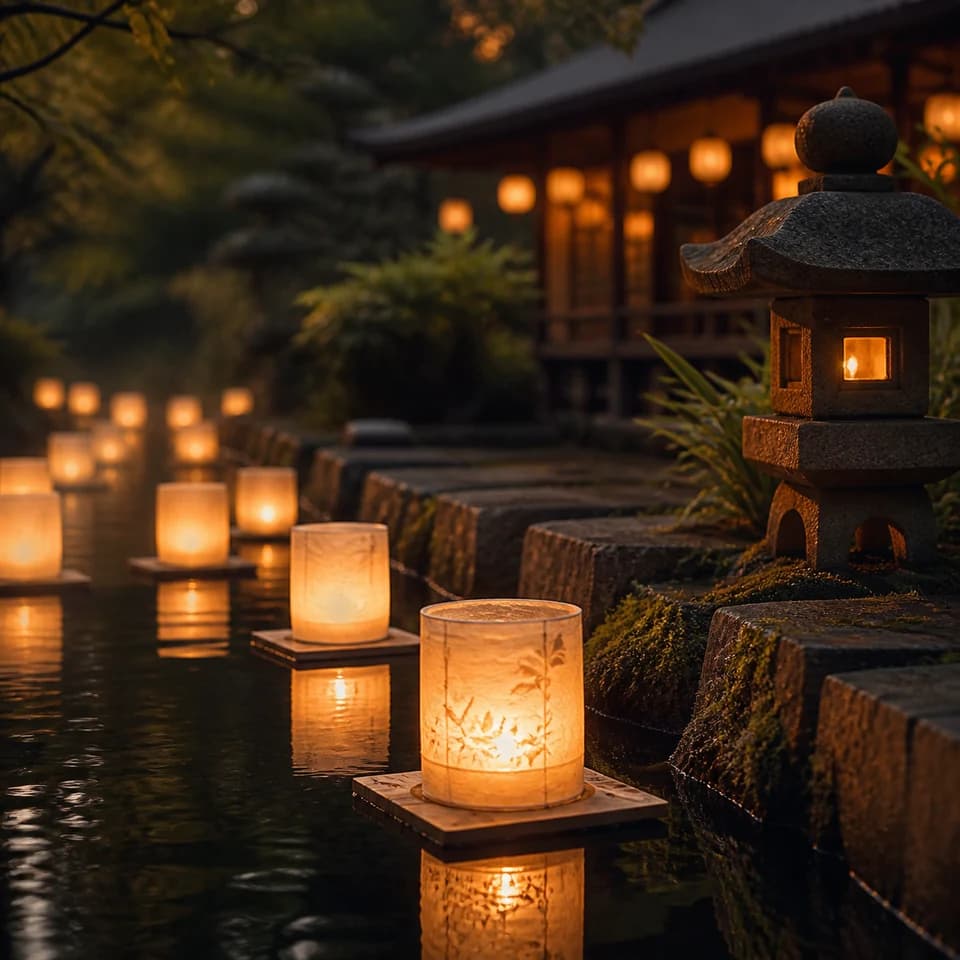
Families may clean graves, prepare offerings at a household Buddhist altar and light welcoming fires or lanterns for ancestral spirits. At the end, farewell lights symbolically guide them onward. Bon odori dances bring neighbourhoods together; the dances have regional histories and should not all be attributed literally to Mokuren's dance. Some places hold floating-lantern ceremonies, while Kyoto's Gozan no Okuribi lights hillside bonfires.
Most of Japan observes Obon around 13–16 August, but parts of Tokyo and other areas observe July dates, and Okinawan communities may follow a traditional lunar reckoning. Thus the fixed 13 August entry is only one widely used start date, not a complete nationwide calendar rule. The observance connects remembrance of the dead with gratitude, hospitality and the continuity of families.
Why it matters
Honours ancestors, filial gratitude and family continuity through Japanese Buddhist remembrance.
What people do
Grave cleaning, household altar offerings, welcoming and farewell lanterns, Bon odori and region-specific ceremonies.
Told differently elsewhere
Most of Japan: 13–16 August; parts of Tokyo/Kanto: July; Okinawa: traditional lunar dates. A single 13 August rule is incomplete.
Questions people ask
- When is Obon in 2000?
- On Sunday, 13 August 2000 in India.
Dates in the coming years
- 2027Friday, 13 AugustShravan Sud 12
- 2028Sunday, 13 AugustShravan Vad 8
- 2029Monday, 13 AugustShravan Sud 4
- 2030Tuesday, 13 AugustShravan Poonam
- 2031Wednesday, 13 AugustShravan Vad 11
Last kept13 August 2026