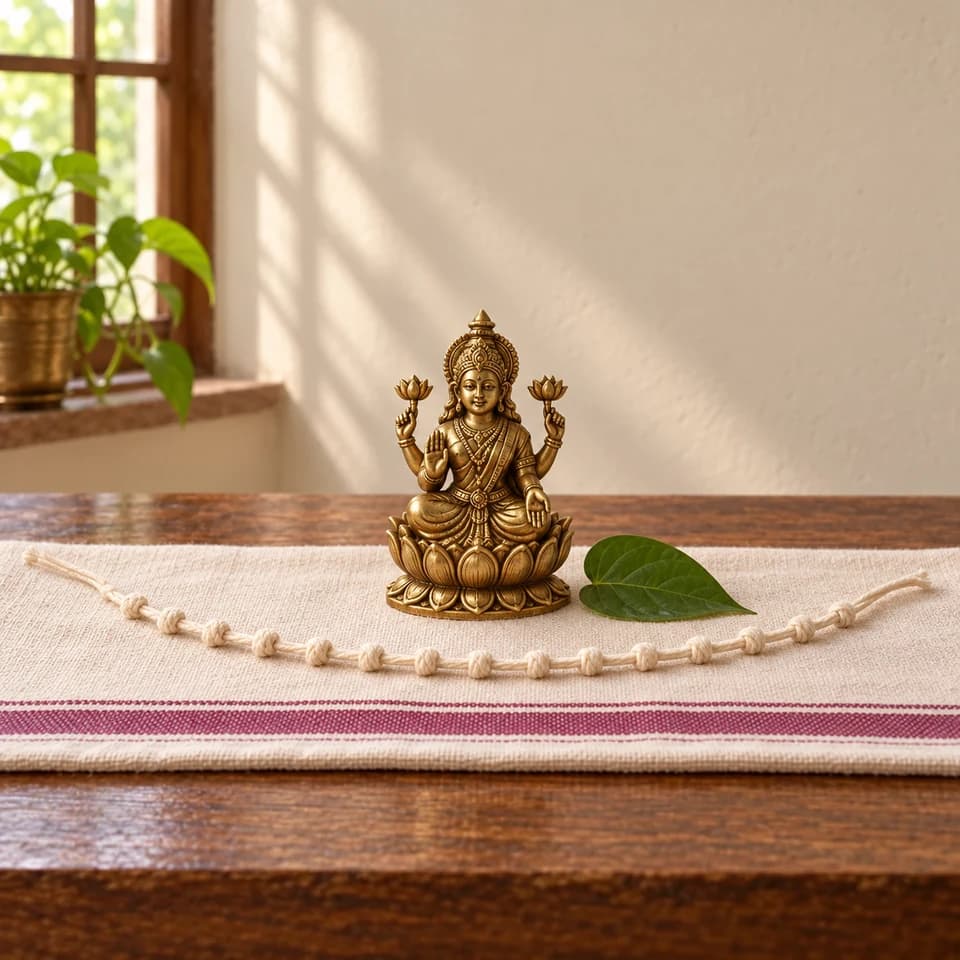
Parivartini Ekadashi as it was kept in 1983.
Next date: 11 September 2027Parivartini Ekadashi 1983
Saturday, 17 September 1983, in Ahmedabad
EkadashiGujarati · Hindu
Vamana Ekadashi · Parsva Ekadashi
Panchang on the day
17
Saturday
Waxing Eleventh
until 03:17 next day
Capricorn
- ખKha
- જJa
- Sunrise
- 06:25
- Sunset
- 18:43
- Moonrise
- 15:54
- Nakshatra
- Uttara Ashadha
- until 21:37
- Yoga
- Shobhana
- until 14:18
- Karana
- Vanija
- until 14:01
- Rahu Kalam 09:29 to 11:02
- Yamaganda 14:06 to 15:38
- Abhijit muhurat 12:09 to 12:58
Why this date
Bhadrapad Waxing Eleventh, taken at sunrise
Runs from 17 Sep 00:47 IST to 18 Sep 03:17 IST.
In short
Parivartini Ekadashi is observed on the eleventh day of the bright half of Bhadrapada. It is also called Parshva or Vamana Ekadashi. Devotees believe that Vishnu, resting in yogic sleep during Chaturmas, turns onto his other side on this day. Its familiar vow story concerns Vamana and King Bali.
The story
Once Yudhishthira asked Krishna the name of the Ekadashi in the bright half of Bhadrapada, which deity was worshipped that day, and what reward its observance brought. Krishna called it Parshva and Vamana Ekadashi. Explaining worship of the Lord as Vamana, he said that Vishnu turns onto his other side during his yogic rest on this day, which is why it is also called Parivartini.
Yudhishthira wanted to understand more. How does the Lord sleep and turn onto his side? What happens to other beings while he rests? How had he bound King Bali? Yudhishthira asked all these questions. Krishna answered by telling the story of Bali and his own Vamana form.
In Treta Yuga there was a king named Bali. He was Prahlada's grandson and was born in the Daitya lineage, yet he was devoted to the Lord. He fought Indra and conquered the kingdom of the gods. After losing their kingdom, Indra, the other gods and many sages approached the Lord. With their teacher Brihaspati, they worshipped him and prayed for help.
Hearing their prayers, the Lord took the form of Vamana. As a Brahmin of small stature, he went to King Bali to ask for a gift. He requested just three steps of land, measured by his own feet. Bali promised to give it.
As soon as Bali made the promise, Vamana's body began to grow. His small form became immense. The earth and the worlds, including the sun and moon, were encompassed by his divine form. With one step he measured the earth, and with the second the heavenly worlds. He then asked Bali where he should place the promised third step.
Bali humbly bowed his head and asked the Lord to place his third step upon it. This vow story says that the Lord placed his foot on Bali's head and sent him to Patal Lok. Pleased by Bali's devotion, he promised to live in his palace from then on.
Krishna continued that afterwards, on Parivartini Ekadashi, Prahlada's grandson Bali installed a deity form of the Lord in his residence. In this account, the Lord both promises to live in Bali's home and speaks of his yogic rest in the Ocean of Milk. This period of rest continues until Prabodhini Ekadashi in the bright half of Kartik.
Krishna explained to Yudhishthira the importance of worshipping Vamana, observing the vow and keeping a night vigil on this day. He also spoke of donating yoghurt with rice and silver, if one's means allowed. Devotees worship the Lord with the belief that he turns onto his other side on this day.
Finally, Krishna said that anyone who listens to this story with devotion attains the world of the gods. In this way, he explained to Yudhishthira the story of Parivartini Ekadashi and its observance.
Why it matters
Bali's story is associated with keeping one's word, humility and offering everything to God. Parivartini Ekadashi is part of the worship observed during Chaturmas. The merit and blessed destination described in the story are matters of religious faith.
What people do
Devotees worship Vishnu or Vamana, offer tulsi and flowers, chant the Lord's name and read the story. Some temples hold devotional singing and night vigils. Charity customs vary between families and traditions.
Fasting
Fasting practices differ between households and traditions. Some eat fruit or avoid grains, while certain traditions observe a waterless fast. Going without water is not suitable for everyone. Choose a practice appropriate to your health and break the fast at the local Dwadashi time given in your calendar.
Told differently elsewhere
Some Vaishnava and Swaminarayan temples in Gujarat celebrate this day as Jal Jhilani Ekadashi. A small deity is seated in a decorated boat and taken on the water. Certain temple traditions have five rounds, with an aarti after each. A separate remembrance of Krishna and the gopis boating is also associated with this observance.
Many traditions celebrate Vamana's appearance the next day, on the twelfth day of the bright half of Bhadrapada. Though the Ekadashi vow and Vamana Dwadashi are close together, worship practices and timings follow the particular temple or family's tradition.
Questions people ask
- When is Parivartini Ekadashi in 1983?
- On Saturday, 17 September 1983 in India. Runs from 17 Sep 00:47 IST to 18 Sep 03:17 IST.
- Why does the date change every year?
- It is kept by the lunar calendar, so its day on the civil calendar moves from year to year.
- Is the date the same everywhere?
- Usually. Where sunrise falls at a different moment the day can differ by one, and the dates here are worked out for India.