FestivalEast Asia · Korea
Seollal
No rule yet
Nobody has written a rule for this observance yet, so the calendar does not put it on a day. A name with a made-up date beside it would be worse than a name on its own.
In short
The Korean lunar new year, kept with a bow to the elders and rice-cake soup.
The story
The Korean lunar new year, three days centred on the first day of the first month. It is the day Koreans traditionally counted a year of age on - everyone grew a year older together, rather than on their own birthday. Korean lunisolar calendar, which this app does not compute.
Retold from the Gujarati household practice
Why it matters
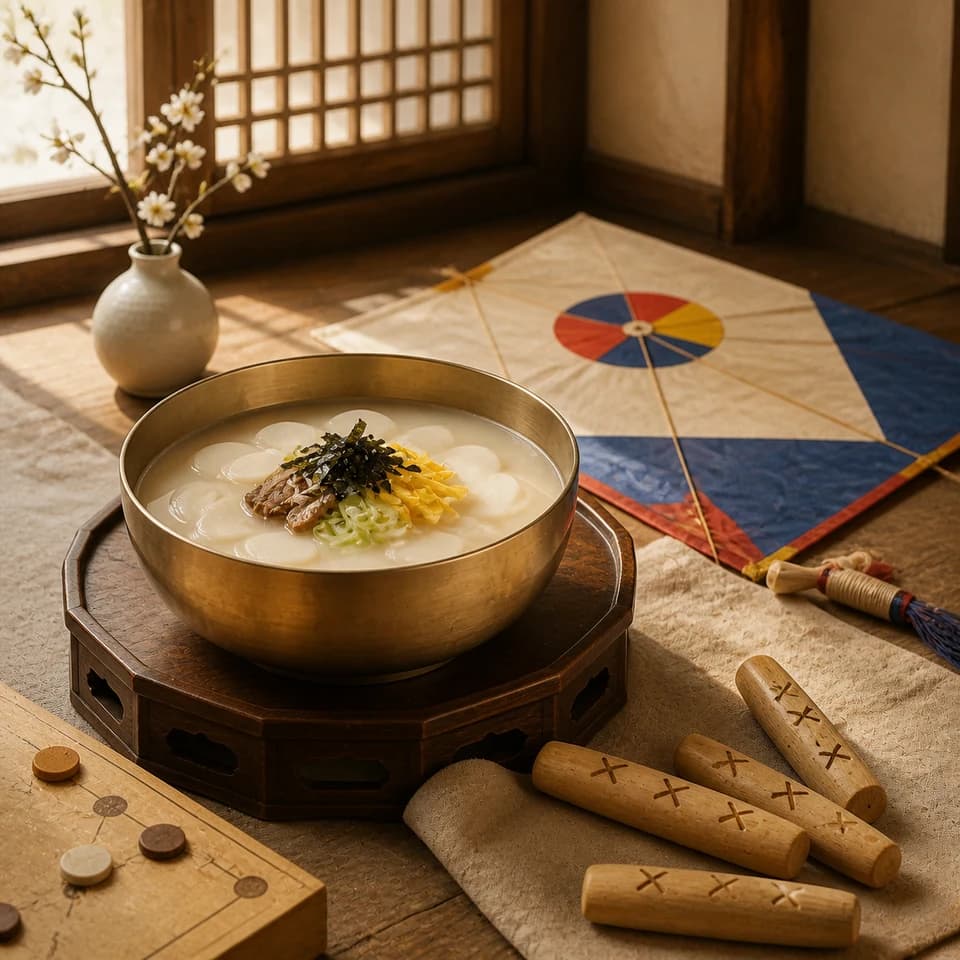
The lunar new year, and the day a Korean gains a year of age in the traditional count - eating tteokguk is what does it. Sebae is the deep bow made to elders in the morning, answered with money and with a word of advice for the year.
What people do
Sebae: the young bow deeply to their elders and are given money and a word of advice. Tteokguk - rice-cake soup - is eaten, and eating it is what makes you a year older. Charye is offered to the ancestors in the morning, and families travel home for it.
Retold from the Gujarati household practice
Told differently elsewhere
Three days of public holiday and the heaviest travel of the Korean year. North Korea kept the Gregorian new year for decades and restored Seollal only in 1989. The charye rite performed for ancestors is the same one kept at Chuseok, with different food.
This text has not been checked by a reviewer yet.

Tithi Calendar on your phone
The panchang for your own city, with the choghadiya, festivals and reminders. It works without the internet.