Seollal
FestivalEast Asia · Korea
No rule yet
Nobody has written a rule for this observance yet, so the calendar does not put it on a day. A name with a made-up date beside it would be worse than a name on its own.
In short
Seollal is the Korean lunisolar New Year, celebrated with family reunions, sebae bows to elders, tteokguk rice-cake soup and, in some households, charye rites honouring ancestors. It is distinct from other East Asian New Year customs.
The story
Seollal is the Korean New Year observed on the first day of the first month of the Korean lunisolar calendar. It is one of Korea's most important family holidays. Relatives travel to their hometowns, share meals, remember ancestors and greet elders. The holiday commonly covers three days around New Year's Day in South Korea, allowing time for travel and family gatherings. The emphasis is not merely on a change of date but on renewing obligations and affection across generations.
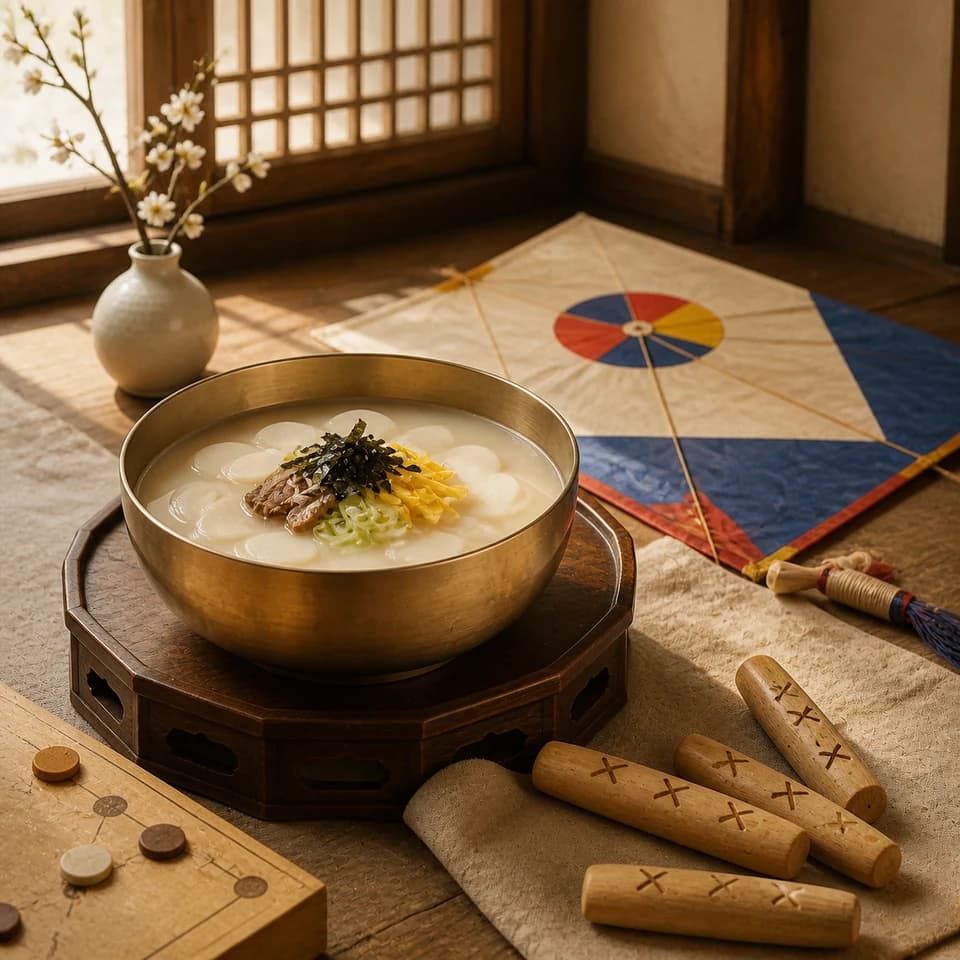
One familiar custom is sebae, a deep formal bow offered by younger people to parents and elders. Elders respond with blessings, advice and sometimes sebaetdon, a monetary gift. Families often eat tteokguk, soup with sliced rice cakes; traditionally, eating it became associated with growing a year older. Some households perform charye, a table offering to ancestors, while others mark the occasion differently according to faith or family preference. Games such as yutnori bring relatives together.
Seollal is not identical to Chinese New Year, even when the civil dates coincide. Its foods, greetings and rites belong to Korean cultural history, and North Korean and diaspora practices have their own differences. Korea's official age-counting reforms have also changed legal usage; the old saying about tteokguk describes a traditional custom, not a current rule for legal age. Because the date follows the Korean lunisolar calendar, it cannot be calculated from a fixed Gregorian day.
Why it matters
Korean lunisolar New Year centred on family reunion, respect for elders, remembrance of ancestors and hopes for the coming year.
What people do
Families may hold charye ancestral rites, perform sebae bows to elders, share tteokguk rice-cake soup and play yutnori; customs vary.
Told differently elsewhere
South Korea has a three-day holiday around the first day of its lunisolar year; Korean diaspora and North Korean customs differ. Dates require Korean calendar reckoning.