Shitala Satam as it was kept in 1990.
Next date: 24 August 2027Shitala Satam 1990
Monday, 13 August 1990, in Ahmedabad
FastGujarati · Hindu
Shitala Saptami
Panchang on the day
13
Monday
Waning Seventh
until 10:31

Aries
- અA
- લLa
- ઈEe
- Sunrise
- 06:13
- Sunset
- 19:15
- Moonrise
- 23:43
- Nakshatra
- Bharani
- until 20:59
- Yoga
- Vriddhi
- until 01:53 next day
- Karana
- Bava
- until 10:31
- Rahu Kalam 07:51 to 09:29
- Yamaganda 11:06 to 12:44
- Abhijit muhurat 12:18 to 13:10
Why this date
Shravan Waning Seventh, taken at sunrise
Runs from 12 Aug 12:40 IST to 13 Aug 10:31 IST.
In short
Gujarat observes Shitala Satam on Shravan Vad Satam. Food is prepared the previous day, Randhan Chhath, and Mother Shitala is worshipped while the stove remains cold on Satam. This is the Gujarati folk account of the two sisters-in-law recorded by Jhaverchand Meghani in Kankavati.
The story
Two sisters-in-law, the wives of the younger and older brothers, lived in one household. It was the sixth day of the waning moon in Shravan. With Shitala Satam the next day, the younger woman cooked all day. By evening she was exhausted. The stove's embers had to be put out that night. She thought she would first feed her baby, then cool the stove.
She took her son in her lap to breastfeed him. Worn out, she fell asleep as she fed him, leaving the embers burning. In the folk story, Mother Shitala came to the house at midnight. She went to rest in the stove, but the live embers burned her all over. With a sigh of pain, she left.
When the younger woman awoke, she found her son beside her, burned and dead. Overwhelmed with grief, she picked him up and set out to find Mother Shitala. Carrying the child, she left the village and walked on.
At the village outskirts, she met a cow. 'Where are you going, sister?' the cow asked. She explained what had happened and said she was searching for the Mother. The cow asked her to take a message too. Why did she have no one to care for her? Why did her calf bite her teats? The younger woman agreed and remembered the request.
Farther on, she came to a river. It asked her to remove the obstruction holding back its flow. Though burdened by her own sorrow, she bent down and cleared it. The water began flowing again. Next she saw a woodcutter cutting a peepal tree. She stopped him, saying that it was Mother Shitala's festival and he should take wood from a babul tree instead. She persuaded him to leave the peepal and turn to the babul, then continued.
She reached two ponds filled with clear water. Water flowed from each into the other. Yet no animal drank there and no bird dipped its beak. The ponds stopped her and asked where she was going. Hearing her answer, they said, 'Our water is so good, but no one drinks it. What have we done? Please ask the Mother about us too.' She agreed to carry their question.
A little farther on, a crocodile lay twisting restlessly in the sand. It could find no peace. Hearing her story, it asked her to enquire about its trouble. What had it done in a former life to suffer such restlessness? The younger woman agreed.
Next she met a female camel with a heavy stone from a hand-operated grain mill tied around her neck. She wandered far and wide without anyone to look after her. She asked why this millstone hung from her neck and why she had no caretaker. Would the woman ask the Mother about her too? The younger woman remembered her message as well.
Then she came to a mango tree. Its mangoes were as large as coconuts, yet no one tasted them. The tree asked her to find out why no one ate even a slice. She agreed. Farther along, two male buffaloes fought without stopping. No one could separate them, and they had bloodied each other. They too asked her to enquire about their ceaseless fighting and suffering. She took their message.
At last she reached a jujube tree. Beneath its trunk lay a woman writhing in pain. The woman asked where she was going. She told her about the child. Would she recognise Mother Shitala if she met her, the woman asked. The younger woman admitted she would not. The woman then asked her to stop and examine her head.
She was worried about her son and was already late. Even so, she agreed to help, though it would delay her further. The woman told her to place the child in her lap. She did so and sat down to tend her head. As she continued, the child began to move.
When she finished, the woman blessed her with peace and relief from her sorrow. Then she said, 'Take your son and feed him.' The younger woman took him in her arms and found him alive. She realised the woman before her was Mother Shitala herself and immediately bowed at her feet.
She asked the Mother about the ponds. They had been two sisters-in-law in their former lives, the Mother said. Their homes had plenty of milk and buttermilk, yet they mixed sour and mild buttermilk when giving it to neighbours. In the story, they had now become ponds whose water no one drank. The Mother told her to drink a handful from both on her return. Others would then begin drinking too.
Next she asked about the crocodile. The Mother said it had once been a learned Brahmin who knew all four Vedas, but had shared his knowledge with no one. She explained that knowledge kept only within him was spoiling and making him restless. The younger woman should speak into his ear, and his restlessness would cease.
The Mother explained that the camel had once been a woman who owned a grain mill but would let no one else use it. Now she wandered with its stone tied around her neck. If the younger woman touched her, the stone would come loose.
Asked about the mango tree, the Mother said it had once been a wealthy, childless man. Despite his riches, he had given nothing to sisters or daughters. Now no one ate his fruit. Seven pots of treasure lay beneath the tree. The woman should take them out and taste a slice of mango, after which others would eat the fruit too.
Finally, she asked about the fighting buffaloes. They had once been village headmen who quarrelled constantly, the Mother said. Now born as buffaloes, their fighting continued. The younger woman's touch would release them from it.
Bowing to the Mother, she set off home, playing with her living son as she went. First she met the buffaloes. She touched them and their fighting stopped. At the mango tree, she asked it to rise a little so she could reach the pots beneath it. The tree rose. She took out seven pots of gold and tasted a mango. Birds immediately began settling on its branches.
She next met the camel. Touching her neck released the heavy millstone. She spoke into the crocodile's ear, and it immediately found peace. Then she drank a handful of water from each pond. Animals and birds began coming to drink. The cow was waiting at the village outskirts. The younger woman led her home.
The older sister-in-law was amazed to see her return with her living child, treasure and a cow. She asked how it had happened. Hearing the entire account, she wanted the same riches for herself and decided to wait for the following year's Satam.
When Shitala Satam returned the next year, the older woman deliberately left the stove hot. The story says that Mother Shitala came, was burned, and left after pronouncing a curse. Her child was also burned and died. She picked him up and went in search of the Mother.
At the village outskirts, the cow asked where she was going. She said she was looking for Mother Shitala. Would she recognise her, the cow asked. Proudly, the older woman claimed she would know her at once by sight. But when the cow asked her to carry a message, she became angry. Pointing to her child's condition, she answered harshly and went on.
When the ponds, camel, crocodile and mango tree spoke to her, she rebuffed each in the same way. She would neither listen nor carry their messages. She wandered all day, but could not find Mother Shitala anywhere. At evening she returned home. Her child did not return to life.
Why it matters
Families pray to Mother Shitala for the well-being of children and the household. The Gujarati folk story centres on the younger woman who listens to others and helps them even amid her own grief. Faith in the Mother and the family's observance are remembered on this day.
What people do
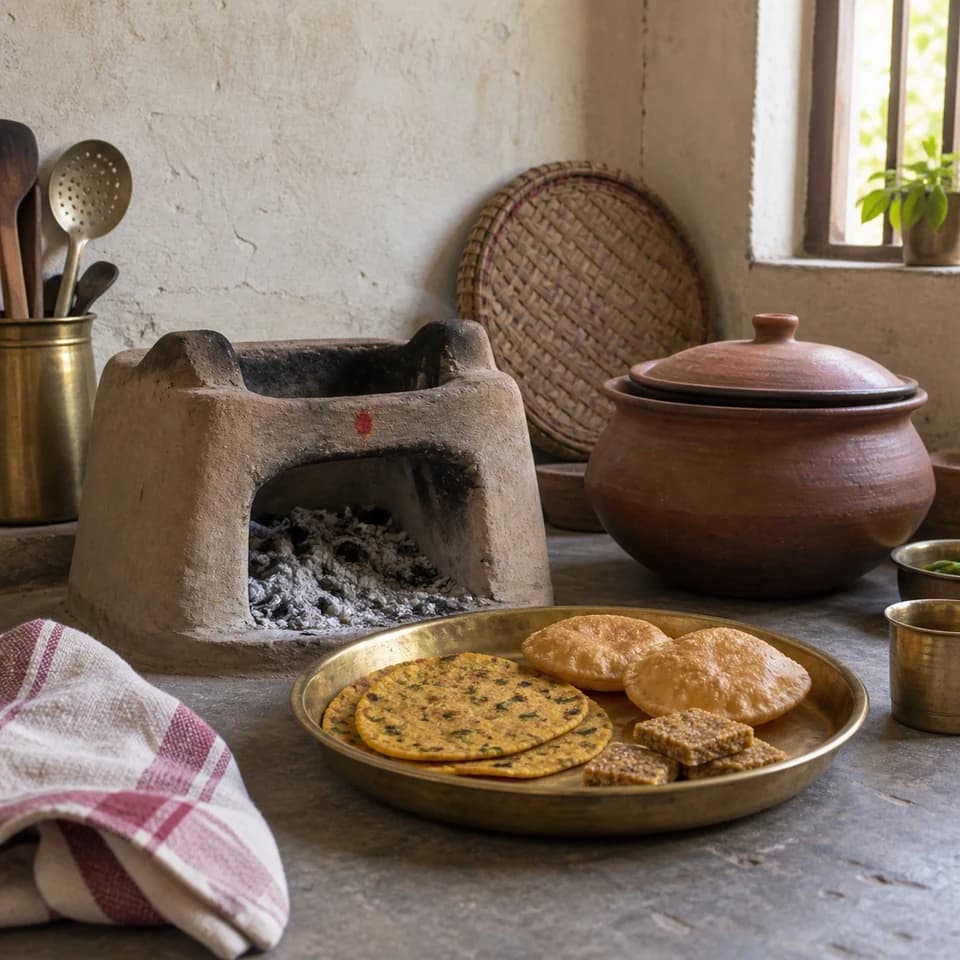
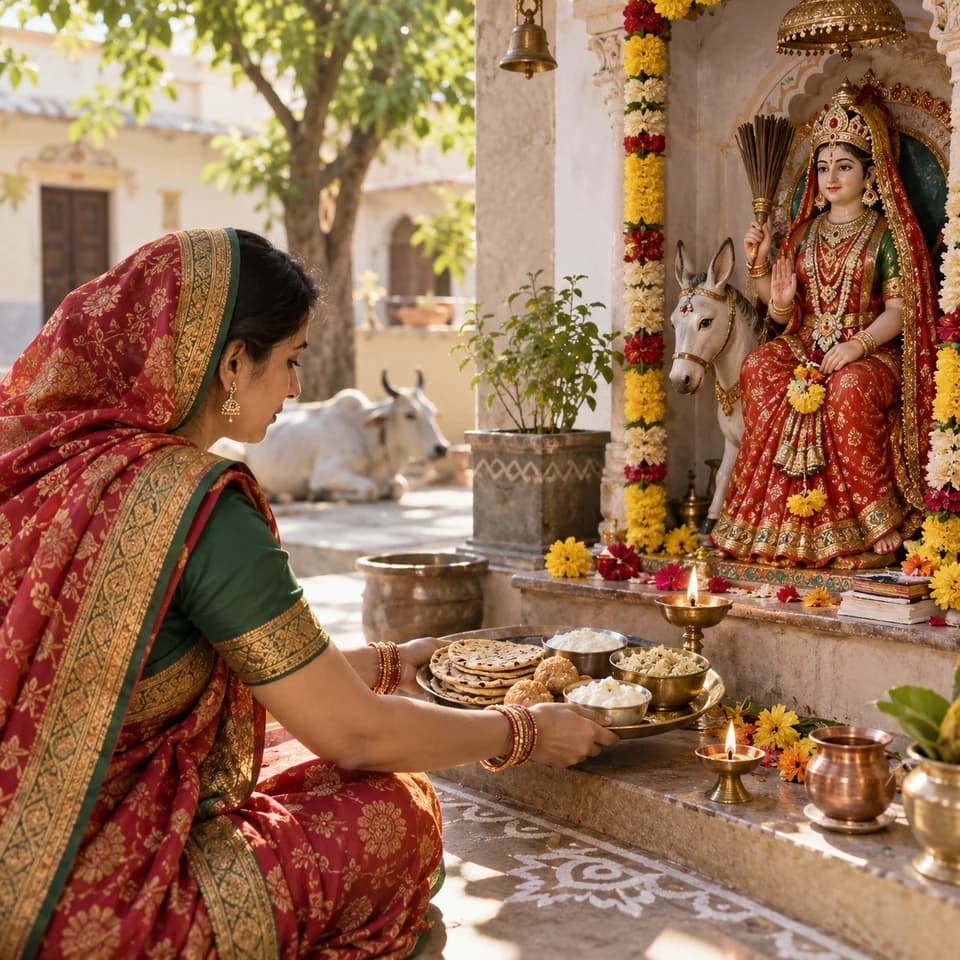
On Randhan Chhath, families prepare food according to their own customs. On Shitala Satam, they worship Mother Shitala without lighting the stove and offer food prepared the previous day. Visiting her shrine and listening to the vrat-katha are also customary. Dishes and worship practices differ by household.
Told differently elsewhere
In Gujarat, Shravan Vad Satam is connected with Randhan Chhath and the custom of keeping the stove cold. Some northern Indian regions observe Shitala Ashtami or Basoda in another month, with a different tithi and local customs. Stories of Mother Shitala also have different versions across regions and families.
Questions people ask
- When is Shitala Satam in 1990?
- On Monday, 13 August 1990 in India. Runs from 12 Aug 12:40 IST to 13 Aug 10:31 IST.
- Why does the date change every year?
- It is kept by the lunar calendar, so its day on the civil calendar moves from year to year.
- Is the date the same everywhere?
- Yes. It is kept everywhere on the day it falls on in India.
Dates in the coming years
- 2027Tuesday, 24 AugustShravan Vad 7
- 2028Saturday, 12 AugustShravan Vad 7
- 2029Friday, 31 AugustShravan Vad 7
- 2030Tuesday, 20 AugustShravan Vad 7
- 2031Saturday, 9 AugustShravan Vad 7
Last kept3 September 2026