In short
Vaisakhi / Baisakhi is a festival observed according to the Hindu calendar. Its date and customary practices can vary by region and local Panchang.
The story
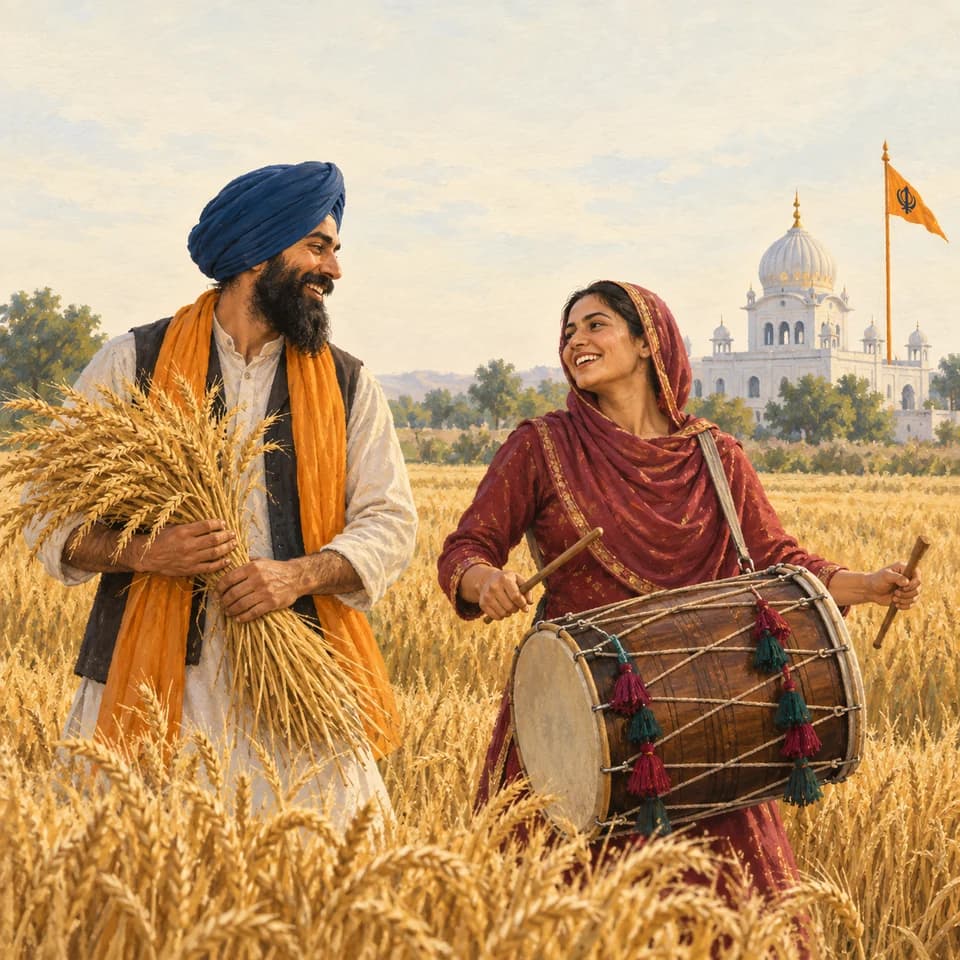
Vaisakhi, or Baisakhi, is a spring harvest festival across parts of North India and has exceptional importance in Sikh history. Farming communities celebrate the ripening of the rabi crop with thanksgiving, fairs, music and shared meals. For Sikhs, Vaisakhi also commemorates the transformative gathering of 1699 at Anandpur Sahib, where Guru Gobind Singh established the Khalsa and initiated the Panj Pyare, shaping a disciplined community committed to courage, equality and service. Gurdwaras hold kirtan, readings, processions and langar, while Punjab's folk celebrations include bhangra and gidda. The same solar transition is marked under different names in several Indian regions. Vaisakhi therefore carries both seasonal joy and a powerful historical memory: gratitude for the harvest alongside commitment to collective responsibility, dignity and fearless ethical action.
Retold from the Gujarati household practice
Why it matters
Vaisakhi / Baisakhi is valued for devotion, family tradition and the spiritual or seasonal meaning attached to the day.
What people do
Bhangra and gidda in the fields and at the melas, and the wheat cut. Gurdwaras hold nagar kirtan and the Nishan Sahib's cloth is changed. Farmers thank the year at the granth and then at the threshing floor, which is the order it happens in.
Retold from the Gujarati household practice
Told differently elsewhere
Punjab and Haryana, and every Sikh congregation abroad, where the Nagar Kirtan procession is the year's largest. The same solar entry is Pohela Boishakh in Bengal, Bohag Bihu in Assam, Puthandu in Tamil Nadu, Vishu in Kerala and Maha Vishuva Sankranti in Odisha.
This text has not been checked by a reviewer yet.

Tithi Calendar on your phone
The panchang for your own city, with the choghadiya, festivals and reminders. It works without the internet.