Chinese New Year (Spring Festival)
FestivalEast Asia · China
No rule yet
Nobody has written a rule for this observance yet, so the calendar does not put it on a day. A name with a made-up date beside it would be worse than a name on its own.
In short
The lunar new year, kept with a reunion dinner and red envelopes.
The story
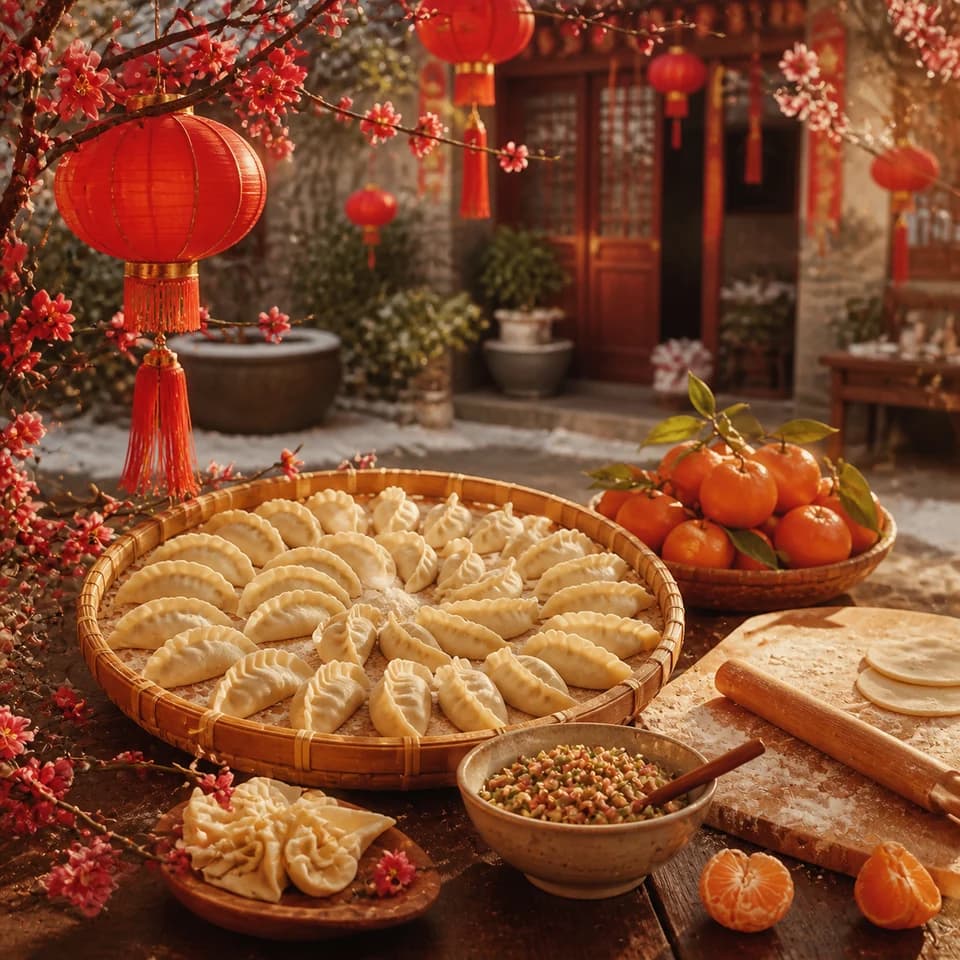
Chinese Spring Festival, the Lunar New Year, is the central annual family celebration in Chinese culture. The lunisolar calendar places it near the end of winter and beginning of spring, but its civil date changes from year to year. Families prepare by cleaning homes, decorating with red couplets and lanterns and gathering for a reunion dinner. Children often receive money in red envelopes, while foods such as dumplings, rice cakes and fish carry wishes for fortune, growth and abundance.
A well-known folk story tells of Nian, a frightening creature said to arrive at the year's turn. Villagers learn that it fears red colour, bright light and loud sound. This story gives a popular explanation for decorations and firecrackers, although it should not be treated as the documented historical origin of every custom. Regional Chinese communities have varied foods, performances, temple observances and household practices. The holiday continues through visits and celebrations culminating in the Lantern Festival.
The event is important in mainland China, Taiwan, Hong Kong and global Chinese communities, with different official holiday schedules. The database has no Chinese lunisolar calculation rule, so it must not assign dates using a Hindu tithi or an invented fixed Gregorian day. Firework restrictions and public safety vary by locality.
Why it matters
The lunar new year, and the reunion dinner on its eve is the point of it - the largest annual movement of people on earth happens so that families can eat one meal together. Debts are settled, the house is swept before the day and not on it, and red envelopes pass from the married to the unmarried.
What people do
The reunion dinner on new year's eve, red couplets pasted at the door, and red envelopes of money given to children and the unmarried. The house is swept before the day and not on it, so that the luck is not swept out. Fifteen days, ending at the Lantern Festival.
Told differently elsewhere
Fifteen days, ending at the Lantern Festival. The north eats jiaozi at midnight and the south niangao or tangyuan. Kept as Tet in Vietnam, Seollal in Korea, and Losar on a different reckoning in Tibet; Singapore, Malaysia and Indonesia keep it as a public holiday with their own Peranakan customs.