Guru Purnima as it falls in 2039.
Next date: 18 July 2027Guru Purnima 2039
Wednesday, 6 July 2039, in Ahmedabad
Full moonIndian · Hindu
Panchang on the day
6
Wednesday
Full Moon
until 07:33
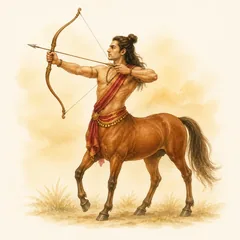
Sagittarius
- ભBha
- ધDha
- ફPha
- Sunrise
- 05:58
- Sunset
- 19:30
- Moonrise
- 20:02
- Nakshatra
- Purva Ashadha
- until 19:06
- Yoga
- Indra
- until 19:09
- Karana
- Bava
- until 07:33
- Rahu Kalam 12:44 to 14:25
- Yamaganda 07:39 to 09:21
Why this date
Ashadh Full Moon, taken at sunrise
Runs from 5 Jul 11:00 IST to 6 Jul 07:33 IST.
In short
Guru Purnima falls on the full moon of Ashadha. Students thank their teachers and guides on this day. In Hindu tradition it also celebrates the birth of Ved Vyasa, which is why it is called Vyasa Purnima.
The story
Satyavati grew up in a fishing household on the banks of the Yamuna. She helped her adoptive father by rowing a boat and ferrying people across the river. One day the sage Parashara came by on his travels. When they met on the river, he told Satyavati that he wished to be close to her. She was worried about the people standing on both banks and about how she would go home afterwards.
In the story, Parashara drew a mist over the river. He promised to ease Satyavati’s worries and told her to ask for a boon. Her body had smelled of fish. She asked for a pleasant fragrance instead. Parashara granted her wish and then left for his hermitage.
That same day, on an island in the Yamuna, Satyavati gave birth to Parashara’s son. Because he was born on an island he was called Dvaipayana. The Mahabharata also calls him Krishna Dvaipayana. In the story, the child grew up as soon as he was born. He asked his mother’s leave and set out to study and practise austerities. Before leaving, he promised that he would come whenever she needed him and thought of him.
Dvaipayana studied the Vedas and their different branches. He also learned old stories and accounts of family lineages. In the Bhagavata account, he was sitting by the Saraswati one morning when he thought about how times were changing. People were living shorter lives and were less able to remember long recitations. It would be hard for them to learn and preserve so much knowledge. He began to think about how to arrange it so they could understand it.
He arranged the Vedas in four parts. He taught the Rigveda to Paila, the Samaveda to Jaimini, the Yajurveda to Vaishampayana and the Atharvaveda to Sumantu. He taught Romaharshana the Puranas and the stories of ancient lineages. His disciples passed on what they had learned to their own students, who in turn taught others. The recitations reached new generations, and the branches of the Vedas continued to be taught. For his work in arranging them, Dvaipayana became known as Ved Vyasa.
Satyavati later became the queen of Shantanu, king of Hastinapura. Years later, their son Vichitravirya died without a child. Satyavati was worried about how the royal line would continue. Bhishma had vowed never to marry. Then she remembered her first son’s promise. She told Bhishma how she had met Parashara and how Vyasa had been born. She also told him that on that day she had feared Parashara might curse her. With Bhishma’s agreement, she called Vyasa to mind, and he came to her.
Satyavati explained the family’s difficulty. Following a family custom of that time, Vichitravirya’s queens Ambika and Ambalika had sons fathered by Vyasa. Ambika’s son was Dhritarashtra, and Ambalika’s was Pandu. A woman who served in the palace also had a son by Vyasa. His name was Vidura. Dhritarashtra’s sons became known as the Kauravas and Pandu’s as the Pandavas. Vyasa’s own family was thus part of the story that would be told in the Mahabharata.
The quarrels between the Kauravas and the Pandavas led to a great war. Vyasa wove the story of the family, its choices and their consequences into the Mahabharata. The Bhagavata says that he wanted lessons about life and duty to reach people who, under the customs of the time, did not have the chance to study the Vedas. He taught the story to his son Shuka and to other disciples.
In a later generation after the war, Janamejaya became king in the line of the Pandavas. Vyasa and his disciples came to Janamejaya’s serpent sacrifice. The king went out to welcome him and offered him a seat. He asked Vyasa how the quarrel between the Kauravas and Pandavas of his own family had begun and why it had led to such a great war. Vyasa knew the family’s story himself, and the king wanted to hear the whole account from him.
Vaishampayana was seated next to Vyasa. Vyasa asked him to tell the king the story just as he had learned it. Vaishampayana recited the Mahabharata to the king and those gathered there. Ugrashrava also heard it. He later went to Naimisha forest and began to tell the same story to the sage Shaunaka and the other sages. In this way, the story Vyasa had taught his disciple reached another gathering and continued to be passed on.
Why it matters
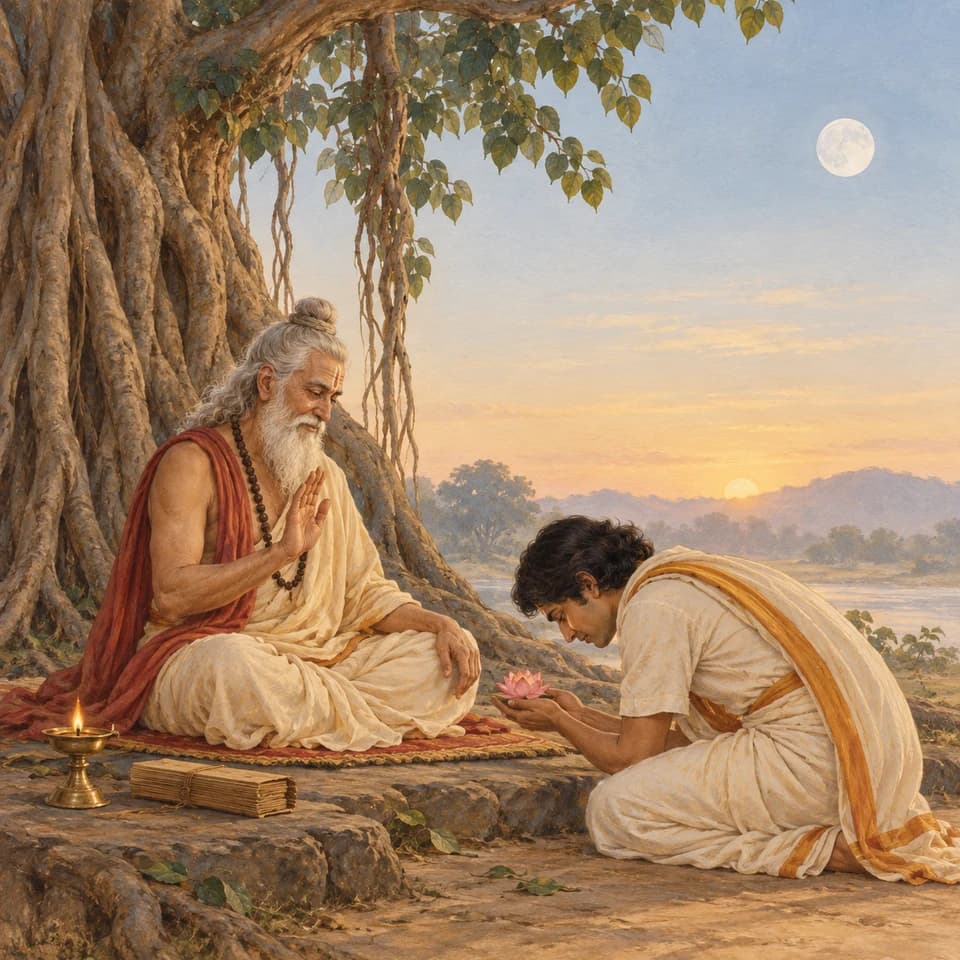
Vyasa Purnima remembers Ved Vyasa and the disciples who learned from him and passed on what they knew. Guru Purnima is also a day to thank the teachers who have taught and guided us.
What people do
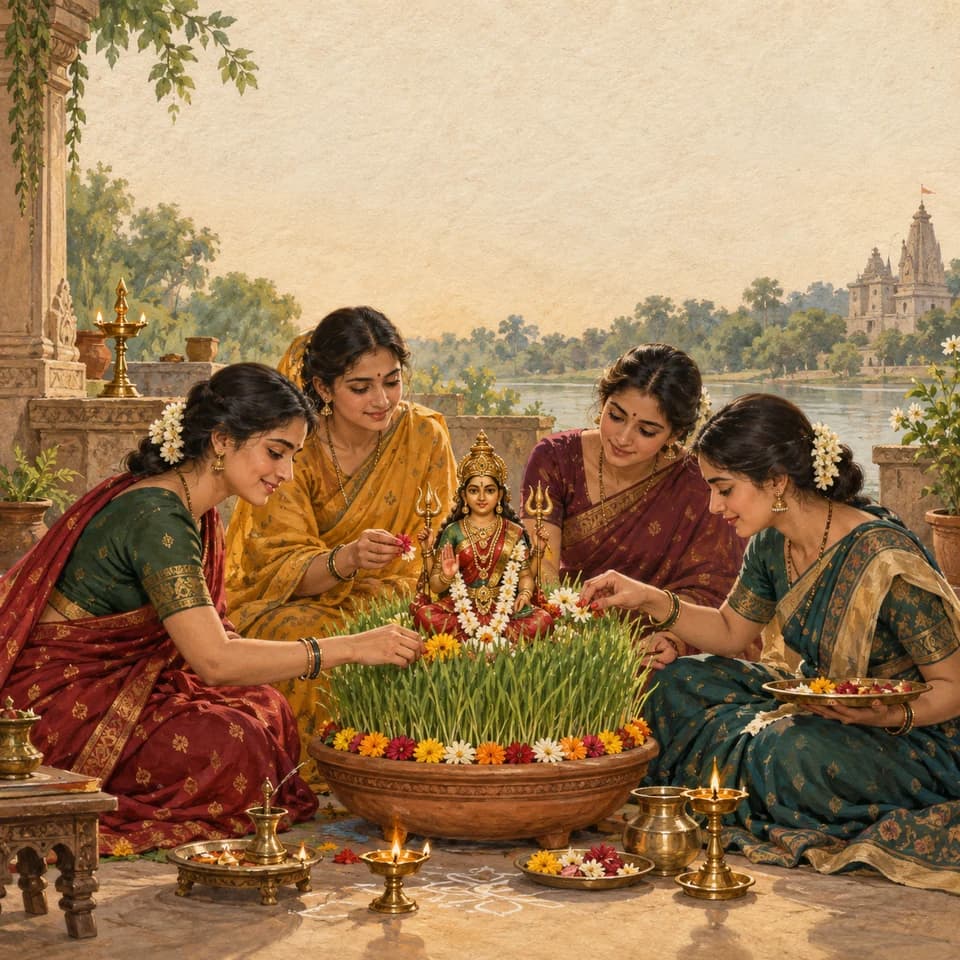
Students visit their teachers, bow to them, ask for their blessings and remember what they have learned from them. Ashrams and temples hold worship for the guru, readings and spiritual gatherings. Students of music, dance and other arts also thank their teachers. Customs vary by family and tradition.
Told differently elsewhere
Hindu tradition calls the day Vyasa Purnima. Buddhist tradition remembers the first teaching the Buddha gave at Sarnath on the full moon of Ashadha. In Jain tradition people remember Gautama Swami, Mahavira’s first disciple, and honour their teachers. Each tradition remembers its own occasion and has its own customs.
Questions people ask
- When is Guru Purnima in 2039?
- On Wednesday, 6 July 2039 in India. Runs from 5 Jul 11:00 IST to 6 Jul 07:33 IST.
- Why does the date change every year?
- It is kept by the lunar calendar, so its day on the civil calendar moves from year to year.
- Is the date the same everywhere?
- Yes. It is kept everywhere on the day it falls on in India.
Dates in the coming years
- 2027Sunday, 18 JulyAshadh Poonam
- 2028Thursday, 6 JulyAshadh Poonam
- 2029Wednesday, 25 JulyAshadh Poonam
- 2030Monday, 15 JulyAshadh Poonam
- 2031Friday, 4 JulyAshadh Poonam
Last kept29 July 2026