FairIndia · North-East
Hornbill Festival
Next date
Tuesday, 1 December 2026
- Tithi at sunrise
- Waning Eighthuntil 23:14
- Nakshatra
- Maghauntil 09:00
- Lunar month
- KartikMargshirsh in the purnimanta reckoning
- Sunrise
- 07:02Sunset 17:54
In short
Nagaland’s Hornbill Festival is a modern cultural festival created to bring the state’s many Naga communities onto a common platform while allowing each to present its own distinct heritage.
The story
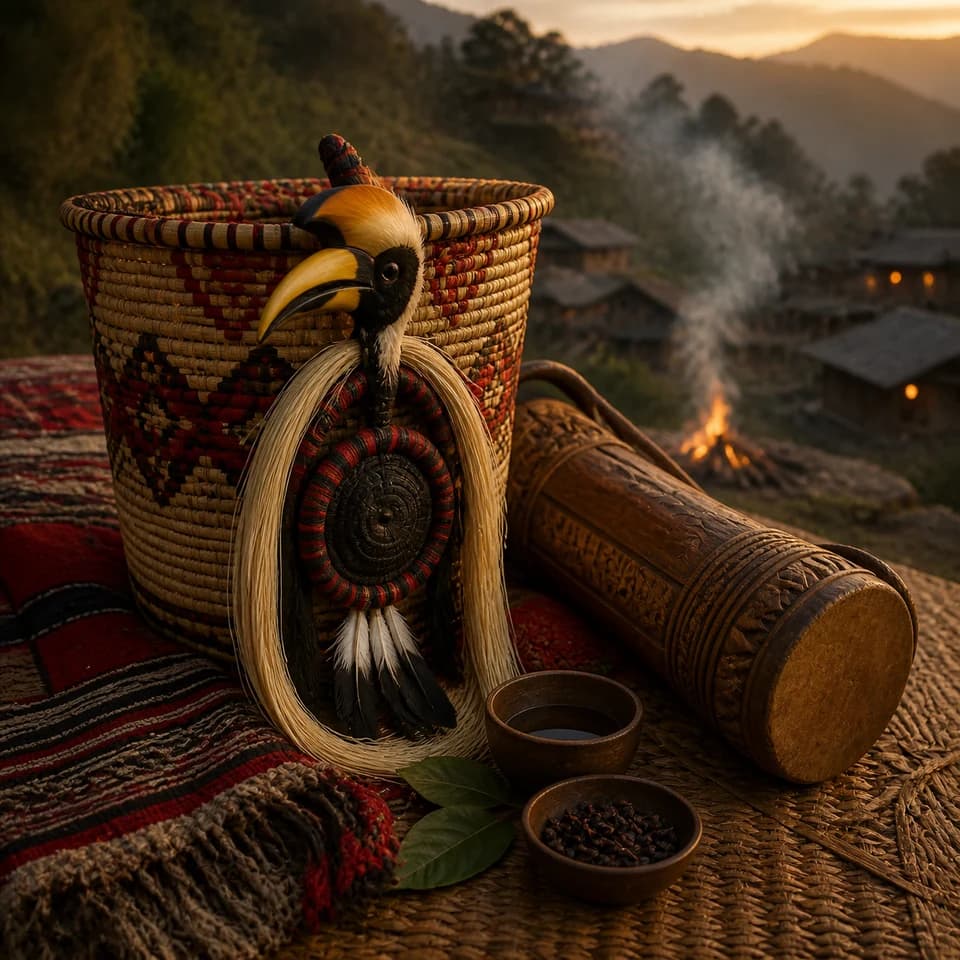
Nagaland’s Hornbill Festival is a modern cultural festival created to bring the state’s many Naga communities onto a common platform while allowing each to present its own distinct heritage. Held at the Naga Heritage Village at Kisama near Kohima, it takes its name from the hornbill bird, which appears prominently in Naga folklore, ornaments and traditional imagery. The festival showcases ceremonial dances, folk songs, indigenous games, crafts, weaving, woodwork, traditional architecture and the cuisines of different tribes. Morung-style structures and cultural demonstrations help visitors understand how community life, oral history, warrior traditions, agriculture and craftsmanship have shaped Naga identity. Unlike an ancient religious feast with one origin story, Hornbill is deliberately a contemporary meeting place for older traditions. Its importance lies in creating a shared public space where diverse Naga groups can preserve, perform and reinterpret their heritage while introducing it to younger generations and visitors from outside the state.
Retold from the Gujarati household practice
Why it matters
Hornbill Festival is significant to the community that observes it and helps preserve religious, family and cultural continuity.
What people do
Each tribe keeps a morung - a traditional house - at the site and hosts in it. Log drums, wrestling, chilli-eating, crafts and the rice beer of each community. The state's statehood day is the first of December, so the festival opens on it.
Retold from the Gujarati household practice
Told differently elsewhere
Kisama, outside Kohima, 1 to 10 December every year - one of the very few festivals in this calendar fixed to Gregorian dates by decision rather than derived from any reckoning. The tribes own harvest festivals - Sekrenyi, Moatsu, Tuluni - are kept separately in their own seasons.
This text has not been checked by a reviewer yet.

Tithi Calendar on your phone
The panchang for your own city, with the choghadiya, festivals and reminders. It works without the internet.