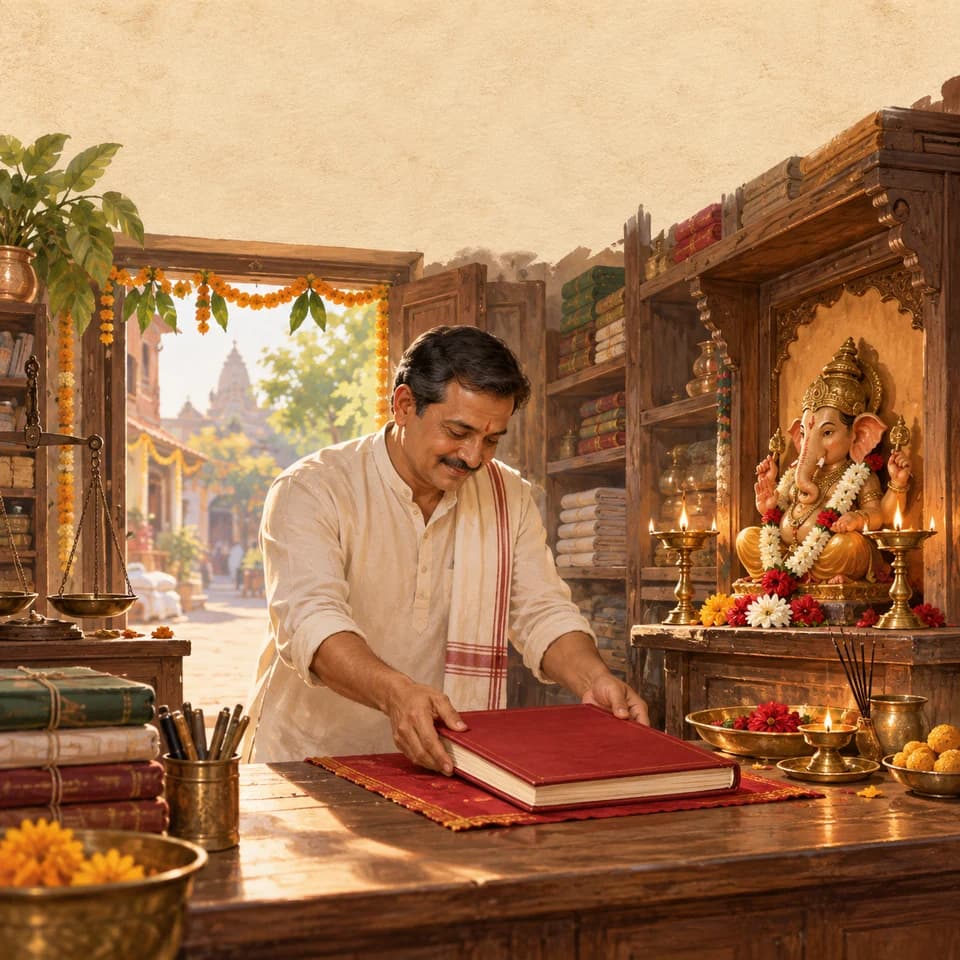
Jalaram Bapa Jayanti as it was kept in 1980.
Next date: 16 November 2026Jalaram Bapa Jayanti 1980
Saturday, 15 November 1980, in Ahmedabad
Birth anniversaryGujarati · Hindu
Panchang on the day
15
Saturday
Waxing Seventh
until 09:40

Capricorn
- ખKha
- જJa
- Sunrise
- 06:51
- Sunset
- 17:56
- Moonrise
- 12:54
- Nakshatra
- Shravana
- until 09:36
- Yoga
- Vriddhi
- until 16:13
- Karana
- Vanija
- until 09:40
- Rahu Kalam 09:38 to 11:01
- Yamaganda 13:47 to 15:10
- Abhijit muhurat 12:02 to 12:46
Why this date
Kartik Waxing Seventh, taken at sunrise
Runs from 14 Nov 10:00 IST to 15 Nov 09:40 IST.
In short
Jalaram Bapa Jayanti is observed on Kartak Sud Satam, the seventh day of the bright fortnight of Kartik. Jalaram Bapa of Virpur and Mother Virbai are remembered for devotion to Rama and their Sadavrat, the continuing service of feeding the hungry. This is their life story as told in the temple tradition. Its miraculous episodes belong to that devotional tradition.
The story
Jalaram was born in Virpur in Saurashtra to Pradhan Thakkar and Rajbai. Pradhan was a trader. Rajbai liked serving saints and treated the holy men and pilgrims who came to their home with respect. Jalaram grew up seeing his mother's service. His heart was drawn to remembering Rama and spending time with saints.
Jalaram first joined his father's business and later that of his uncle Valjibhai. Whenever a holy man or someone in need came to the shop, he helped them. Feeding the hungry and giving clothes to those in need mattered more to him than increasing the business. His generosity worried the family, as the shop and household also had to be supported.
At sixteen, Jalaram married Virbai, the daughter of Pragji Somaiya. Jalaram's heart was in devotion and service, and Virbai chose to share this work. In time they managed the food service together. Virbai's role was not limited to caring for their home; her labour and support remained an essential part of running the Sadavrat.
One devotional account from his youth concerns the shop. A group of holy men once came to Valjibhai's shop. Jalaram gave them food supplies. Those whose clothes were torn received new clothes too. He was happy to give the visitors what they needed.
When Valjibhai heard about this, he came to check the stock. Jalaram remembered God. The story says that, despite all that had been given away, the count showed no shortage. His uncle's anger subsided, and instead of scolding him, he praised him. Devotees remember the incident in connection with Jalaram's faith in God.
Jalaram wished to go on pilgrimage. With his family's permission, he set out, and Virbai went with him. They met many saints on the journey. On returning to Virpur, they established their own home, but their path of devotion and service continued.
Jalaram accepted Bhoja Bhagat of Fatehpur, near Amreli, as his guru. He was also known as Bhojalram Bapa. From his guru, Jalaram received Rama's mantra and a rosary. With his guru's blessings, he continued feeding hungry people. Remembering God and offering food to those who came became linked parts of his life.
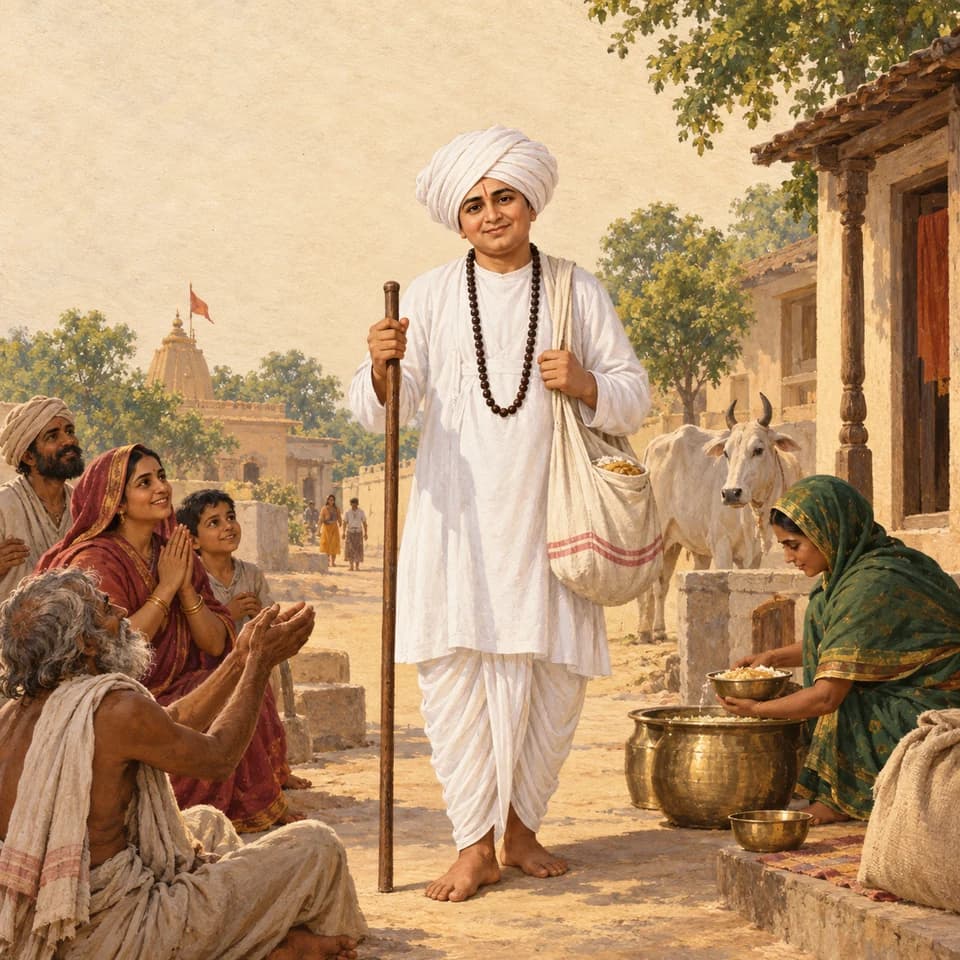
This food service in Virpur became known as Sadavrat. Holy men, fakirs, pilgrims and poor people were fed. No distinction was made between Hindu and Muslim visitors. Jalaram and Virbai both worked in it. They wanted no one to leave hungry.
The Sadavrat needed grain, so the couple also worked in the fields. Instead of keeping their earnings in grain for themselves, they used them to feed guests. They returned home in the evening with the grain earned through their labour, and the service continued with it. Daily work was part of their devotion.
At times the Sadavrat ran short of grain. Virbai then gave the gold ornaments she had received at her wedding for the food service. They were sold to buy grain so that visitors could be fed. Her contribution is remembered as part of sustaining the path of service they had chosen together.
A devotional story tells of the son of a Muslim man named Jamal. The boy was seriously ill. Jamal prayed in Jalaram Bapa's name and vowed to give forty maunds of grain to the Sadavrat if his son recovered. The story says that the boy improved, and Jamal brought the grain to Bapa. Among devotees, this incident is told as an example of people of different faiths trusting Jalaram Bapa.
Another familiar story of Jalaram and Virbai concerns the bag and staff. One day, an elderly holy man came to their home. Bapa welcomed him for a meal. The visitor spoke of his old age and weakness. He needed someone to accompany him on his travels and look after him.
The holy man asked for Virbai to come with him to provide that care. Jalaram and Virbai discussed it, and both agreed. Virbai willingly set out with the elderly visitor.
During their journey, the two reached a river. The holy man gave his staff and bag to Virbai to keep safe. He then disappeared. The bag and staff remained with her.
At the same time, Jalaram Bapa heard a divine voice in Virpur. According to this tradition, Rama himself had come as the holy man to test their devotion and service. Bapa was told to bring Virbai home. She returned with the bag and staff. These objects are still shown in Virpur as reminders of the story.
For many years, Virbai and Jalaram Bapa continued their food service. Virbai died before Bapa, but the Sadavrat continued after her passing. When devotees tell his life story, they also remember her as Mother Virbai, because this work had been built through both their efforts.
Jalaram Bapa died in 1881. Temple tradition remembers his final days with prayers and remembrance of Rama. Hariramji, the son of his daughter Jamnaben, later took responsibility for the temple and ashram. The work begun by Bapa and Virbai continued after them.
Their home in Virpur became a place of pilgrimage for devotees. Worship of Rama continued alongside darshan of the bag and staff and the sharing of food as prasad. Jalaram Bapa and Virbai's life story does not end with their deaths; the food service they began still keeps their memory alive.
Why it matters
In Jalaram Bapa’s life, devotion to Rama and feeding the hungry go together. Virbai’s contribution shows that the work was sustained by more than one person’s name; it rested on daily effort and shared responsibility. On the jayanti, devotees remember serving people respectfully without distinctions of caste or religion.
What people do
Devotees remember Jalaram Bapa and Mother Virbai through darshan, worship, aarti and bhajans. They remember Rama’s name and listen to Bapa’s life story. Many temples and devotional communities share food as prasad or arrange meals and other services for people in need.
Programme times and forms of service vary by temple and local community. Devotees consult their local calendar and temple announcements for the jayanti’s lunar day. They can also participate by offering time, effort or whatever support they can for food service.
Told differently elsewhere
Virpur in Gujarat is the main pilgrimage centre associated with Jalaram Bapa. Devotees come for Bapa’s darshan and food prasad. Jalaram temples in other Gujarati cities and places such as Mumbai also hold jayanti celebrations, bhajans and service activities.
The tradition continues outside India too. Communities in Leicester in Britain, Nairobi in East Africa and North America hold Bapa’s jayanti and bhajan programmes. Local organisations combine this remembrance with food distribution and social service according to their arrangements.
Questions people ask
- When is Jalaram Bapa Jayanti in 1980?
- On Saturday, 15 November 1980 in India. Runs from 14 Nov 10:00 IST to 15 Nov 09:40 IST.
- Why does the date change every year?
- It is kept by the lunar calendar, so its day on the civil calendar moves from year to year.
- Is the date the same everywhere?
- Yes. It is kept everywhere on the day it falls on in India.
Dates in the coming years
- 2026Monday, 16 NovemberKartik Sud 7in 2 days
- 2027Friday, 5 NovemberKartik Sud 7
- 2028Tuesday, 24 OctoberKartik Sud 7
- 2029Monday, 12 NovemberKartik Sud 7
- 2030Friday, 1 NovemberKartik Sud 7
Last kept29 October 2025