Japanese New Year as it was kept in 2026.
Next date: 1 January 2027Japanese New Year 2026
Thursday, 1 January 2026, in Ahmedabad
FestivalEast Asia · Japan
Panchang on the day
1
Thursday
Waxing Thirteenth
until 22:22
Taurus
- બBa
- વVa
- ઉU
- Sunrise
- 07:19
- Sunset
- 18:06
- Moonrise
- 15:49
- Nakshatra
- Rohini
- until 22:48
- Yoga
- Shubha
- until 17:12
- Karana
- Kaulava
- until 12:06
- Rahu Kalam 14:04 to 15:25
- Yamaganda 07:19 to 08:40
- Abhijit muhurat 12:21 to 13:04
Why this date
Every year on 1 January
In short
The first three days of January, kept with visits and packed food boxes.
The story
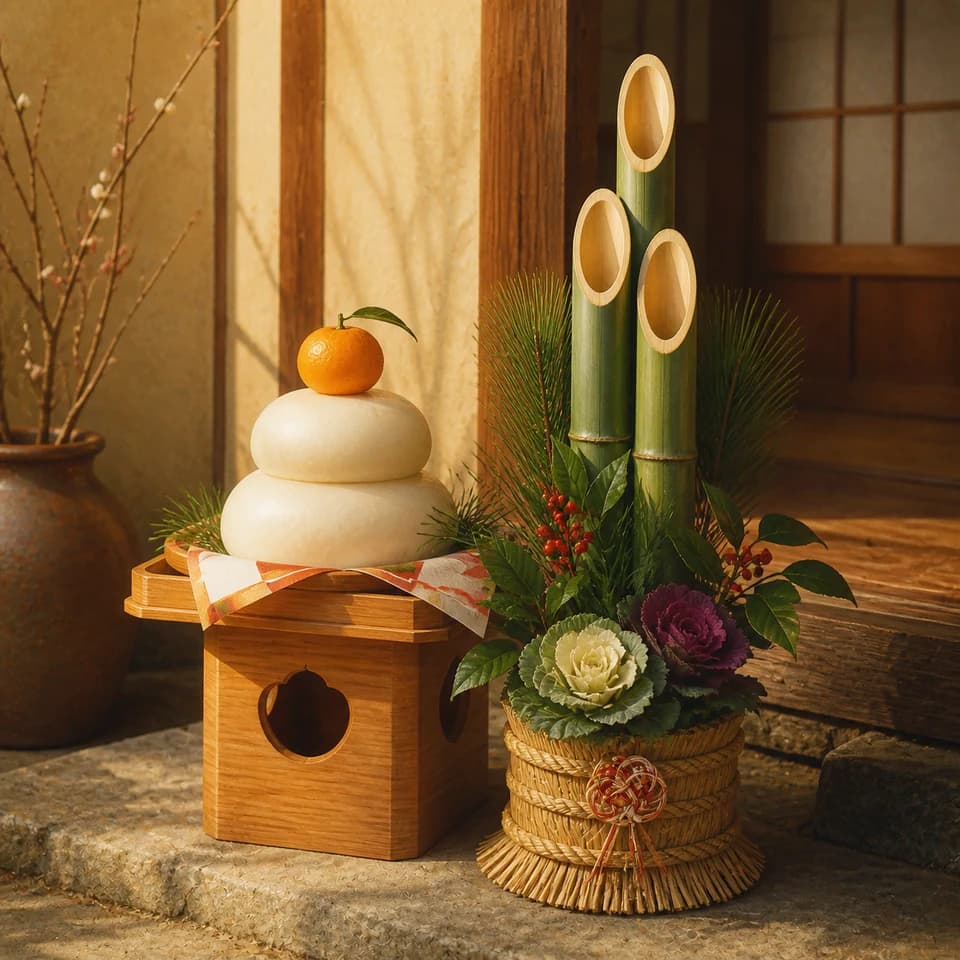
Japanese New Year, or Shogatsu, begins on 1 January and traditionally centres on family, renewal and welcoming the year's blessings. Before the holiday many households conduct osoji, a thorough cleaning, and prepare decorations such as kadomatsu and shimenawa. On New Year's Eve some Buddhist temples ring bells 108 times in the joya no kane ceremony, symbolically addressing worldly attachments. Families may eat long toshikoshi soba noodles while reflecting on the year that is ending.
On New Year's Day people exchange greetings, share osechi ryori festive dishes and ozoni soup, and children often receive otoshidama money gifts. Many make hatsumode, the first visit of the year to a Shinto shrine or Buddhist temple, offering prayers and expressing gratitude. These customs combine household culture with religious practices, and not every family observes each one. The opening days of January are often reserved for visits and rest.
Japan adopted the Gregorian calendar for official use in 1873, which explains why Shogatsu now begins on the fixed date 1 January rather than following Chinese Lunar New Year. The former lunisolar reckoning survives in some regional traditions. The holiday has a long history of welcoming Toshigami, the New Year deity in folk belief, but it should not be presented as a single proven historical visitation. The public holiday date is fixed; local shrine programmes and family practices vary.
Why it matters
Marks family renewal and the welcoming of the new year through household cleaning, seasonal food, greetings, shrine or temple visits and gratitude; practices differ among families.
What people do
Osechi - a lacquered box of small dishes, each meaning something - is prepared beforehand so that nobody has to cook. Toshikoshi soba is eaten on the last night, temple bells are rung a hundred and eight times, and hatsumode is the first shrine visit of the year. Children are given otoshidama.
Told differently elsewhere
Japan moved to 1 January in 1873 and did not keep the lunar date, which is why its new year sits apart from every other East Asian one. Okinawa and some rural districts still keep the old lunar new year alongside it.
Questions people ask
- When is Japanese New Year in 2026?
- On Thursday, 1 January 2026 in India.
Dates in the coming years
- 2027Friday, 1 JanuaryMargshirsh Vad 9in 51 days
- 2028Saturday, 1 JanuaryPosh Sud 4
- 2029Monday, 1 JanuaryPosh Vad 1
- 2030Tuesday, 1 JanuaryMargshirsh Vad 12
- 2031Wednesday, 1 JanuaryPosh Sud 8
Last kept1 January 2026