Lantern Festival
FestivalEast Asia · China
No rule yet
Nobody has written a rule for this observance yet, so the calendar does not put it on a day. A name with a made-up date beside it would be worse than a name on its own.
In short
The fifteenth night of the new year, closed with lanterns and riddles.
The story
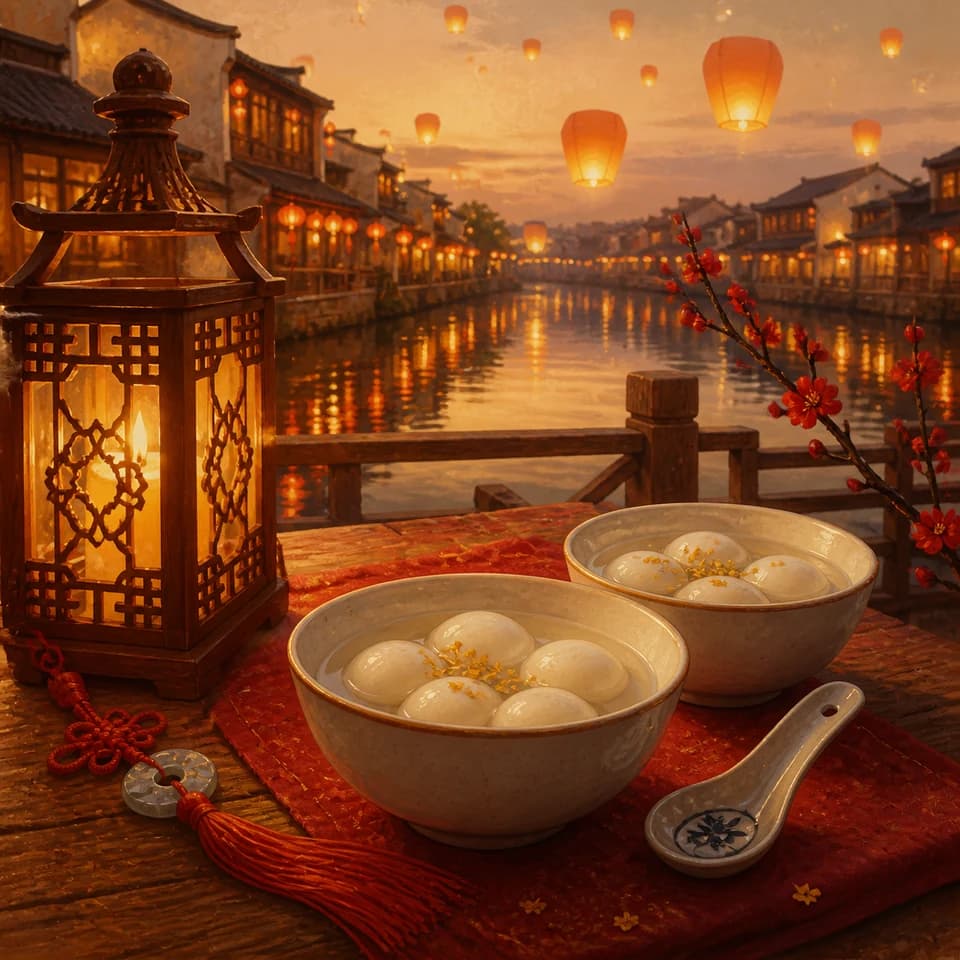
The Chinese Lantern Festival, or Yuanxiao Jie, is celebrated on the fifteenth day of the first month of the Chinese lunisolar year. It falls at the first full moon after the Lunar New Year and traditionally closes the main New Year celebration period. Lantern displays, illuminated streets, dragon and lion performances and lantern riddles turn the evening into a public gathering. Families eat round glutinous-rice balls, called yuanxiao or tangyuan according to region and preparation, as a symbol of reunion and completeness.
Stories about its beginnings vary. Some link lanterns to Buddhist ceremonies in imperial times; others tell of a heavenly bird and a plan to hang red lights to avert a threatened fire. These are traditions and folk explanations, not a single proven historical origin. Lantern culture developed over centuries through court celebrations, temples, markets and neighbourhood craft. Taiwan has related but distinct events, including Pingxi sky lanterns and the Yanshui fireworks festival, which should not be treated as universal customs across China.
The date requires the Chinese lunisolar calendar, not the fifteenth day of a Gregorian month or a Hindu Purnima. Lantern releases and fireworks also have local environmental and safety restrictions. Modern celebrations can honour the craft and family gathering without releasing litter or creating fire hazards.
Why it matters
First full moon of the Chinese lunisolar new year, expressing family reunion, hope and community celebration.
What people do
Display lanterns, solve lantern riddles, watch performances and eat yuanxiao or tangyuan; follow fire and environmental restrictions.
Told differently elsewhere
China and Chinese diaspora on day 15 of lunar month one; Taiwan's Pingxi and Yanshui events have separate local practices.