FestivalBuddhist
Losar
No rule yet
Nobody has written a rule for this observance yet, so the calendar does not put it on a day. A name with a made-up date beside it would be worse than a name on its own.
In short
Losar is the Tibetan and Himalayan Buddhist New Year, celebrated in Ladakh and other communities influenced by Tibetan culture. Its roots combine an older seasonal new-year tradition with Buddhist ritual.
The story
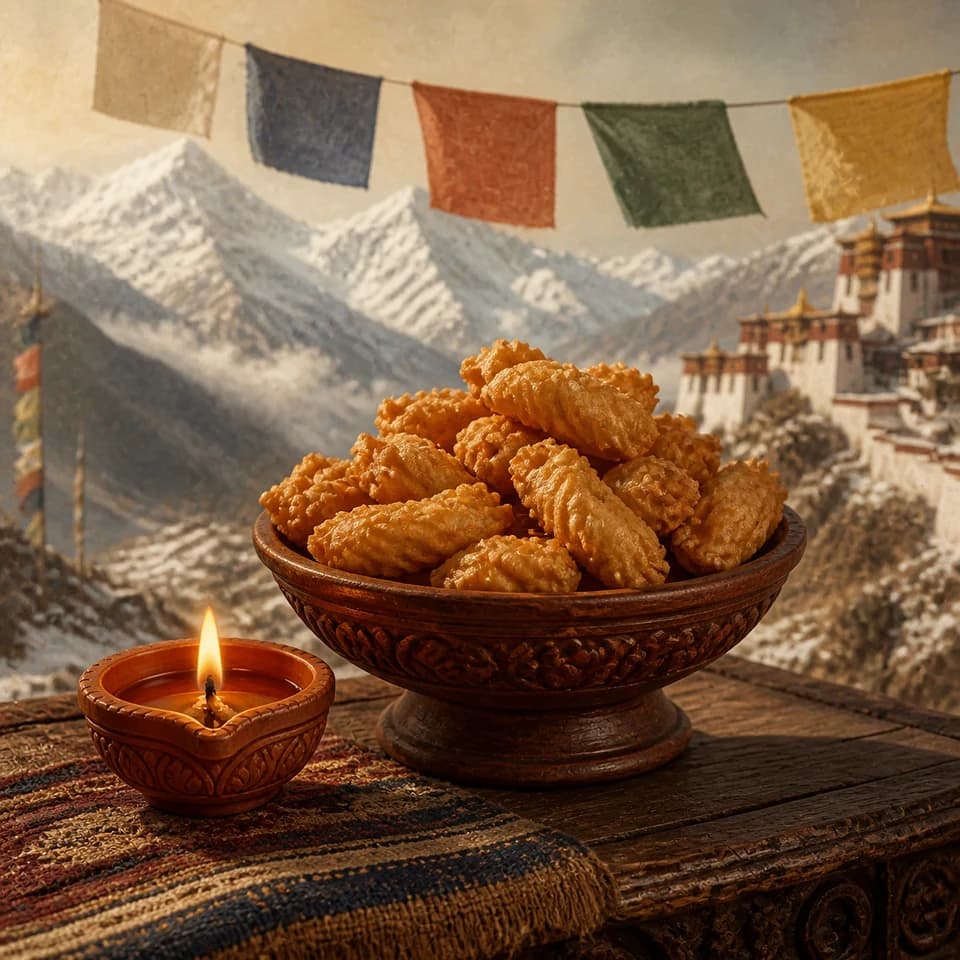
Losar is the Tibetan and Himalayan Buddhist New Year, celebrated in Ladakh and other communities influenced by Tibetan culture. Its roots combine an older seasonal new-year tradition with Buddhist ritual. In the days before Losar, homes and monasteries are thoroughly cleaned, debts and unfinished tasks are settled where possible, special foods are prepared and old negativity is symbolically left behind. Monasteries conduct prayers and protective ceremonies, while families make offerings, light lamps, visit relatives and exchange greetings for peace and prosperity. Traditional foods such as khapse are prepared, and local customs may include dances, music and community gatherings. The first days are often devoted first to religious observance and family before broader social celebration. Losar’s central idea is renewal: people enter a new cycle with a clean home, clear intentions, gratitude to teachers and deities, and hopes for health, harmony and good fortune in the year ahead.
Retold from the Gujarati household practice
Why it matters
Losar is significant to the community that observes it and helps preserve religious, family and cultural continuity.
What people do
The house is cleaned out and the old year's soot swept from the kitchen. Guthuk, a soup of nine ingredients with dough balls hiding small objects that tell you something about yourself, is eaten two nights before, and what is left is thrown out with the year's bad luck. Monasteries hold cham - masked dances - and families visit for three days.
Retold from the Gujarati household practice
Told differently elsewhere
Tibet, and in India the Tibetan settlements plus Ladakh, Sikkim, Arunachal and the Himachal valleys. Ladakh keeps its own Losar two months early, a displacement attributed to a fourteenth-century king who advanced it before a winter campaign and never moved it back. Bhutan keeps Losar as Losar and Nepal's Sherpa and Tamang communities keep their own.
This text has not been checked by a reviewer yet.

Tithi Calendar on your phone
The panchang for your own city, with the choghadiya, festivals and reminders. It works without the internet.