Nag Pancham as it was kept in 2026.
Next date: 22 August 2027Nag Pancham 2026
Tuesday, 1 September 2026, in Ahmedabad
FestivalGujarati · Hindu
Panchang on the day
1
Tuesday
Waning Fourth
until 07:42
Aries
- અA
- લLa
- ઈEe
- Sunrise
- 06:20
- Sunset
- 18:58
- Moonrise
- 21:28
- Nakshatra
- Ashwini
- until 02:42 next day
- Yoga
- Vriddhi
- until 23:38
- Karana
- Balava
- until 07:42
- Rahu Kalam 15:49 to 17:23
- Yamaganda 09:30 to 11:04
- Abhijit muhurat 12:14 to 13:04
Why this date
Shravan Waning Fifth, taken at sunrise
Runs from 1 Sep 07:42 IST to 2 Sep 06:12 IST.
This tithi is skipped: it begins and ends between two sunrises, so no day carries it. Shown on the day it begins.
In short
In Gujarat, Nag Pancham is observed on the fifth day of the waning half of Shravan. People worship the serpent deity and remember to treat living creatures with respect. One well-known story associated with serpent worship is the Mahabharata’s account of the sage Astika.
The story
A white horse named Uchchaihshrava had emerged from the churning of the ocean. One day Kadru, the mother of the Nagas, and Vinata made a wager about the colour of its tail. Vinata said the horse was white all over. Kadru said its tail was black. Whoever lost would have to serve the other. Kadru told her serpent sons to turn into black hairs and cover the horse’s tail. They refused to cheat in this way. Angry, Kadru cursed them to fall into the fire and burn at King Janamejaya’s sacrifice one day. The Nagas then thought that if they obeyed her, she might take back the curse. They became black hairs and hid in the horse’s tail. The next day Vinata saw the tail and lost the wager. Kadru’s curse still stood.
The Nagas were frightened. Vasuki, their king, gathered them to find a way to save their kin. A Naga called Elapatra said he had heard Brahma speak. A sage named Jaratkaru and Vasuki’s sister, who was also named Jaratkaru, would have a son called Astika who would stop the sacrifice. Vasuki later went with the gods to see Brahma. Brahma confirmed what Elapatra had said. From then on, Vasuki waited for his chance.
The sage Jaratkaru spent his time studying and practising austerities. He did not wish to marry. One day he saw his ancestors hanging upside down over a deep pit, held up by the roots of a clump of grass. All but one of the roots had been cut, and a mouse was gnawing at the last. The ancestors explained that the final root was the remaining link in their line and the mouse stood for the passage of time. Jaratkaru was the last of their line. They asked him to marry so that the family could continue.
Jaratkaru said he would marry if a woman with his own name agreed of her own will and he did not have to provide for her. Long afterwards, he spoke these conditions aloud three times in the forest. The Nagas keeping watch told Vasuki, who brought his sister Jaratkaru to meet the sage. She had the same name as him, and Vasuki took responsibility for her upkeep. Before the marriage, the sage said he would leave if anything happened that displeased him. Hoping to save her kin, Vasuki’s sister agreed.
One evening the sage fell asleep with his head in his wife’s lap. As the sun was setting, she worried he would miss his evening prayers and gently woke him. He was angry. Reminding her of his condition, he decided to leave. She explained that she had only wanted to remind him of the time for prayer. She also asked what would become of the child who was to save the Nagas. The sage told her she would be the mother of a son. Then he went away to resume his austerities.
Jaratkaru told her brother Vasuki what had happened. In time she gave birth to a son. The story says he was named Astika because his father had said that there was a child before leaving. Astika grew up in Vasuki’s home. He studied the Vedas with the sage Chyavana and learned a great deal while still young.
Meanwhile, Abhimanyu’s son Parikshit ruled in Hastinapura. One day while hunting he struck a deer with an arrow. The wounded deer fled into the forest. Following it, the king grew tired and thirsty. He asked the sage Shamika, who was sitting there, which way it had gone. Shamika was observing silence and gave no answer. The king did not know about his vow. Angrily, he lifted a dead snake with the tip of his bow and placed it on the sage’s shoulders. Shamika remained calm, and the king left.
Shamika’s son Shringin heard from a friend what had happened to his father. In anger he cursed the king to die from the bite of the serpent Takshaka on the seventh day. When Shamika learned about the curse, he explained to his son that such a harsh punishment did not fit the king’s mistake. He forgave the king himself and sent his disciple Gauramukha to warn him. Parikshit regretted what he had done. On his ministers’ advice, he arranged to stay in a building raised on a single pillar. Guards, healers and medicines were kept there, and the king carried on governing from that place.
On the seventh day a Brahmin named Kashyapa set out to see the king. He believed he could counter Takshaka’s venom. Takshaka stopped him on the way and bit a banyan tree to test him. In the story, the tree burned to ashes from the venom, and Kashyapa brought it back to life with his knowledge. Takshaka offered him more wealth than he expected to receive from the king. In meditation Kashyapa saw that the king’s allotted life had run its course. He accepted Takshaka’s offer and turned back.
Takshaka disguised some Nagas as ascetics and sent them to the king with fruit and other gifts. He took the form of a tiny creature and hid inside a fruit. When the visitors had gone, Parikshit picked up the fruit, and the little creature came out. The sun was setting, and the king thought the danger had passed. He placed the creature near his neck. It returned to its form as Takshaka, coiled around the king’s neck and bit him. Parikshit died.
Parikshit’s son Janamejaya took the throne after his death. When he grew up, he asked his ministers how his father had died. They told him the story from the curse to Takshaka’s bite. A man had overheard Kashyapa and Takshaka while up in the banyan gathering dry wood. In the story, he too burned with the tree and came back to life when Kashyapa restored it. It was he who told the ministers what had happened. Hearing how his father died, Janamejaya was deeply grieved. He decided to punish Takshaka and his kin. His priest told him about the serpent sacrifice, and Janamejaya ordered the preparations.
A large pavilion and a fire pit were prepared. Lohitaksha, who understood construction, said a Brahmin would prevent the rite from being completed. The king told the guards to admit no one without his knowledge. The sacrifice began. The officiating scholars called out the Nagas’ names, recited mantras and offered ghee into the fire. In the story, the mantras drew the Nagas into the fire pit.
Afraid, Takshaka went to Indra, told him what had happened and asked for shelter. Indra let him stay. Seeing the Nagas fall into the fire one after another, Vasuki grew alarmed and asked his sister to turn to Astika for help. Jaratkaru told Astika about Kadru’s curse, Brahma’s words and why he had been born. Astika told his mother and his uncle that he would try to stop the sacrifice. He set off for the pavilion at once.
The guards stopped Astika at the door. He spoke to them calmly and gained permission to enter. Inside, he blessed the king and praised the scholars conducting the rite and the sacred fire. Janamejaya was pleased by the young Astika’s understanding and the way he spoke. He told Astika to ask for a boon. The officiants reminded him that Takshaka had not yet reached the fire.
Janamejaya learned that Takshaka was with Indra. When Indra appeared in his chariot, Takshaka was hiding in his upper garment. The king told the officiants to draw Takshaka into the fire with Indra if necessary. They recited the mantras again, calling Takshaka by name. Indra became afraid, let go of Takshaka and went away. Takshaka began to be drawn through the air towards the fire.
Janamejaya again told Astika to ask for a boon and promised to grant whatever he asked. Astika asked him to stop the sacrifice then and there so that no more Nagas would fall into the fire. Janamejaya hesitated. He offered gold, silver and cows, and asked him to choose something else. Astika stood by his request. He wanted to save his mother’s kin. The scholars in the pavilion urged the king to keep his promise.
Takshaka was still moving towards the fire. Astika told him three times to stop. In the story, he hung still in midair. Janamejaya finally granted Astika’s request and ordered the sacrifice to end. Takshaka and the remaining Nagas survived. Lohitaksha’s prediction had come true. The king bade Astika farewell with respect and invited him to his next Ashvamedha rite.
Astika returned home and told his mother and uncle everything. The Nagas were delighted and told him to ask for a boon. Astika asked for nothing for himself. He asked that people who remember this story in the morning or evening have no fear of the Nagas. At the end of the story the Nagas grant his request. Astika is remembered as the sage who saved them.
Why it matters
Some Nag Panchami traditions remember how Astika saved the Nagas. A sacrifice begun in anger is stopped by a wise young man, and the remaining Nagas survive. Nag Pancham expresses respect for the serpent deity and for nature.
What people do
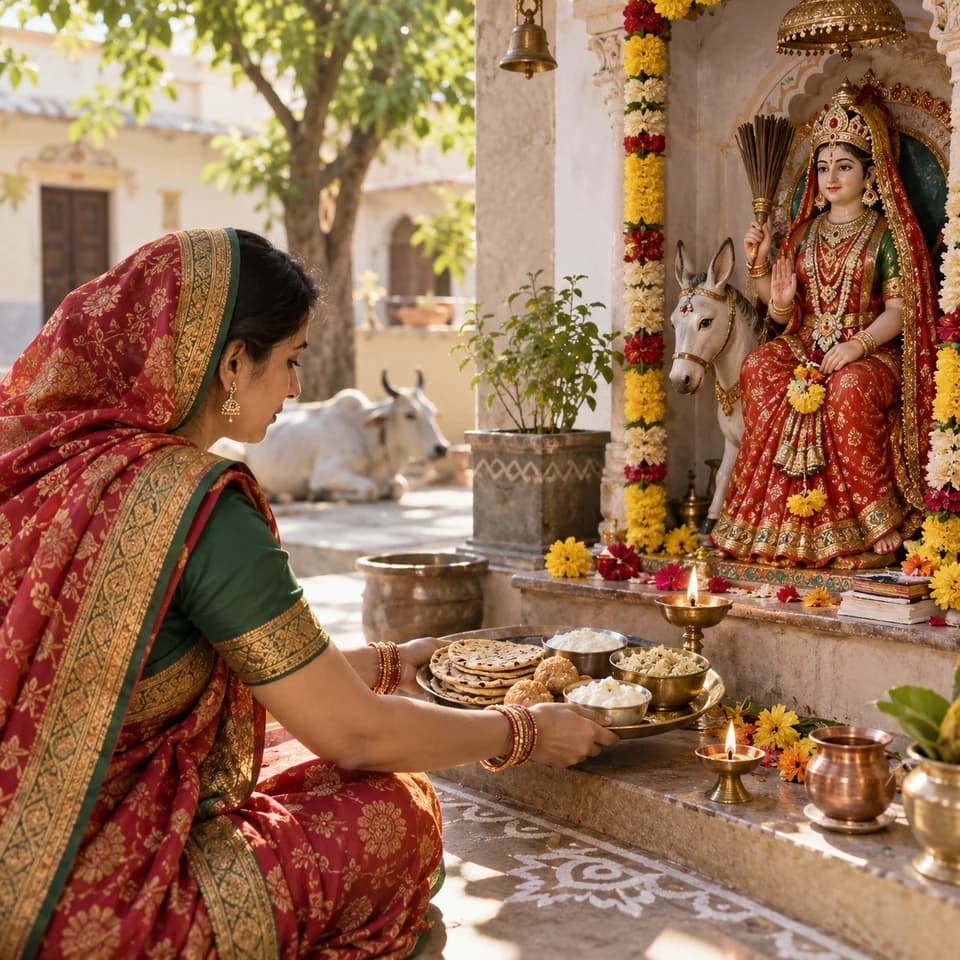
Families follow their own custom, offering flowers before a picture or image of the serpent deity. Some visit a temple of the serpent deity or Shiva. Keep a safe distance from live snakes. Catching them or feeding them milk can harm them.
Told differently elsewhere
Gujarat observes Nag Pancham on the fifth day of the waning half of Shravan. Maharashtra and many other regions celebrate Nag Panchami on the fifth day of the bright half of Shravan. Some traditions in Maharashtra also recall the separate story of Krishna and the serpent Kaliya. Check the local calendar for the date.
Questions people ask
- When is Nag Pancham in 2026?
- On Tuesday, 1 September 2026 in India. Runs from 1 Sep 07:42 IST to 2 Sep 06:12 IST.
- Why does the date change every year?
- It is kept by the lunar calendar, so its day on the civil calendar moves from year to year.
- Is the date the same everywhere?
- Yes. It is kept everywhere on the day it falls on in India.
Dates in the coming years
- 2027Sunday, 22 AugustShravan Vad 5
- 2028Thursday, 10 AugustShravan Vad 5
- 2029Wednesday, 29 AugustShravan Vad 5
- 2030Sunday, 18 AugustShravan Vad 5
- 2031Thursday, 7 AugustShravan Vad 5
Last kept1 September 2026