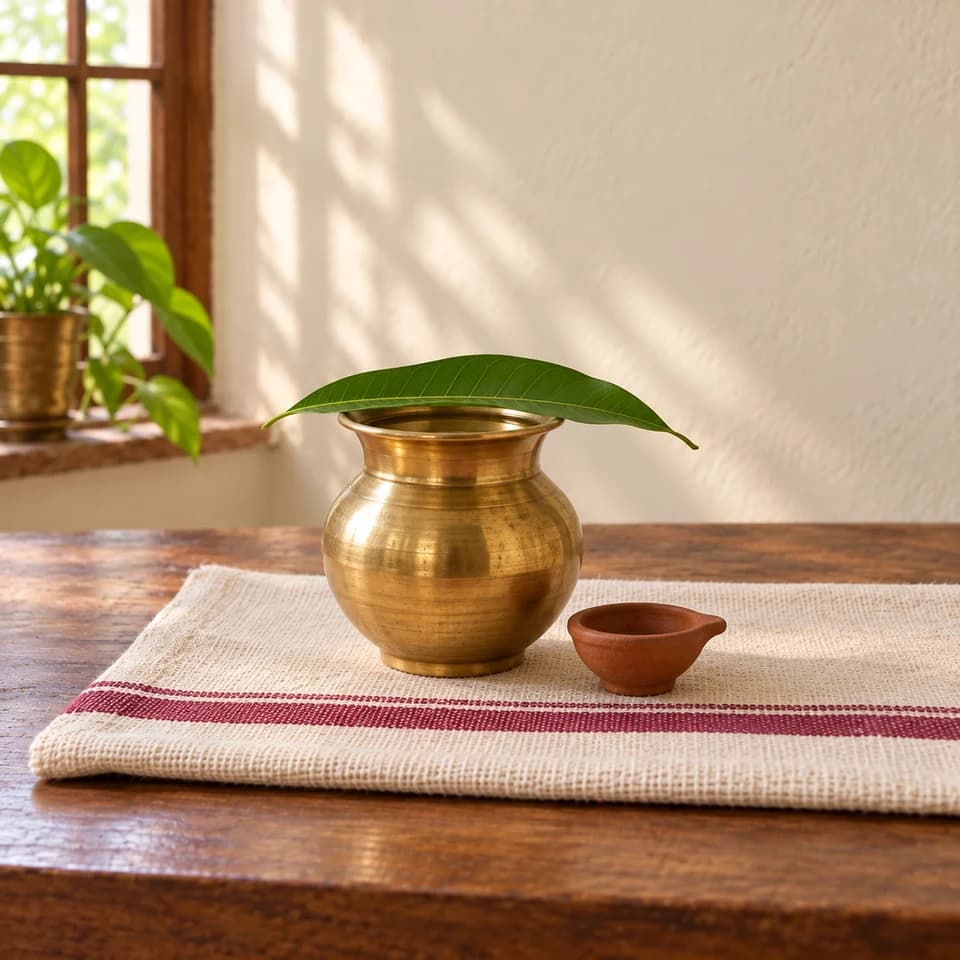
Ram Navami as it falls in 2033.
Next date: 15 April 2027Ram Navami 2033
Thursday, 7 April 2033, in Ahmedabad
FestivalGujarati · Hindu
Panchang on the day
7
Thursday
Waxing Eighth
until 09:08
Gemini
- કKa
- છChha
- ઘGha
Puja time
11:26 to 13:57
At midday, IST
- Sunrise
- 06:25
- Sunset
- 18:58
- Moonrise
- 12:55
- Nakshatra
- Punarvasu
- until 16:52
- Yoga
- Sukarma
- until 04:20 next day
- Karana
- Bava
- until 09:08
- Rahu Kalam 14:16 to 15:50
- Yamaganda 06:25 to 07:59
- Abhijit muhurat 12:16 to 13:07
Why this date
Chaitra Waxing Ninth, taken at midday
Runs from 7 Apr 09:08 IST to 8 Apr 10:29 IST.
In short
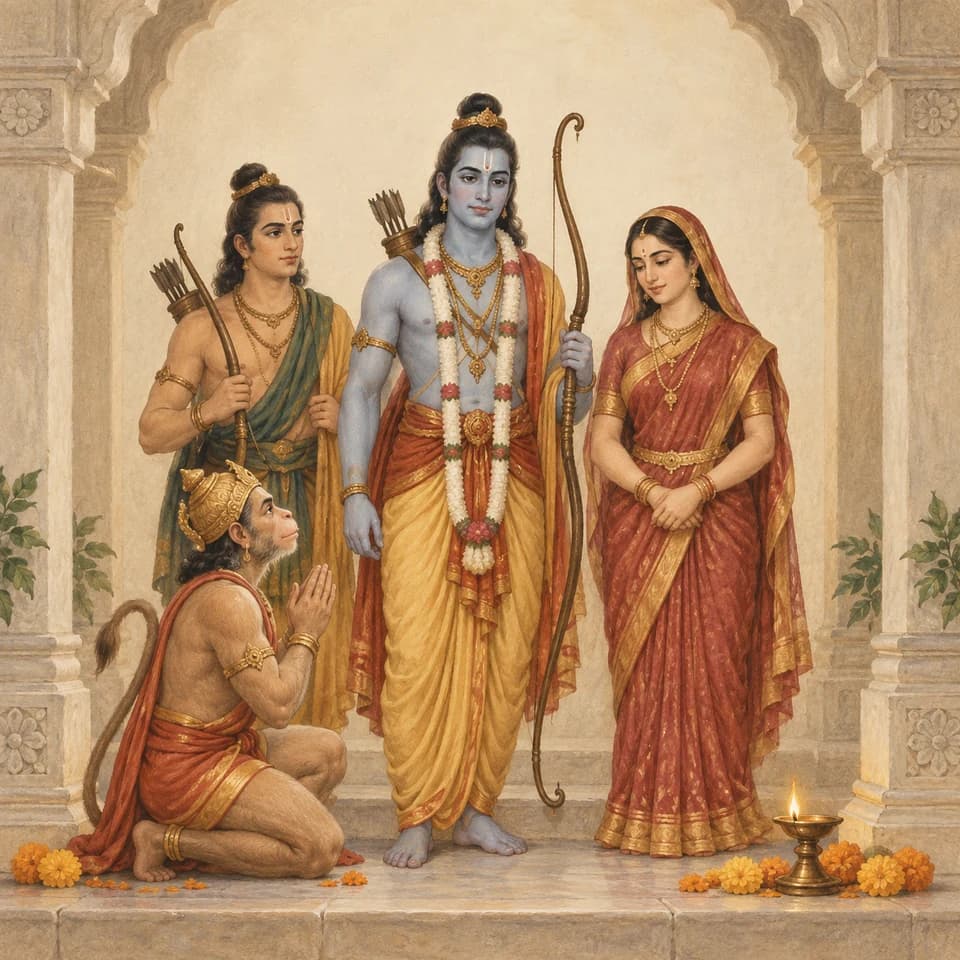
Ram Navami celebrates Rama’s birth. In Gujarat it falls on Chaitra Sud Nom. The birth story begins with King Dasharatha of Ayodhya and his wish for children.
The story
Dasharatha ruled Ayodhya. He had three queens, Kaushalya, Kaikeyi and Sumitra, but no children. He worried about who would carry on his family after him. He called his ministers and sages and told them he wanted to hold a sacrifice to seek children.
His minister Sumantra remembered something he had heard from sages. He told Dasharatha that a sacrifice conducted under Rishyasringa’s guidance would bring him children. Rishyasringa was living in Anga. His wife Shanta had grown up in King Romapada’s family there.
Dasharatha went to Anga and met Romapada. He asked for Rishyasringa and Shanta to come and stay in Ayodhya. Romapada agreed, and they travelled back with Dasharatha. Preparations began beside the Sarayu. After the Ashvamedha rites, Rishyasringa conducted a special sacrifice for the king to have children.
At the same time, the gods took a difficulty of their own to Brahma. Ravana, the king of Lanka, was using his power to torment them. Brahma remembered the boon he had given Ravana. Ravana had asked for protection from the gods and many powerful beings. He thought humans so weak that he had never asked for protection from them.
The gods asked Vishnu to be born as a human and bring Ravana’s oppression to an end. Vishnu agreed and chose Dasharatha’s family. In Ayodhya the king was waiting for a child, while the gods were waiting for relief from Ravana.
A divine being emerged from the sacrificial fire carrying a vessel of payasa. He gave it to Dasharatha and told him to share it among his queens. The king took it to them and gave half to Kaushalya. From what remained he gave a portion to Sumitra and a portion to Kaikeyi. He gave the last portion to Sumitra again.
All three queens accepted the payasa. Time passed, and the moment Dasharatha’s household had awaited arrived. On the ninth day of Chaitra, Kaushalya gave birth to Rama. Kaikeyi then gave birth to Bharata, and Sumitra had two sons, Lakshmana and Shatrughna.
Ayodhya rejoiced at the birth of the four princes. There was music and celebration, and Dasharatha gave gifts in charity. At the naming ceremony, Vasishtha named the children. The brothers grew up together. Lakshmana was especially attached to Rama, and Shatrughna was close to Bharata. The house where Dasharatha had waited for one child was now home to four brothers.
Why it matters
Honours Rama's birth and invites reflection on duty, truthfulness, compassion and responsible leadership.
What people do
Devotees recall the joy of Rama’s birth through worship at home and in temples. They sing bhajans, read the Ramayana or listen to the birth story. In many places the birth worship takes place around midday, and an image of baby Rama is rocked in a cradle.
Told differently elsewhere
Celebrated across India and in overseas Hindu communities. Ayodhya has major temple gatherings; processions are common in parts of northern India. Some Maharashtrian temples hold a cradle ceremony, and Tamil traditions may offer panakam, a jaggery-and-pepper drink. Local customs differ; many communities connect the day with Chaitra Navratri.
Questions people ask
- When is Ram Navami in 2033?
- On Thursday, 7 April 2033 in India. Runs from 7 Apr 09:08 IST to 8 Apr 10:29 IST.
- Why does the date change every year?
- It is kept by the lunar calendar, so its day on the civil calendar moves from year to year.
- Is the date the same everywhere?
- Yes. It is kept everywhere on the day it falls on in India.