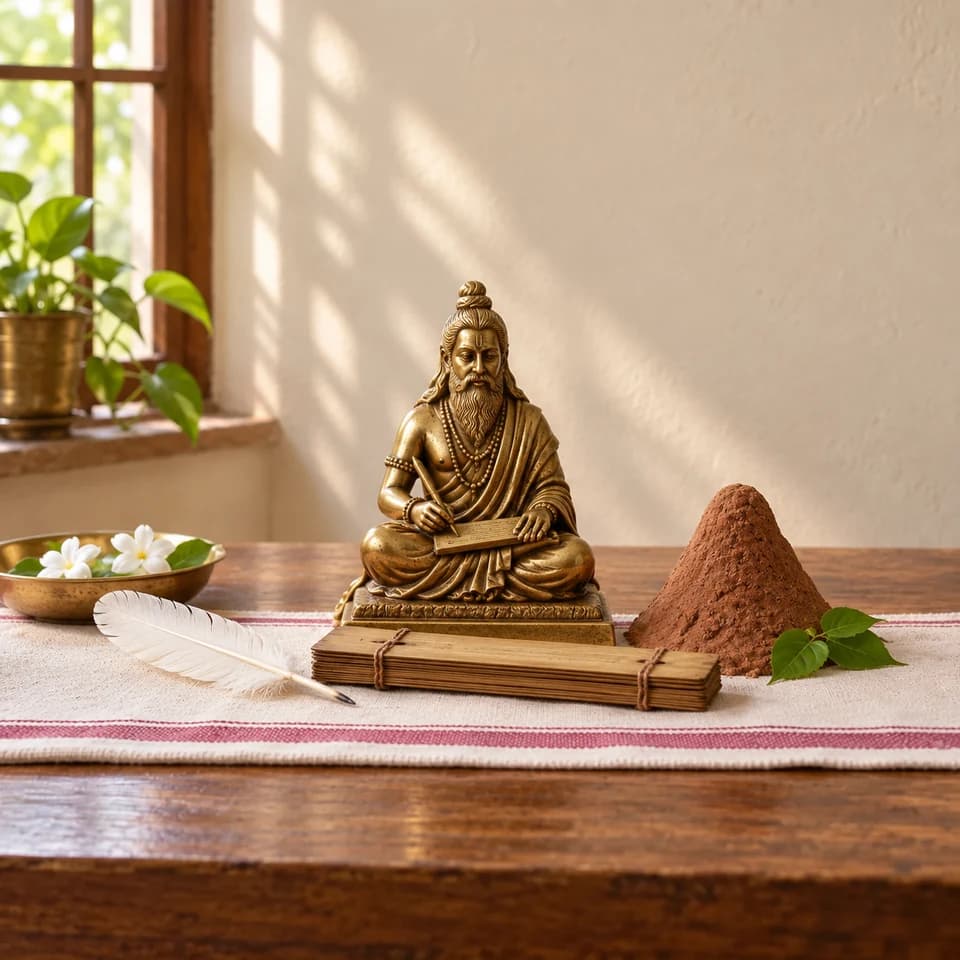
Sharad Purnima as it falls in 2029.
Next date: 14 October 2027Sharad Purnima 2029
Sunday, 21 October 2029, in Ahmedabad
Full moonGujarati · Hindu
Panchang on the day
21
Sunday
Waxing Fourteenth
until 12:32
Pisces
- દDa
- ચCha
- ઝJha
- થTha
Puja time
23:59 to 00:49
At the middle of the night, IST
- Sunrise
- 06:37
- Sunset
- 18:10
- Moonrise
- 17:20
- Nakshatra
- Revati
- until 04:51 next day
- Yoga
- Vyaghata
- until 07:57
- Karana
- Vanija
- until 12:32
- Rahu Kalam 16:43 to 18:10
- Yamaganda 12:24 to 13:50
- Abhijit muhurat 12:01 to 12:47
Why this date
Aso Full Moon, taken at the middle of the night
Runs from 21 Oct 12:32 IST to 22 Oct 14:57 IST.
In short
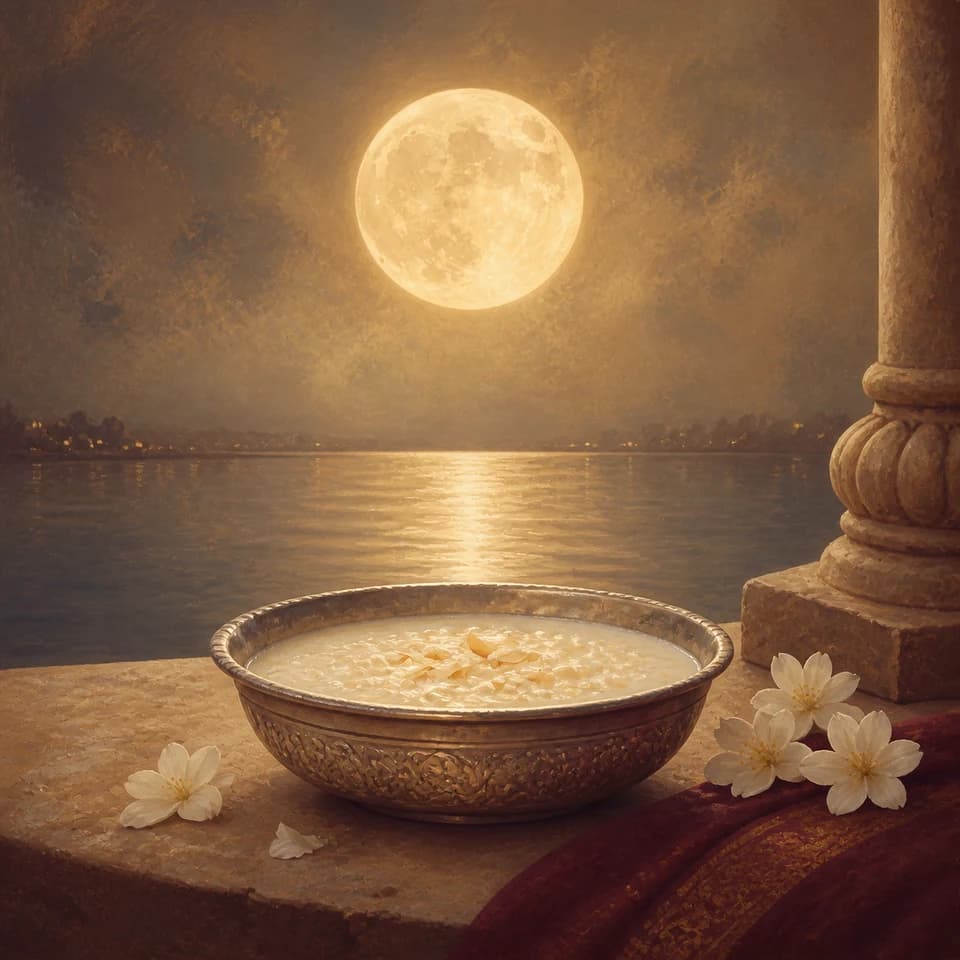
On the moonlit full-moon night of Aso, Sharad Purnima is celebrated with devotional songs, Raas and offerings in remembrance of Shri Krishna's Maharasa. In some regions, Kojagari Lakshmi worship and an overnight vigil are also observed.
The story
It was an autumn night. Jasmine had blossomed in the forest. The moon rose in the east, spreading its light through Vrindavan, and the night-blooming lotuses opened. Seeing the beauty of the night, Shri Krishna called upon his divine power, Yogamaya, and began to play his flute. The gopis of Vraja heard its melody. Their hearts were already devoted to Krishna, and now they left everything and set out to meet him.
One left a cow half-milked. Another had milk or food on the stove and did not even stop to take it off. Some were feeding their babies, serving their families or eating their own meals. Others had not finished dressing. In their hurry, some put on their clothes and ornaments the wrong way round. Husbands, fathers, brothers and other relatives tried to stop them, but their hearts were drawn towards Krishna. Some gopis could not leave their homes at all. They closed their eyes and meditated on him. The Bhagavata says that the pain of separation and the joy of meeting him in meditation freed them from the bonds of karma. Released from bodily bondage, they attained Krishna.
Hearing this, King Parikshit asked Shukadeva how the gopis had attained liberation when they loved Krishna as their beloved, without recognising him as the Supreme. Shukadeva explained that Krishna was no ordinary human being. Even Shishupala, who constantly thought of him out of hatred, had attained him. How much more, then, could be said of those whose minds rested on him in love? Explaining the gopis' love through their relationship with the Lord, Shukadeva continued.
Krishna welcomed the gopis who had reached the forest and asked whether all was well in Vraja. He then reminded them that it was night, wild animals roamed the forest and their families would be looking for them. Children and calves would be waiting too. He told them to return home and care for their families. He also explained that devotion could grow through hearing of his qualities, singing his names and meditating on him. Being physically beside him was not the only way.
His words saddened the gopis. They lowered their heads. One scratched the ground with her toe, and tears carried the kohl down their cheeks. After a while, they told Krishna what was in their hearts. They had left everything for him. Now that he was asking them to go back, neither their hearts nor their feet could obey. He was the indwelling soul and the dearest of all, so even their love for their relatives had its source in him. His flute, smile and loving glance had won their hearts. They begged him to accept them lovingly and not disappoint the hope they had cherished for so long.
Hearing their loving plea, Krishna smiled and walked with them along the Yamuna. A cool breeze blew, and the sand gleamed in the moonlight. The gopis sang of his qualities, and he sang with them. Laughter, affectionate glances and tenderness filled the night with joy. But this happiness made the gopis feel that their good fortune surpassed everyone else's. They began to think they had received the greatest honour. To quiet this pride, Krishna disappeared.
When Krishna vanished, the gopis became restless. Remembering the way he walked, laughed, looked at them and spoke, they searched the forest. They asked the trees, Tulsi plants, flowering shrubs, creepers and deer whether they had seen him. Looking at the grass, they imagined the earth trembling with delight at the touch of his feet. Trees bent beneath their fruit seemed to bow to him, and the creepers seemed to bloom from his touch. All their thoughts were with Krishna.
As they searched, the gopis began acting out Krishna's childhood deeds. One became Putana and another the infant Krishna. Some enacted the breaking of the cart, while one played Trinavarta and lifted another. Some crawled like a baby. Two played Krishna and Balarama, and others their cowherd friends. They acted out the defeat of Vatsasura and Bakasura. One called the cows and pretended to play the flute. Another raised her upper cloth in one hand to show Krishna lifting Govardhan. Some enacted his dance on Kaliya's heads. One told the others to close their eyes to be saved from the forest fire. Another tied a gopi with a flower garland, remembering the child Krishna bound to the mortar. Every memory of him returned as they searched.
Then they found Krishna's footprints on the ground. They recognised the marks of a flag, lotus, thunderbolt, elephant goad and barley on his feet. A little farther on, a gopi's footprints appeared beside his. They thought she must have worshipped the Lord with such devotion that he had taken her away alone. Then her footprints disappeared, while his sank deeper into the ground. They guessed that grass or thorns had hurt her feet, so Krishna had carried her. Elsewhere, marks from the front of his feet suggested that he had stood on tiptoe to pick flowers. At another spot, signs of sitting made them imagine him weaving flowers into her hair. Following these traces, they tried to work out where the two had gone.
The gopi who had gone with Krishna also became proud, thinking herself the most loved. She told him she could walk no farther and asked him to carry her. Krishna invited her to climb onto his shoulder. But as she tried to do so, he disappeared. Left alone, she cried out for him in distress. The other gopis found her in this sorrowful state. She told them everything that had happened, and together they resumed the search. They went as far as the moonlight let them see the path. When they reached deep darkness, they turned back and gathered on the bank of the Yamuna.
The gopis now began to sing together in remembrance of Krishna. This is the Gopi Gita. They sang that Vraja's good fortune had blossomed with his birth, yet the gopis searching for him survived only in the hope of seeing him. His glance was as lovely as an autumn lotus. Having won their hearts with that glance, he should not abandon them like this. They recalled how he had saved the people of Vraja from poisoned water, demons, storms, heavy rain and other dangers. He was more than Yashoda's son. He was the Lord who knew every heart. They prayed that he would understand their sorrow too.
In their song they remembered Krishna's hands, smile, gentle voice and feet. They asked him to place on their heads the hand that gave courage to those seeking his protection. They longed to hold against their hearts the feet that followed the cows through the forest and had danced upon Kaliya's hoods, easing the pain of separation. His words and stories gave life to those in distress, they sang, and those who shared these stories gave a great gift. Remembering the flute touched by his lips and their sweet conversations made their longing to meet him still stronger.
When Krishna went to the forest with the cows by day, the gopis worried that stones or sharp grass might hurt his tender feet. They remembered him returning in the evening, with the dust of the cows upon his hair and face. When he was absent, a moment felt as long as an age. When he stood before them, they could hardly bear even the blink of an eye that hid his face. They had left their families at the call of his flute. Was it right to leave them alone on such a night? Once more they thought of his delicate feet. They were careful even when holding those feet against their hearts, yet he might now be walking on rough forest paths. With this thought, they called on him to return and relieve their pain.
After finishing their song, the gopis wept aloud. At that very moment, Krishna appeared among them, wearing yellow garments and a flower garland, with a smile on his face. They rose as if life had returned to their bodies. One held his hand. Another placed his arm on her shoulder. One took his feet in her lap. Another still watched him with a hurt, reproachful look. One gazed at his face without blinking, while another closed her eyes and embraced him in her heart. Each expressed her feelings differently, but all rejoiced to have him back.
Krishna sat with the gopis on the Yamuna's soft sand, where a breeze carried the fragrance of flowers. They spread their upper garments as a seat for him. Some attended to his hands and others to his feet. Alongside their joy, they still felt hurt that he had left them. They asked him about three kinds of people. Some loved only those who loved them, some loved even without receiving love in return, and some loved no one. What was the difference?
Krishna explained that love offered only in exchange for something carried self-interest. Compassionate people and parents could love without expecting a return. Others might seek no outward relationship because they were content within themselves or had every wish fulfilled. Still others forgot a kindness or turned against the person who had helped them. But he had not been cruel to the gopis, he said. Just as a poor person who found and then lost some wealth could think of nothing else, he had disappeared so that their minds would remain wholly with him. Even while unseen, he was close and knew their love. They had left everything for him. He acknowledged that he could not repay their pure devotion even in the longest lifetime. Their own goodness and love would have to be their reward.
Krishna's words eased the gopis' anguish. They joined hands and formed a circle for the Raas. Krishna appeared between every pair of gopis, and each felt that he stood beside her. The gods came in their celestial vehicles to watch. Flowers showered from above, divine drums sounded and the Gandharvas sang. The Maharasa of Krishna and the gopis began on the bank of the Yamuna.
The gopis' anklets, bracelets and waist bells rang with the dance. Movements of hands, steps, smiles and song came together. As they danced, their braids loosened and sweat appeared on their faces. One sang in such beautiful harmony with Krishna that he praised her. Another delighted him with her rhythmic singing. A tired gopi held his shoulder, while another lovingly drew his sandalwood-scented arm close. Krishna shared his affection with each of them. Shukadeva says that, though Krishna was fulfilled in himself, he performed this pastime like a child playing with its own reflection.
Krishna's many forms danced among the gopis. The story describes even the moon and the stars accompanying it as astonished by the sight. When the gopis tired, Krishna tenderly wiped the sweat from their faces. They then entered the Yamuna. Laughing, the gopis splashed water at Krishna, and he played with them as flowers continued to shower from above. Afterwards, they walked through the groves on the riverbank. A breeze carried the fragrance of flowers growing in the water and on the land. The night passed in the Raas, water play and walks through the groves.
At this point, King Parikshit asked another question. Why had Krishna, the establisher and protector of dharma, shared such a pastime with other men's wives? Shukadeva explained that the Lord's divine deeds should not be treated as ordinary human conduct and imitated. Shiva could drink the poison that emerged from the ocean, but another person trying to do the same would not survive. A wise person should follow the Lord's teachings. Shukadeva described Krishna as the Supreme dwelling within the gopis, their husbands and every living being. He appeared in human form out of compassion and performed deeds whose telling would draw people's minds towards him.
Shukadeva also said that, through Krishna's Yogamaya, the husbands in Vraja felt that their wives were beside them, so they bore Krishna no ill will. As the night drew to an end, Krishna allowed the gopis to return home. Though their hearts were reluctant to leave, they obeyed him and went back. Shukadeva ended by describing the fruit of hearing the account. A person who faithfully listens to or recounts this pastime can gain deep devotion to the Lord and overcome the hold of desire upon the heart.
Why it matters
The Maharasa story brings together love for the Lord, the pain of separation, the fading of pride and the joy of reunion. Shukadeva connects its ending with devotion and overcoming the heart's desires. In the separate Kojagari tradition, Lakshmi worship, the night vigil and prayers for the family's well-being and prosperity are central.
What people do
Temples hold darshan of Shri Krishna, devotional singing and Raas celebrations. Families gather in the moonlight to sing and offer doodh-pauva, kheer or prasad according to their tradition. Those observing Kojagari worship Lakshmi and stay awake at night. Worship and offerings vary by household and region.
Told differently elsewhere
In Gujarat, the festival is known as Sharad Poonam. Doodh-pauva offerings, devotional singing and Raas are familiar customs. The Swaminarayan tradition also celebrates Gunatitanand Swami's birth anniversary on this day. In the Krishna traditions of Vraja and Vrindavan, this night is especially associated with the Maharasa.
In Bengal, Kojagari Lakshmi Puja is held on this full moon. In Maharashtra, Lakshmi worship, an overnight vigil and a milk offering are customary on Kojagiri Purnima. The familiar explanation of Kojagari is 'Who is awake?' There is a belief that Lakshmi visits devotees who remain awake that night.
In Odisha, the full moon of Aso is also celebrated as Kumar Purnima. Lakshmi Puja takes place in Cuttack, Choudwar and Banki. In Kendrapara, the community Gaja Lakshmi Puja festival begins on Kumar Purnima. These local celebrations have their own customs.
Questions people ask
- When is Sharad Purnima in 2029?
- On Sunday, 21 October 2029 in India. Runs from 21 Oct 12:32 IST to 22 Oct 14:57 IST.
- Why does the date change every year?
- It is kept by the lunar calendar, so its day on the civil calendar moves from year to year.
- Is the date the same everywhere?
- Yes. It is kept everywhere on the day it falls on in India.
Dates in the coming years
- 2027Thursday, 14 OctoberAso Poonam · Puja 00:01
- 2028Monday, 2 OctoberAso Poonam · Puja 00:04
- 2029Sunday, 21 OctoberAso Poonam · Puja 23:59
- 2030Thursday, 10 OctoberAso Poonam · Puja 00:02
- 2031Wednesday, 29 OctoberAso Poonam · Puja 23:58
Last kept25 October 2026