In short
Shattila Ekadashi is a Ekadashi vrat observed according to the Hindu calendar. Its date and customary practices can vary by region and local Panchang.
The story
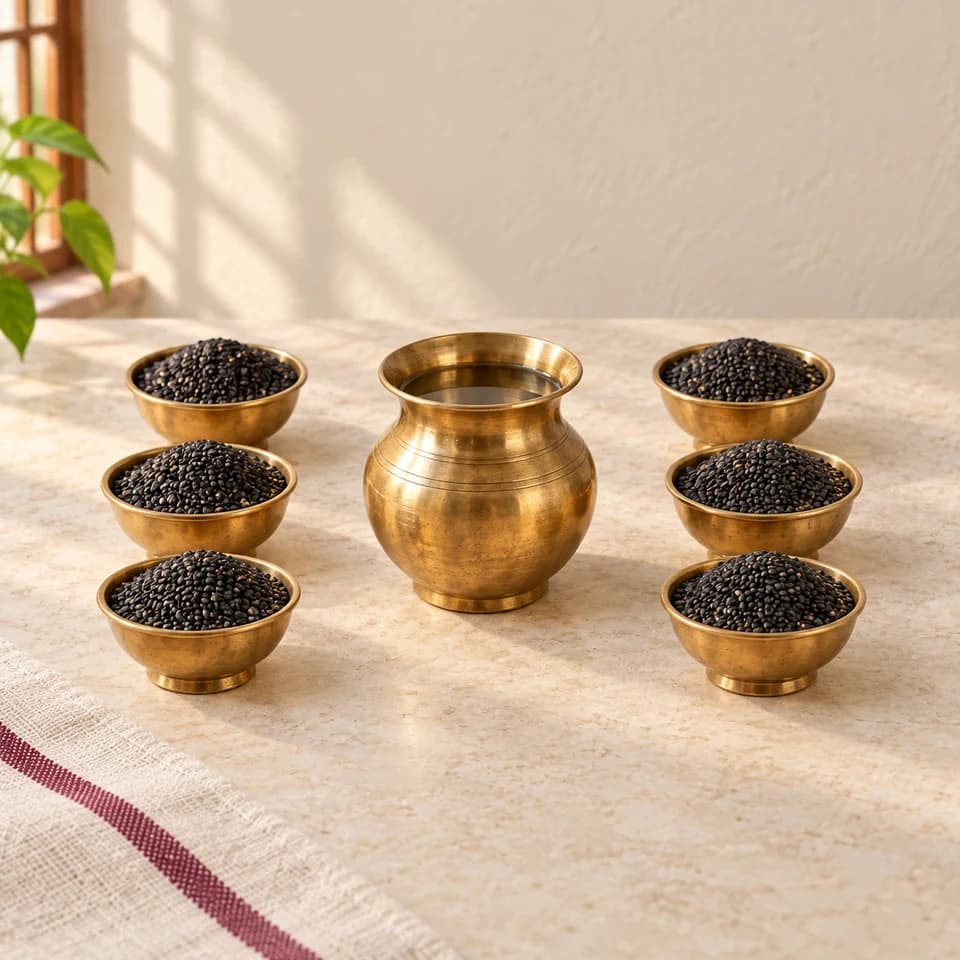
Shattila Ekadashi takes its name from six traditional uses of tila, sesame—bathing with it, applying it to the body, offering sesame-water, using it in homa, eating it and giving it in charity. Its katha tells of a deeply religious Brahmin woman who performed severe fasts but rarely gave food or useful gifts to others. Vishnu, wishing to teach her that austerity without generosity is incomplete, came disguised as a mendicant asking for alms. She gave only a lump of clay. After death she reached a heavenly dwelling through her religious merit, but found it empty of food and provisions. She then learned and observed Shattila Ekadashi, combining devotion with sesame and charity, and her home became abundant. The story makes dana essential to the vrata: spiritual discipline is not only self-denial but also sharing nourishment and resources with others.
Retold from the Padma Purana
Why it matters
Sesame six ways - in the bath water, in the fire, in the food, given away, eaten and offered. Kept in the cold of Magh, when sesame and jaggery are what the season eats anyway.
Fasting
Sesame six ways, and it is the giving that the day is for. Til and jaggery are given away, and in Gujarat this falls in the fortnight after Uttarayan when the same two are already in every house.
Retold from the Gujarati household practice
This text has not been checked by a reviewer yet.

Tithi Calendar on your phone
The panchang for your own city, with the choghadiya, festivals and reminders. It works without the internet.