Sita Navami as it was kept in 2011.
Next date: 14 May 2027Sita Navami 2011
Thursday, 12 May 2011, in Ahmedabad
Birth anniversaryIndian · Hindu
Sita Jayanti
Panchang on the day
12
Thursday
Waxing Ninth
until 10:58
Leo
- મMa
- ટTa
Puja time
11:16 to 13:55
At midday, IST
- Sunrise
- 05:59
- Sunset
- 19:13
- Moonrise
- 13:58
- Nakshatra
- Magha
- until 07:55
- Yoga
- Dhruva
- until 07:20
- Karana
- Kaulava
- until 10:58
- Rahu Kalam 14:15 to 15:54
- Yamaganda 05:59 to 07:38
- Abhijit muhurat 12:09 to 13:02
Why this date
Vaishakh Waxing Ninth, taken at midday
Runs from 11 May 13:09 IST to 12 May 10:58 IST.
In short
Sita Navami, also called Janaki Navami, celebrates Sita's appearance on the ninth day of the bright half of Vaishakha. King Janaka of Mithila found a girl in a ploughed furrow, and she became known as Sita. This is the Valmiki Ramayana account from her discovery through her marriage to Rama.
The story
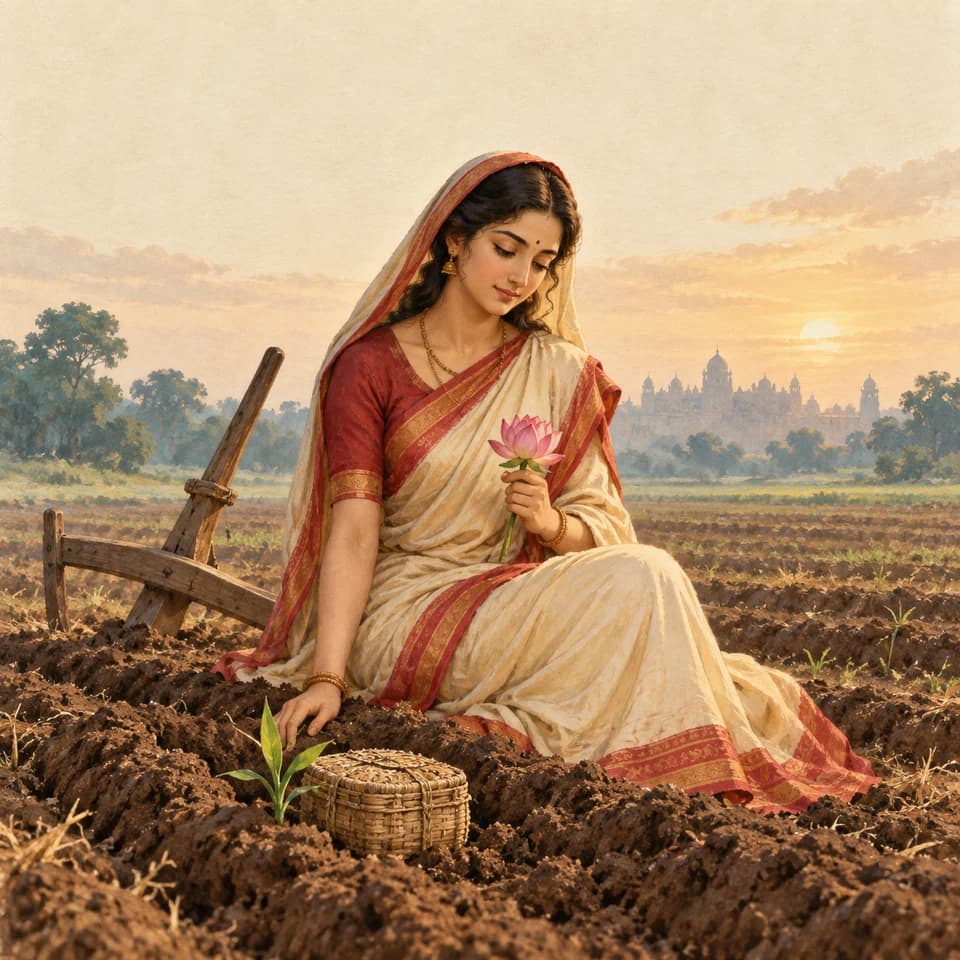
King Janaka of Mithila was once ploughing land to prepare it for a sacrifice. As the plough moved through the soil, a little girl appeared from the earth. Janaka accepted her as his daughter. A furrow made by a plough is called sita; the daughter found in that furrow became known as Sita. Though she had not been born from a mother's womb in the usual way, she grew up in Janaka's home as his own daughter.
When Sita grew up, Janaka made a vow concerning her marriage. The bridegroom's valour would be the test. The royal family possessed an extraordinary bow belonging to Shiva. A warrior who could lift and string it would marry his daughter. Sita was dearer to Janaka than his own life, and he wished to find a worthy husband according to his vow.
The gods had entrusted this bow to Janaka's ancestor Devarata. Long before, at Daksha's sacrifice, Shiva had become angry at not receiving his share. He had drawn this bow and spoken of punishing the gods. Their prayers calmed his anger. Shiva gave them the bow, and they later placed it in the care of Janaka's ancestor. Since then, Janaka's lineage had worshipped and protected it.
Many kings came to Mithila hoping to marry Sita. Janaka told them of his vow. Shiva's bow was brought out to test their strength. But no king could even lift and handle it. Janaka did not abandon his promise and marry his daughter to one of them.
Feeling insulted, the kings became angry. They laid siege to Mithila and began troubling the city. The siege lasted a whole year. The city's resources and essential supplies grew scarce. Janaka was deeply distressed.
At last, Janaka pleased the gods through penance. They gave him an army of elephants, horses, chariots and foot soldiers. With this help, the attacking kings were defeated and fled with their companions. Mithila was freed from the siege, but Janaka's vow was still unfulfilled.
Later, sage Vishvamitra came to Mithila with Rama and Lakshmana, the two sons of King Dasharatha of Ayodhya. One morning, Janaka respectfully welcomed the sage and the princes and asked what he could do for them. Vishvamitra said that these two sons of Dasharatha wished to see the remarkable bow in his possession.
Janaka told Vishvamitra the bow's history, Sita's discovery and his vow for her marriage. He also described the earlier kings' failure and the siege of Mithila. He then said that if Rama could string the bow, he would give his daughter Sita in marriage to him.
Vishvamitra asked for the bow to be brought. At Janaka's command, the ministers went to its place of keeping. It lay in a great iron chest with eight wheels. Five thousand strong men pulled it forward with great effort. Sandalwood and flower garlands adorned it. The chest was placed before everyone.
Janaka again explained that his royal ancestors had worshipped this very bow and that even mighty kings had been unable to wield it. Vishvamitra told Rama to examine it. Rama opened the chest and looked at the bow. He asked permission to touch and lift it and attempt to string it.
The king and the sage gave permission. Rama easily grasped the bow in the middle. As thousands watched, he lifted it and fitted the string. When he drew the string, the bow broke in the middle.
The sound was like a thunderclap. The earth shook as though a great mountain had split apart. Everyone present except Vishvamitra, Janaka, Rama and Lakshmana fainted at the tremendous noise. After a while, they regained consciousness and recovered.
Janaka was astonished by Rama's feat. With folded hands, he told Vishvamitra that he had now seen the extraordinary strength of Dasharatha's son for himself. His vow had been fulfilled. He said that Sita's marriage to a husband like Rama would bring honour to his family.
With Vishvamitra's approval, Janaka decided to send messengers to Ayodhya. They would tell Dasharatha everything, assure him that Rama and Lakshmana were safe in the sage's care, and invite him to Mithila for the marriage. Vishvamitra agreed, and the messengers set out in chariots.
After spending three nights on the road, the messengers reached Ayodhya. With Dasharatha's permission, they entered the palace and respectfully delivered Janaka's message. They said that Rama had strung and broken Shiva's bow and that Janaka wished to marry his daughter to him. They invited Dasharatha to Mithila with his family, teachers and priests.
Dasharatha was delighted to hear news of his sons and the marriage invitation. He consulted Vasishtha, Vamadeva and his ministers. They all accepted the match. Dasharatha ordered preparations to leave for Mithila the very next day.
Dasharatha set out with teachers, sages and relatives. Wealth, jewels and wedding supplies were sent ahead. Arrangements were made for the army and transport too. After four days of travel, they reached Videha. Janaka welcomed them respectfully. Dasharatha was happy to be reunited with Rama and Lakshmana.
Janaka also invited his younger brother Kushadhvaja to share in the wedding celebrations. Kushadhvaja ruled in the city of Sankashya. On receiving the message, he arrived and bowed to the sages and elders. At the meeting of the two families, Vasishtha recounted Dasharatha's lineage, and Janaka described his own.
Janaka agreed to Sita's marriage to Rama and his other daughter Urmila's marriage to Lakshmana. Vishvamitra and Vasishtha suggested matches for Kushadhvaja's two daughters as well. Mandavi would marry Bharata, and Shrutakirti would marry Shatrughna. Janaka and Kushadhvaja were pleased with these alliances. Preparations were made for all four weddings on the same day.
Dasharatha performed the rites preceding the marriages and honoured the ancestors. He donated cows and wealth in his sons' names. At the proper time, all four princes came to the wedding pavilion. Janaka asked Vasishtha to conduct the marriages together with the other sages.
With Vishvamitra and Shatananda, Vasishtha prepared the sacrificial altar in the pavilion. Sandalwood, flowers, vessels containing sprouts, sacred pots, incense and worship materials adorned it. Darbha grass was spread, the sacred fire established, and offerings made with mantras.
Janaka then brought Sita, adorned with ornaments, to Rama before the fire. Introducing his daughter, he said that she would be Rama's companion in life's duties and dharma. He asked Rama to accept her and take her hand. He blessed them, speaking of Sita's devotion to her husband and her companionship like a shadow. Then he offered water sanctified by mantras and performed the marriage rite.
The gods and sages expressed their joy. Flowers showered from the sky, and celestial drums sounded. Janaka asked Lakshmana to accept Urmila's hand. He then called Bharata to marry Mandavi and Shatrughna to marry Shrutakirti. Following Vasishtha's guidance, the four princes took the hands of their brides.
The four couples walked around the fire, the altar, Janaka and the sages, and completed the other marriage rites. Amid songs and instrumental music, Gandharvas sang and celestial women danced. With three circuits around the fire, the four weddings were completed.
After the marriages, Rama, Lakshmana, Bharata and Shatrughna went with their wives to their lodging. Dasharatha, the sages and relatives followed. The girl Janaka had found in the earth and raised as his daughter was now Rama's life companion. The two families of Mithila and Ayodhya were joined through these marriages.
Why it matters
Janaka accepts Sita as his own daughter even though he finds her in the earth. Her story is associated with the earth, parental affection and keeping one's promise. At the wedding, Janaka introduces Sita as Rama's companion in dharma and duties. On Sita Navami, devotees remember her appearance and the bond between Sita and Rama.
What people do
Devotees worship Sita and Rama, offer flowers and prasad, and read or listen to the Ramayana. Temples hold ceremonial bathing and devotional singing according to their traditions. Some devotees observe a vow and give charity according to their means.
Many traditions remember Sita's appearance at midday on the ninth day of the bright half of Vaishakha. Exact worship timings follow the local calendar and temple programme; one clock time does not apply everywhere.
Told differently elsewhere
In Mithila, Sita is remembered with special affection as the region's daughter Janaki. The local traditions of Sitamarhi and Punaura Dham in Bihar are associated with her appearance. Devotees visit the Janaki temples there for worship on Sita Navami.
The Janaki temple in Janakpur, Nepal, is an important centre of devotion to Sita. Its Vivaha Mandap also recalls Sita and Rama's marriage. Sita Navami, the appearance celebration, and Vivaha Panchami, the wedding celebration, are separate occasions. Consult the local programme for temple festivals.
Some calendar traditions also mark Janaki Jayanti on the eighth day of the dark half of Phalguna. In the amanta month system, that same day may be called the eighth day of the dark half of Magha. It should not be assumed to be the same date as Sita Navami in the bright half of Vaishakha.
Questions people ask
- When is Sita Navami in 2011?
- On Thursday, 12 May 2011 in India. Runs from 11 May 13:09 IST to 12 May 10:58 IST.
- Why does the date change every year?
- It is kept by the lunar calendar, so its day on the civil calendar moves from year to year.
- Is the date the same everywhere?
- Yes. It is kept everywhere on the day it falls on in Ayodhya.