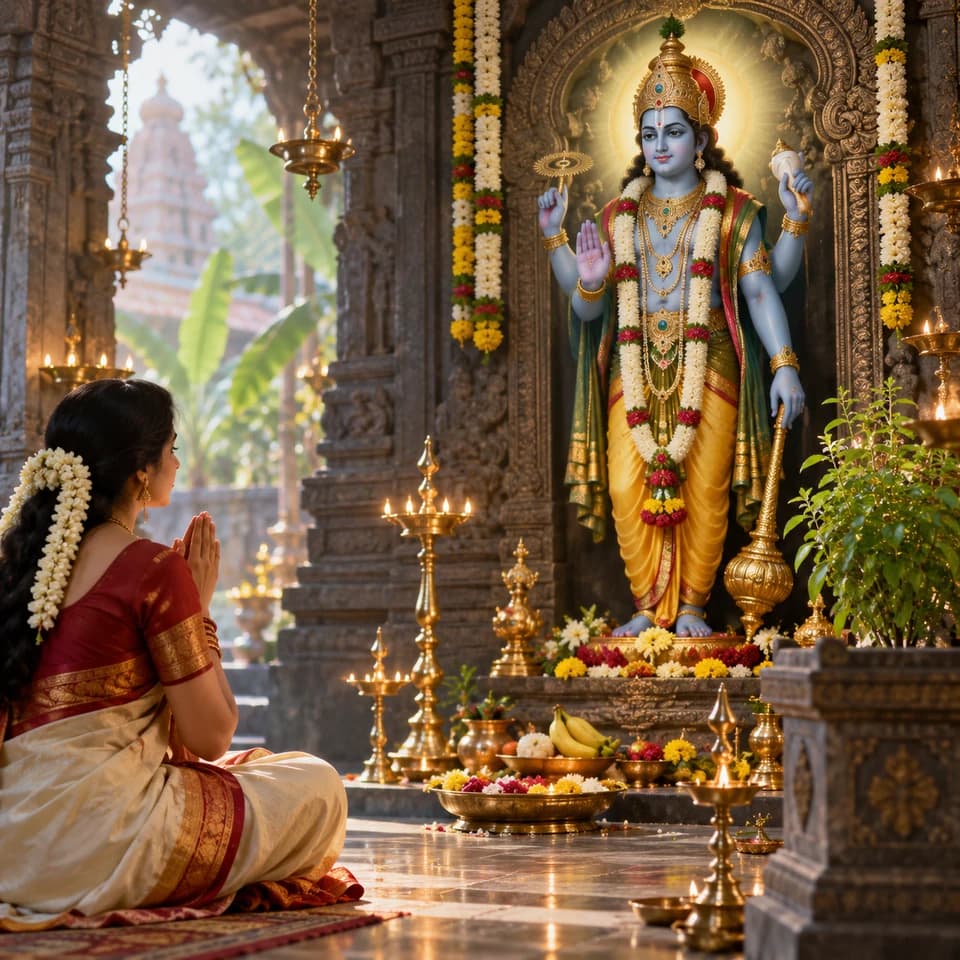
EkadashiGujarati · Hindu
Utpanna Ekadashi
Next date
Friday, 4 December 2026
- Tithi at sunrise
- Waning Eleventhuntil 23:45
- Nakshatra
- Hastauntil 10:22
- Lunar month
- KartikMargshirsh in the purnimanta reckoning
- Sunrise
- 07:04Sunset 17:54
In short
Utpanna Ekadashi is a Ekadashi vrat observed according to the Hindu calendar. Its date and customary practices can vary by region and local Panchang.
The story
Utpanna Ekadashi carries the origin legend of Ekadashi itself. The story tells of the powerful demon Mura, who defeated the gods and continued fighting Vishnu even after other demons were destroyed. After a prolonged battle, Vishnu withdrew to a cave at Badrikashrama to rest. Mura followed, intending to attack the sleeping Lord. At that moment a radiant warrior goddess emerged from Vishnu’s divine energy and killed Mura. When Vishnu awoke, he was pleased with her courage and invited her to ask for a boon. She requested that those who fast and worship on her lunar day be freed from wrongdoing and progress toward liberation. Vishnu named her Ekadashi because she had manifested on the eleventh tithi. Utpanna—“born” or “manifested”—therefore celebrates the emergence of Ekadashi as a personified spiritual power and explains why fasting, vigilance and Vishnu devotion are central to the tradition.
Retold from the Padma Purana
Why it matters
The origin story of the ekadashi itself: Ekadashi is said to have been born from Vishnu on this day to defeat the asura Mura. Traditionally the day somebody keeping ekadashis begins.
Fasting
The one to begin on. Those taking the vrat for life keep this as the first of the twenty-four, and the fast is the full one - a single meal on the tenth, nothing on the eleventh, and the parana on the twelfth.
Retold from the Gujarati household practice
This text has not been checked by a reviewer yet.

Tithi Calendar on your phone
The panchang for your own city, with the choghadiya, festivals and reminders. It works without the internet.