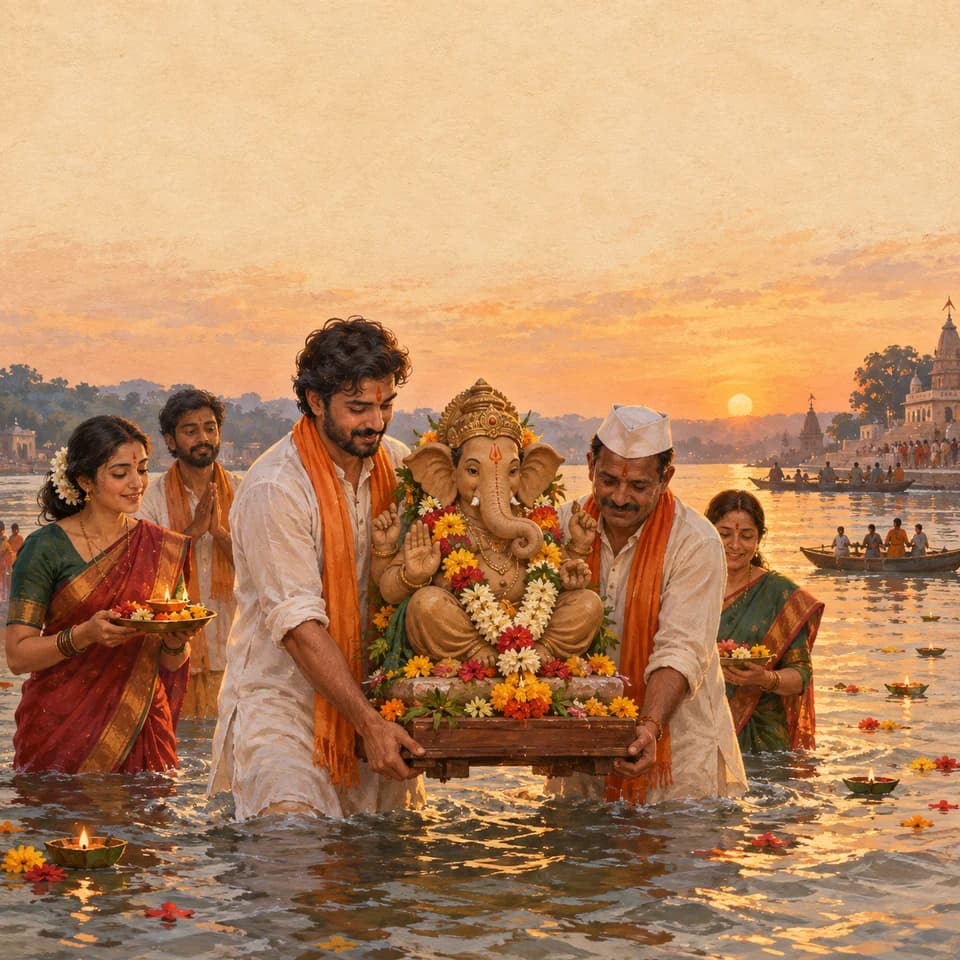
Vamana Jayanti as it was kept in 2025.
Next date: 12 September 2027Vamana Jayanti 2025
Thursday, 4 September 2025, in Ahmedabad
Birth anniversaryGujarati · Hindu
Panchang on the day
4
Thursday
Waxing Twelfth
until 04:08 next day

Capricorn
- ખKha
- જJa
- Sunrise
- 06:21
- Sunset
- 18:55
- Moonrise
- 16:42
- Nakshatra
- Uttara Ashadha
- until 23:43
- Yoga
- Saubhagya
- until 15:21
- Karana
- Bava
- until 16:20
- Rahu Kalam 14:12 to 15:46
- Yamaganda 06:21 to 07:55
- Abhijit muhurat 12:13 to 13:03
Why this date
Bhadrapad Waxing Twelfth, taken at sunrise
Runs from 4 Sep 04:22 IST to 5 Sep 04:08 IST.
In short
Vamana Jayanti is observed on Bhadrapada Shukla Dwadashi. It remembers Vishnu's appearance as the son of Aditi and Kashyapa. The festival is associated with the young brahmachari who asked King Bali for three steps of land, and Bali's willingness to give everything to keep his word.
The story
King Parikshit asked Shukadeva a question. If the Lord owned everything, why had he asked Bali for three steps of land? And why had Bali been bound even after giving what was asked? Shukadeva began with Bali's earlier life.
Bali was Prahlada's grandson and Virochana's son. In the war between the gods and asuras, Indra had defeated and killed him. With help from the sages of Bhrigu's lineage, he returned to life. He then devotedly served his teacher Shukracharya and the Bhrigu sages. Through their blessings, he performed the Vishvajit sacrifice. From its fire came a divine chariot, horses, a lion-emblazoned flag, a bow, two quivers and armour. Prahlada gave him a garland that never withered, and Shukracharya gave him a conch.
Bali bowed to his elders and marched towards Indra's city with his army. Seeing his strength, Indra asked his teacher Brihaspati for advice. Brihaspati explained that Bali now had the sages' spiritual strength behind him, so fighting would not bring victory. The gods should wait for the right time. They left heaven and went into hiding. Bali took control of Indra's city and the three worlds. Under the Bhrigu sages' guidance, he began performing Ashvamedha sacrifices.
Aditi, the mother of the gods, grieved at her sons' plight. One day Kashyapa returned from meditation to the ashram. Seeing its sadness, he asked what had happened. Aditi explained that her sons had lost their place and prosperity. She begged him for a way to restore their happiness. Kashyapa advised worshipping Vishnu and taught her the Payovrata, a twelve-day observance of devoted worship while taking milk as food.
Aditi kept the vow with discipline of mind and senses. Pleased, Vishnu appeared before her in yellow garments, with conch, discus, mace and lotus in his four hands. Aditi joyfully bowed. Emotion held back her voice before she could offer her prayers. The Lord said he knew her wish. Because the sages protected Bali, the gods could not defeat him in battle at that time. He therefore promised to be born as Aditi's son and help them.
In time, the Lord appeared as the son of Aditi and Kashyapa. The Bhagavata places his appearance at midday on Dwadashi. At first he showed his divine four-armed form. Aditi and Kashyapa were filled with joy and wonder. Before their eyes, he then became Vamana, a small brahmachari. The sages performed his birth ceremonies.
At Vamana's sacred-thread ceremony, the sun god taught him the Gayatri, Brihaspati gave him the sacred thread, and Kashyapa a girdle of munja grass. Earth gave a deer skin, the moon a staff, Aditi clothing, and the deity of the sky an umbrella. Brahma gave a water vessel, the seven sages kusha grass, and Saraswati a rosary. Kubera supplied a begging bowl, and Mother Uma gave the first alms. Vamana worshipped the fire and made offerings. The young brahmachari shone with radiance.
Bali was then performing a sacrifice at Bhrigukachchha on the north bank of the Narmada. Hearing this, Vamana set out. Seeing his radiance in the distance, the sages at the sacrifice wondered whether the sun or fire god had arrived. Carrying his staff, umbrella and water vessel, Vamana entered the sacrificial hall. Everyone rose to welcome him.
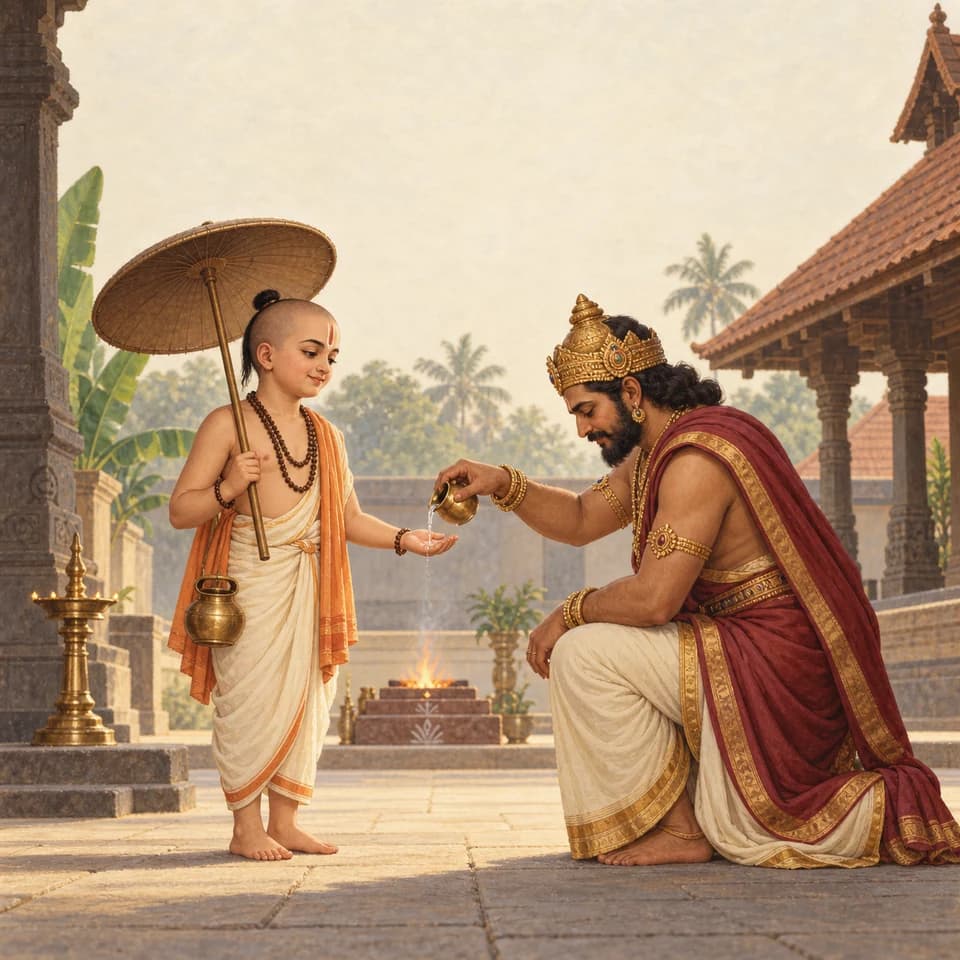
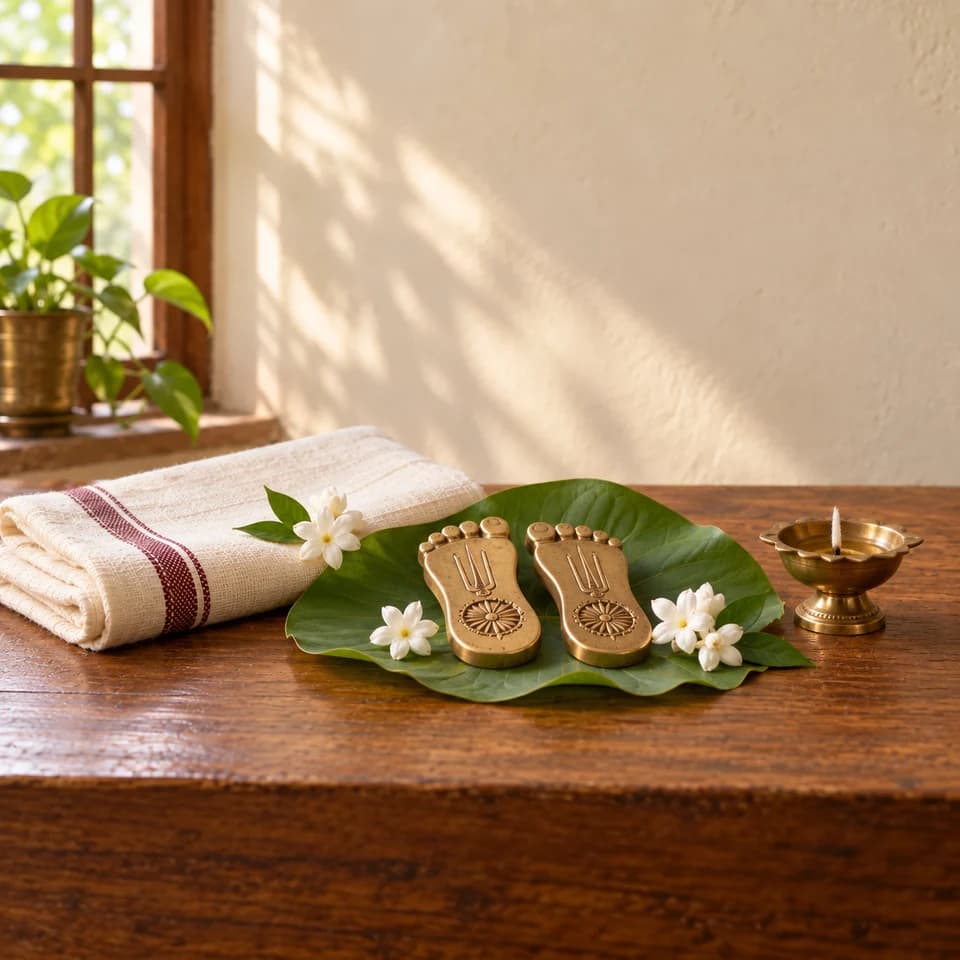
Bali offered this radiant guest a seat, washed his feet and placed that water on his own head. Welcoming Vamana, he said the visit had sanctified his family and sacrifice. He invited him to ask for whatever he needed. Cows, gold, a house, food, villages, horses, elephants or a chariot, Bali was ready to give generously.
Vamana spoke of the generosity of Bali's family and Prahlada's devotion. He recalled Virochana, who had offered his life to gods disguised as Brahmins. He then asked for just three steps of land, measured by his own feet. Bali thought this far too small. He could give an entire island, he said. He wanted a person who asked him for a gift never to need to ask elsewhere again.
Vamana explained that an unsatisfied mind would find even the three worlds insufficient. Someone not content with three steps would want another island after receiving the first. Happiness came from contentment with enough for one's needs. He wanted nothing more. Bali laughed and agreed to give the land. He picked up the water vessel to make his promise.
Shukracharya stopped him. He had recognised Vamana's true identity. This was Vishnu, born to Aditi and Kashyapa, and he would take Bali's wealth and power and return them to Indra. The promise of three steps would leave nothing, not even space for the third. Shukracharya argued that a gift which threatened one's own and one's family's livelihood was unwise, and urged Bali to withdraw his promise.
Bali thought silently for a while. Then he told his teacher that, as Prahlada's grandson, he could not break his word out of attachment to wealth. Wealth would leave him at death anyway. Great people such as Dadhichi and Shibi had given their lives for others. Why should giving land trouble him? Even if Vamana was Vishnu, whether he had come to bless him or as an opponent, Bali would give what he asked. He was ready to suffer loss rather than break his word.
Shukracharya disliked this answer and cursed Bali to lose his prosperity soon. Bali remained firm. His wife Vindhyavali brought a golden pot filled with water. Bali washed the Lord's feet, placed the water on his head and completed the gift of land with the water offering. Gods and Gandharvas praised his wholehearted generosity and showered flowers.
Vamana's form began to grow. The little brahmachari now appeared as the vast Trivikrama. Bali and those at the sacrifice saw earth, oceans, mountains, directions, sky, stars and different living beings within him. One step measured the earth. His body filled the sky and his arms the directions. His second step measured heaven and the worlds above. Nothing under Bali's control remained for a third step.
When the Lord's foot reached above, Brahma and the sages worshipped it. Brahma washed his foot. The gods offered flowers, sandalwood, incense, lamps and prayers. Jambavan played an instrument and announced the Lord's victory in every direction. But Bali's asura followers were angry at seeing their king lose everything. They took Vamana for an enemy and raised their weapons.
The Lord's attendants confronted them, and a battle began. Seeing his followers being beaten, Bali told them to stop. Time had once favoured them, but no longer did. Their own strength or plans could not change the Lord's will. This was no time to fight. Accepting his advice, the asuras withdrew.
Understanding the Lord's wish, Garuda bound Bali with Varuna's noose. Even after losing wealth and kingdom, Bali remained determined to keep his promise. The Lord asked where he should place the third step. Bali had promised three, but two had measured everything. Speaking of his failure to fulfil the promise, the Lord tested him again.
Bali replied that he was still ready to make his word true. He offered his head for the third step. More than loss of wealth or position, or being bound, he feared being known as false to his word. He remembered his grandfather Prahlada, who had held to the Lord through great suffering. Bali felt no hatred towards the Lord. Even after losing everything, he felt he had gained the Lord's shelter.
Prahlada arrived. Because he was bound, Bali could not welcome him as before. With tears in his eyes, he bowed his head. Prahlada told the Lord that he had given Bali power and had now taken it back. Attachment to wealth could cloud understanding, so he saw grace in this event too. Vindhyavali prayed that people claimed ownership of the world the Lord had made, then took pride in giving it away. Brahma also asked for Bali's release, since he had offered everything he possessed, including himself.
The Lord praised Bali's faithfulness. He had lost wealth and power, been bound by enemies, abandoned by his people, and rebuked and cursed by his teacher. Yet he had not departed from truth. Wealth could make people lose their judgement, but Bali had stayed firm through this trial. The Lord promised him the position of Indra in the future period of Savarni Manu.
Until then, Bali was given a prosperous realm in Patal Lok built by Vishvakarma. The Lord invited him to live there happily with his family and followers. He promised to protect them and remain close. Bali would be able to see him there, and through his grace would be freed from inner restlessness and asuric tendencies.
Bali's voice filled with emotion as he bowed in gratitude. He offered respects to the Lord, Brahma and Shiva. Released from his bonds, he went with his companions to the dwelling given to him in Patal Lok. Prahlada also offered prayers. The Lord invited him to live there with his grandson and family and enjoy his darshan. Prahlada bowed and went there too.
The Lord then asked Shukracharya to complete the unfinished rites of Bali's sacrifice. He did so with the other sages. Indra regained his place, and Aditi's wish was fulfilled. Thus Shukadeva told Parikshit the account of Vamana's incarnation. The Lord who had asked Bali for three steps honoured his faithfulness in the end and accepted responsibility for his protection.
Why it matters
The story brings together Aditi's prayer, Vamana's teaching about contentment and Bali's faithfulness to his promise. The feeling of owning everything falls away, while Bali's truthfulness and surrender endure. The Lord honours that devotion and offers shelter and protection.
What people do
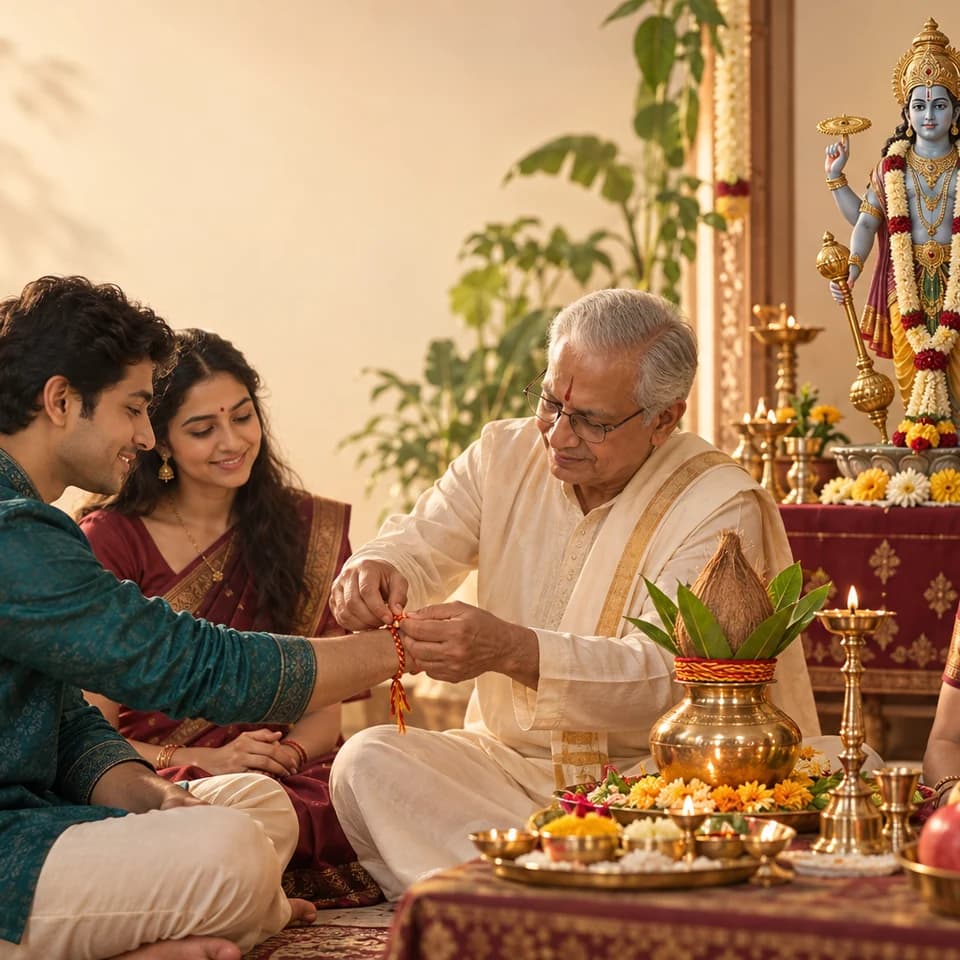
Devotees worship Vishnu as Vamana and read or hear the story of Bali and Vamana. Temples hold darshan, decorations, aarti and bhajans. In some places, the deity is dressed as a young brahmachari with staff, umbrella and water vessel. Food and other gifts are offered in charity according to one's means.
Fasting practices differ between temples and traditions. Some fast until midday, while some Vaishnava traditions connect the Vamana Jayanti fast with the preceding Ekadashi. People follow their health needs and family practices.
Told differently elsewhere
In many Gujarati traditions, Vamana Jayanti is associated with Bhadarva Sud Baras. Vishnu and Krishna temples follow their own observances and fasting times. The nearby Parivartini or Parsva Ekadashi also recalls Vamana and Bali. Ekadashi and Dwadashi are separate tithis.
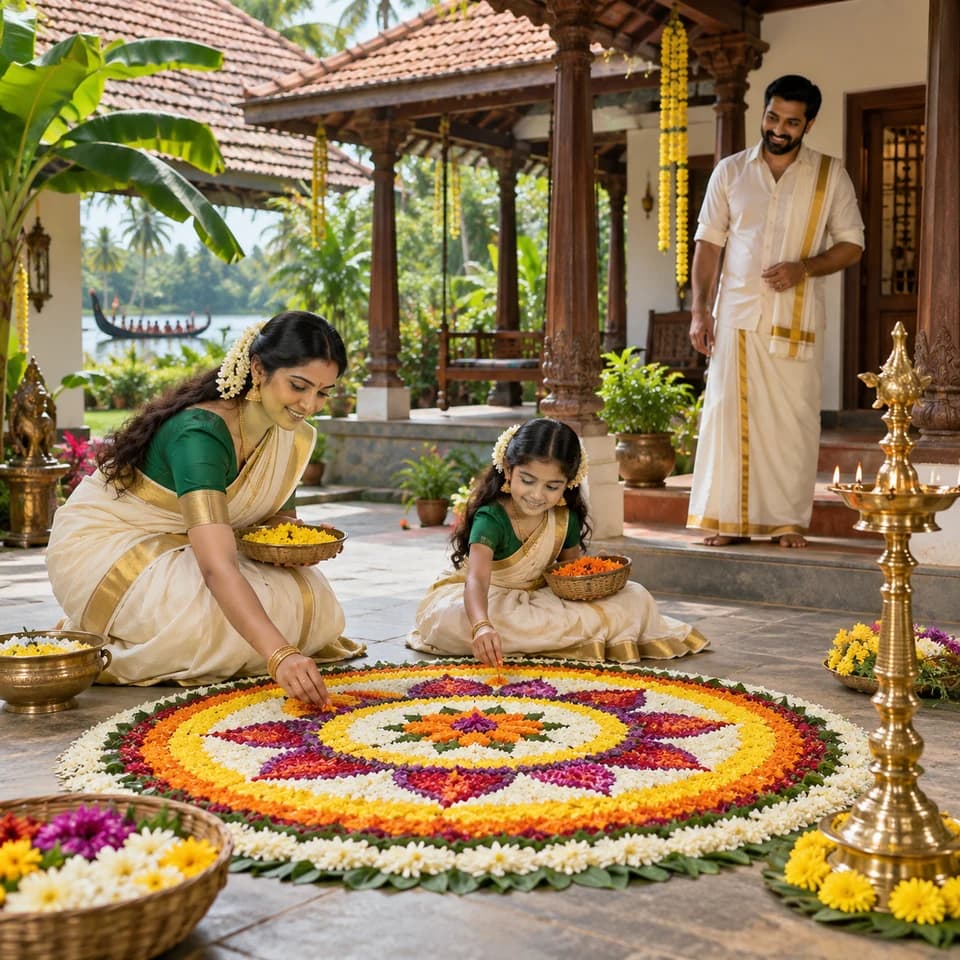
In Kerala, Mahabali is remembered in the local Onam tradition. Thrikkakara Vamanamoorthy Temple celebrates a festival from Atham to Thiruvonam in Chingam. Floral designs and the community sadya meal are part of it. There is a belief that Mahabali returns to visit his people at Onam. It is a distinct festival observed according to Kerala's local calendar.
Questions people ask
- When is Vamana Jayanti in 2025?
- On Thursday, 4 September 2025 in India. Runs from 4 Sep 04:22 IST to 5 Sep 04:08 IST.
- Why does the date change every year?
- It is kept by the lunar calendar, so its day on the civil calendar moves from year to year.
- Is the date the same everywhere?
- Yes. It is kept everywhere on the day it falls on in India.