In short
Vijaya Ekadashi is a Ekadashi vrat observed according to the Hindu calendar. Its date and customary practices can vary by region and local Panchang.
The story
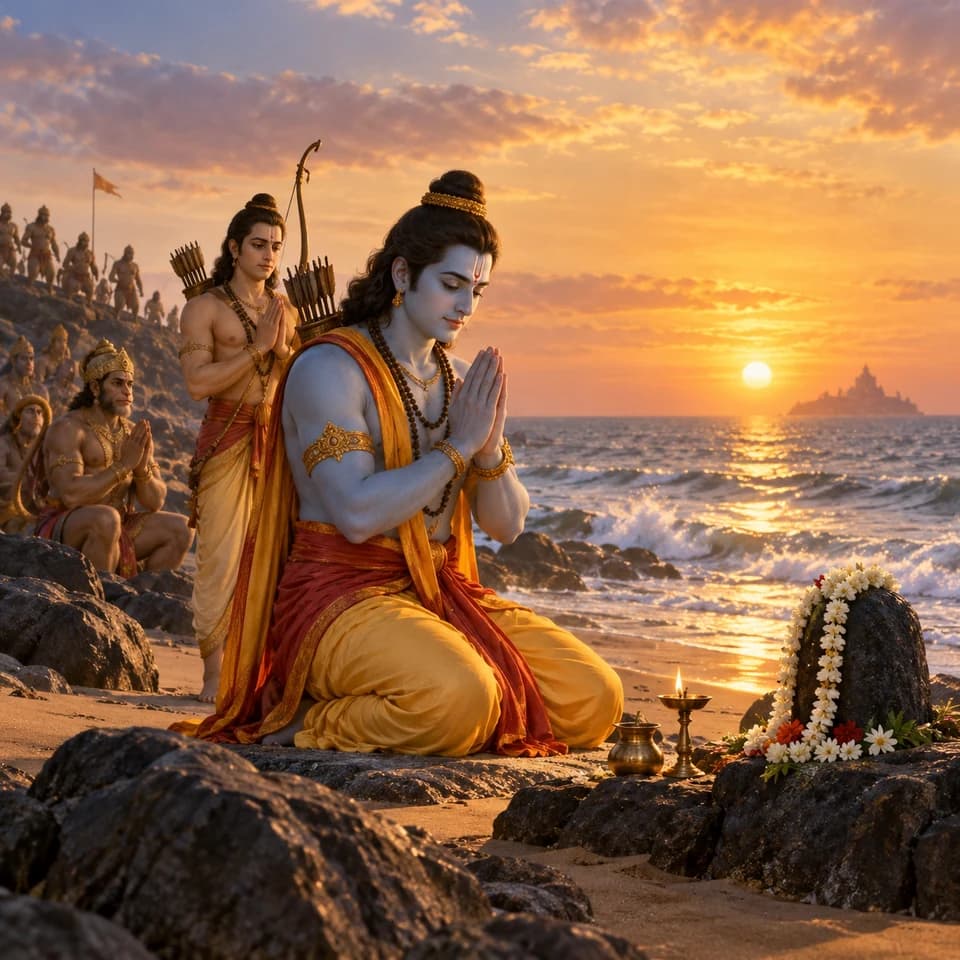
Vijaya Ekadashi is traditionally connected with Rama’s journey to Lanka. When Rama, Lakshmana and the vanara army reached the ocean, the vast water seemed to block their advance toward Ravana’s kingdom. Rama sought the guidance of the sage Bakadalbhya, who advised him to observe the Ekadashi of the dark fortnight of Phalguna with disciplined worship and fasting. Rama and the army followed the vrata, and the story says its blessing supported their successful crossing of the sea and the campaign that followed. The katha does not replace the Ramayana’s engineering and heroic story of the Setu; rather, the vrata tradition uses this moment to teach that great action should be preceded by humility, counsel and spiritual preparation. “Vijaya” means victory, so devotees pray not merely for defeating an opponent but for overcoming obstacles, fear and weakness through righteous effort guided by Vishnu.
Retold from the Padma Purana
Why it matters
Rama is said to have kept it before crossing to Lanka, and the name is the victory that followed. Kept when something difficult is about to be attempted.
Fasting
Maha's dark fortnight. Kept before an undertaking that has to succeed, and in the katha it is Rama's, before crossing to Lanka.
Retold from the Gujarati household practice
This text has not been checked by a reviewer yet.

Tithi Calendar on your phone
The panchang for your own city, with the choghadiya, festivals and reminders. It works without the internet.