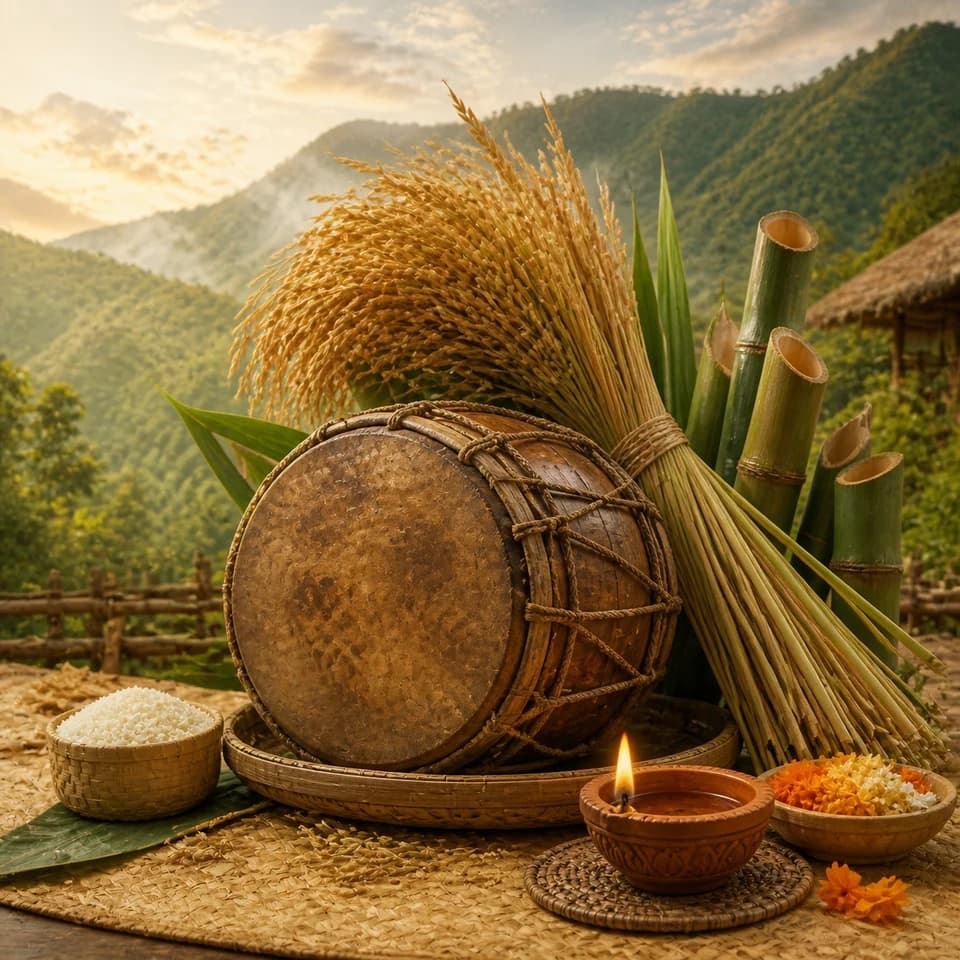
Wangala
RegionalIndia · North-East
No rule yet
Nobody has written a rule for this observance yet, so the calendar does not put it on a day. A name with a made-up date beside it would be worse than a name on its own.
In short
Wangala is the Garo post-harvest thanksgiving festival honouring Misi Saljong. Village rites and the organised Hundred Drums showcase have distinct schedules.
The story
Wangala is the post-harvest thanksgiving festival of the Garo people, especially in the Garo Hills of Meghalaya. Traditionally the community thanks Misi Saljong, associated with the sun and agricultural fertility, for sustaining crops through the growing season. The harvest is not treated as an achievement of individuals alone: land, weather, inherited knowledge and cooperation among households all contribute. Ceremonies led by customary authorities precede feasting, music and dancing.
In some traditional Songsarek communities, rites include offerings of new produce and rice beer, with ceremonial acts associated with the nokma, or village head, and ritual specialists. The stages often described as Rugala and Kakkat involve offerings followed by drumming and dance. Long drums, gongs, flutes and dancers wearing festive ornaments make Wangala especially memorable. Public performances popularly called the Hundred Drums Festival are a cultural showcase, not an exact description of every village rite.
Villages choose dates according to their own harvest cycle, commonly in the autumn months. The large organised celebration at Asanang and other cultural venues has its own announced schedule. Many Garos are Christian and participate in cultural expressions differently from practitioners of older Songsarek religious traditions. A calendar should respect this diversity and not assign every village one unverified fixed date.
The harvest season is not celebrated on a single date by every Garo village. Meghalaya Tourism distinguishes village observances from the larger organised Hundred Drums cultural festival, commonly held in early November. The latter gathers performers and visitors, while traditional rites may be conducted separately by local communities. The name 'Hundred Drums' refers to a prominent collective performance and must not be mistaken for a requirement that each household or village use exactly one hundred drums.
Why it matters
Garo post-harvest thanksgiving honouring Misi Saljong and sustaining distinct Songsarek and contemporary cultural traditions.
What people do
Some Songsarek communities offer new produce and rice beer in customary ceremonies; drumming, dance and feasting vary by village. Public Hundred Drums performances are not identical to every ritual.
Told differently elsewhere
Garo Hills of Meghalaya and Garo communities elsewhere; village dates follow local harvests, while the Hundred Drums cultural festival has its own announced dates, often in early November.