FestivalEast Asia · Korea
Chuseok
No rule yet
Nobody has written a rule for this observance yet, so the calendar does not put it on a day. A name with a made-up date beside it would be worse than a name on its own.
In short
The Korean harvest, when families return home to the graves.
The story
The Korean harvest full moon, and the day families return to their home town and to the graves. It is often called Korean Thanksgiving, which gets the food right and the graves wrong: the first business of the day is the ancestors. Korean lunisolar calendar, not computed here.
Retold from the Gujarati household practice
Why it matters
The harvest full moon, and the year's principal duty to the ancestors. Families return to the ancestral home, perform charye with the new grain, and go out to the graves to cut the summer's grass - beolcho, which is work rather than ceremony and is the part nobody may skip. Songpyeon are shaped by hand the night before.
What people do
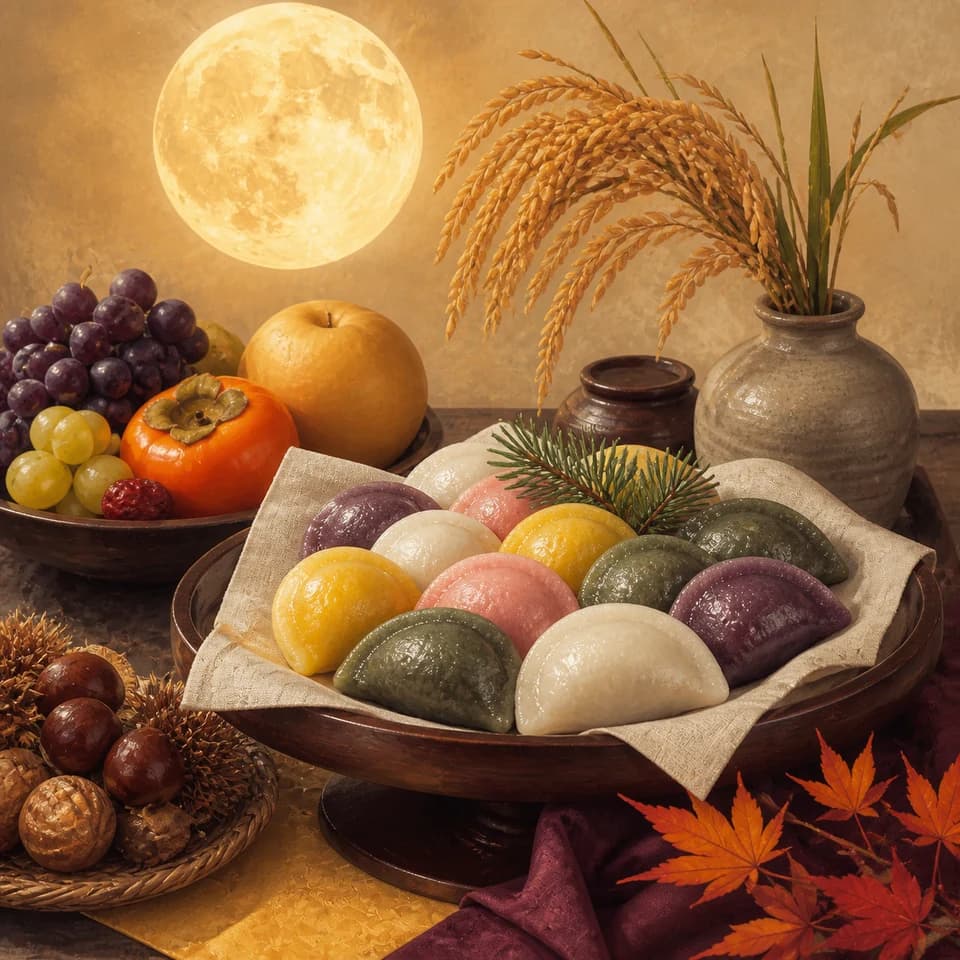
Charye in the morning with the new grain, then beolcho - the family graves cleared of summer growth - and seongmyo, the visit itself. Songpyeon, half-moon rice cakes steamed over pine needles, are made the night before by the whole household.
Retold from the Gujarati household practice
Told differently elsewhere
Falls on the same full moon as the Mid-Autumn Festival in China and Tsukimi in Japan, but is kept as a homecoming rather than a moon-viewing. Songpyeon fillings and the ganggangsullae circle dance of the south-west are regional.
This text has not been checked by a reviewer yet.

Tithi Calendar on your phone
The panchang for your own city, with the choghadiya, festivals and reminders. It works without the internet.