FairBuddhist
Hemis Festival
No rule yet
Nobody has written a rule for this observance yet, so the calendar does not put it on a day. A name with a made-up date beside it would be worse than a name on its own.
In short
The Hemis Festival, or Hemis Tsechu, is one of Ladakh’s best-known Buddhist monastic celebrations and is held at Hemis Monastery in honour of Guru Padmasambhava, revered for helping establish Vajrayana Buddhism in Tibet and the Himalayan region.
The story
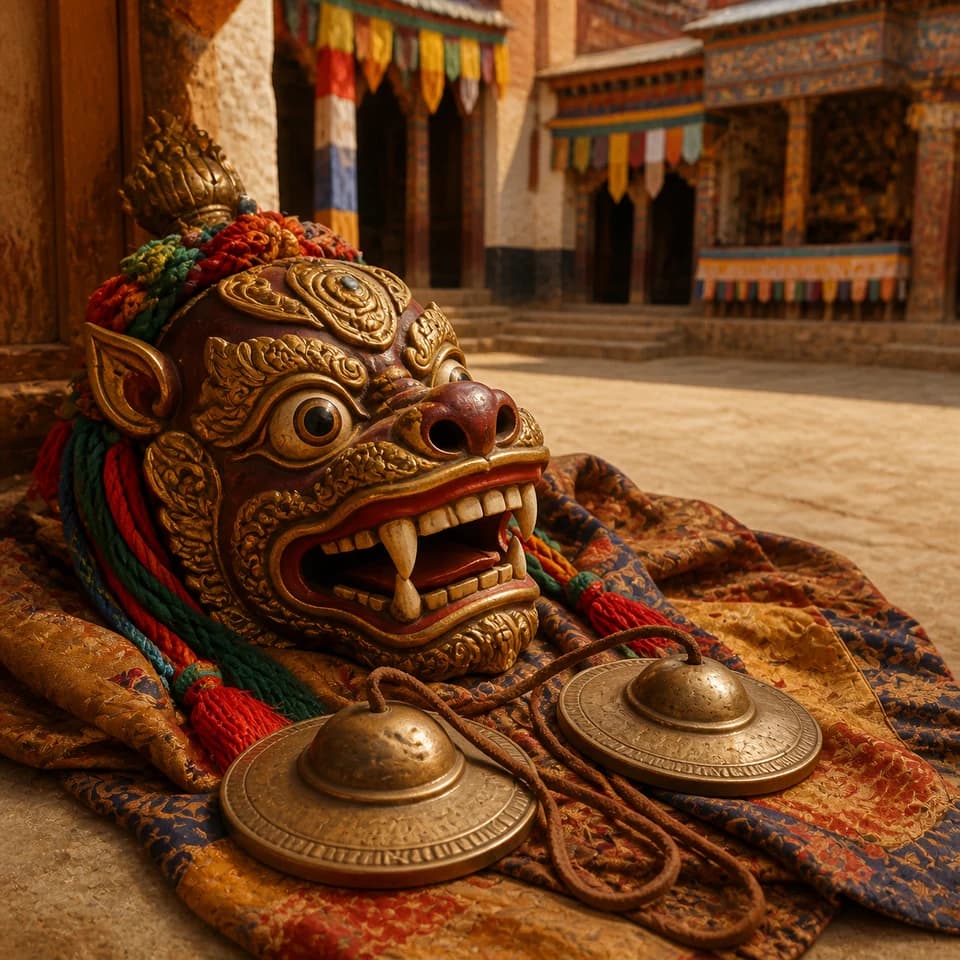
The Hemis Festival, or Hemis Tsechu, is one of Ladakh’s best-known Buddhist monastic celebrations and is held at Hemis Monastery in honour of Guru Padmasambhava, revered for helping establish Vajrayana Buddhism in Tibet and the Himalayan region. The monastery courtyards become the stage for masked cham dances performed by monks in elaborate costumes. These ritual dances portray protective deities, the overcoming of harmful forces and the Buddhist teaching that ignorance and attachment can be transformed through wisdom. Long horns, cymbals and drums accompany the performances, while sacred images and ritual objects are displayed for devotees. In particular years a great thangka of Padmasambhava is ceremonially shown. Pilgrims and visitors gather not only for spectacle but also to receive blessings and hear teachings. Hemis Tsechu thus combines devotion, monastic ritual, sacred theatre, music and Ladakh’s living Himalayan Buddhist heritage.
Retold from the Gujarati household practice
Why it matters
Hemis Festival is significant to the community that observes it and helps preserve religious, family and cultural continuity.
What people do
Cham dancing in the monastery courtyard: monks in brocade and carved masks act out the subduing of what obstructs, to long horns and cymbals, and an effigy is destroyed at the end. Every twelve years, in the year of the monkey, the great thangka is unrolled down the monastery wall.
Retold from the Gujarati household practice
Told differently elsewhere
Hemis gompa above the Indus, on the tenth day of the fifth Tibetan month. Every third year the two-storey thangka of Padmasambhava is unrolled on the monastery wall, and that is the year the largest crowds come.
This text has not been checked by a reviewer yet.

Tithi Calendar on your phone
The panchang for your own city, with the choghadiya, festivals and reminders. It works without the internet.