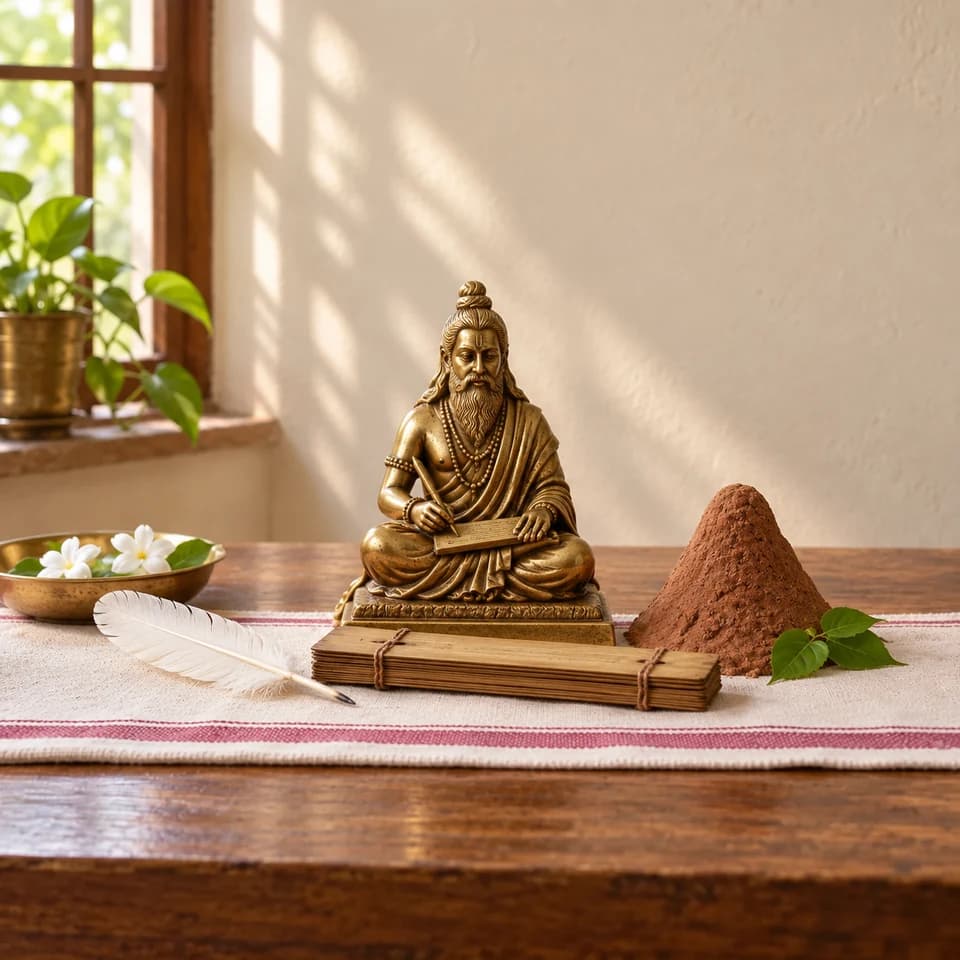
Karwa Chauth as it falls in 2031.
Next date: 18 October 2027Karwa Chauth 2031
Sunday, 2 November 2031, in Ahmedabad
FastIndian · Hindu
Panchang on the day
2
Sunday
Waning Third
until 14:36
Taurus
- બBa
- વVa
- ઉU
- Sunrise
- 06:43
- Sunset
- 18:02
- Moonrise
- 20:29
- Nakshatra
- Rohini
- until 18:18
- Yoga
- Parigha
- until 02:16 next day
- Karana
- Vishti
- until 14:36
- Rahu Kalam 16:37 to 18:02
- Yamaganda 12:23 to 13:47
- Abhijit muhurat 12:00 to 12:45
Why this date
Aso Waning Fourth, taken at moonrise
Runs from 2 Nov 14:36 IST to 3 Nov 16:16 IST.
In short
On Karwa Chauth, many married women observe a vrat for their husbands' well-being and good health. Worship and storytelling take place in the evening. After the moon rises where they live, they offer it water and end the fast. A familiar vrat-katha tells of Veeravati and her seven brothers.
The story
A Brahmin named Vedsharma lived in Indraprasthapur with his wife Lilavati. They had seven sons and a daughter named Veeravati. As their only sister, she was dearly loved by all her brothers. When she grew up, she married a young Brahmin.
After her marriage, Veeravati was staying at her parents' home when Karwa Chauth arrived. She kept the vrat with her sisters-in-law, praying for her husband's long life. As the day went on, she struggled with hunger. She became so weak that she fainted.
Her brothers could not bear to see her like this. They knew she would eat only after seeing the moon, so they devised a plan. One brother climbed a nearby banyan tree with a lamp and a sieve. When Veeravati regained consciousness, the others took her to the roof and told her that the moon had risen.
The lamp shone through the sieve in the tree. Veeravati thought it was the moon rising behind the branches. She offered water to that light and sat down to eat. She found a hair in her first mouthful. At the second, she sneezed. As she took her third mouthful, a message came calling her to her husband's home. When she arrived, she found him dead.
Veeravati began to weep. She kept wondering what mistake she had made while observing the vrat. Hearing her cries, Indra's wife Indrani came to her. Veeravati asked why her husband had died on Karwa Chauth itself and begged her to bring him back to life.
In the story, Indrani explained that Veeravati had offered water and eaten before the real moon had risen, leaving the observance incomplete. She told Veeravati to observe the Chauth vrat every month throughout the year, including Karwa Chauth, and carefully follow its practices. She assured her that her husband would return to life.
Veeravati followed Indrani's advice. She faithfully observed the monthly Chauth vrats and completed all the rituals. The story ends with her husband returning to life through the merit of those vows, and the couple reunited.
Why it matters
The vrat is associated with prayers for a happy married life and the family's well-being. Caring for one another, worshipping together and passing on family traditions are part of its celebration.
What people do
In some families, the day begins with sargi before sunrise. Sargi is the meal eaten before the fast. In the evening, women gather with a worship tray and a small water vessel called a karwa. They worship Gauri or Shiva and Parvati and listen to the vrat-katha. In some places, they pass the trays around while singing.
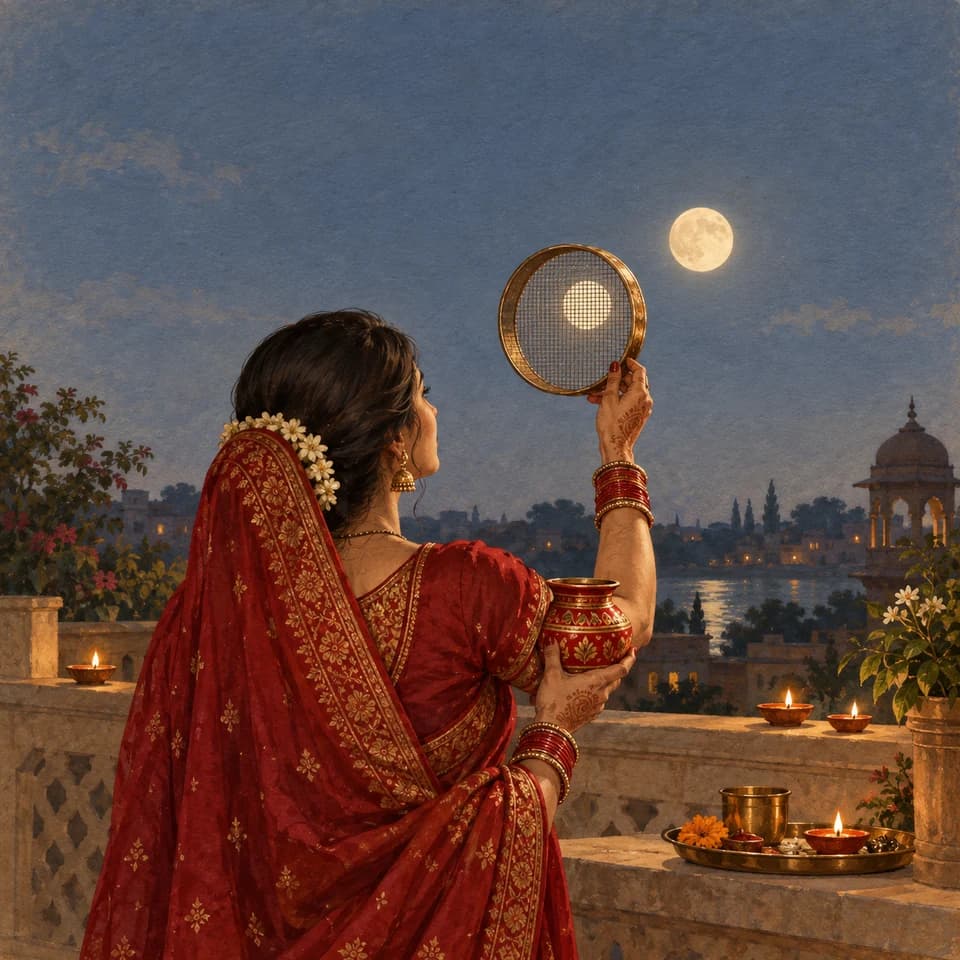
When the moon rises, they offer it water. Some families follow the custom of looking at the moon through a sieve. They then end the fast with water or food. Moonrise is checked in a local panchang for the place where they live.
Fasting
Many families follow the custom of fasting without food or water from sunrise until sighting the moon. Some people adapt the observance to their health and family practices. Keeping the vrat is a matter of personal faith and circumstances.
Told differently elsewhere
Karwa Chauth is observed in many families in Punjab, Haryana, Rajasthan, Delhi and Uttar Pradesh. Sargi, passing worship trays and viewing the moon through a sieve vary by region and household.
In the Purnimanta calendar, this tithi is Kartika Krishna Chaturthi. In Gujarat's Amanta calendar, the same tithi is Aso Vad Choth. Worship and the ending of the fast follow the local panchang because moonrise varies by place.
Questions people ask
- When is Karwa Chauth in 2031?
- On Sunday, 2 November 2031 in India. Runs from 2 Nov 14:36 IST to 3 Nov 16:16 IST.
- Why does the date change every year?
- It is kept by the lunar calendar, so its day on the civil calendar moves from year to year.
- Is the date the same everywhere?
- Yes. It is kept everywhere on the day it falls on in Delhi.
Dates in the coming years
- 2027Monday, 18 OctoberAso Vad 4
- 2028Saturday, 7 OctoberAso Vad 4
- 2029Friday, 26 OctoberAso Vad 4
- 2030Tuesday, 15 OctoberAso Vad 4
- 2031Sunday, 2 NovemberAso Vad 4
Last kept29 October 2026