FastGujarati · Hindu
Vat Savitri
Vat Savitri Amavasya
Next date
Friday, 4 June 2027
In short
Vat Savitri is a vrat observed according to the Hindu calendar. Its date and customary practices can vary by region and local Panchang.
The story
Vat Savitri is rooted in the celebrated story of Savitri and Satyavan from the Mahabharata tradition. Princess Savitri chose Satyavan as her husband even after sage Narada warned that he was destined to die within a year. When the foretold day arrived, Savitri accompanied him to the forest and remained beside him as he died beneath a tree. She then followed Yama, the lord of death, refusing to turn back. Impressed by her wisdom, loyalty and determined conversation, Yama granted her successive boons. Savitri cleverly asked for blessings that could be fulfilled only if Satyavan lived, and finally won back her husband's life. The banyan tree, known for longevity and its spreading roots, became central to the vrata. Married women worship the vat tree and remember Savitri's courage, intelligence and unwavering commitment.
Retold from the Mahabharata, Vyasa
Why it matters
Vat Savitri is valued for devotion, family tradition and the spiritual or seasonal meaning attached to the day.
What people do
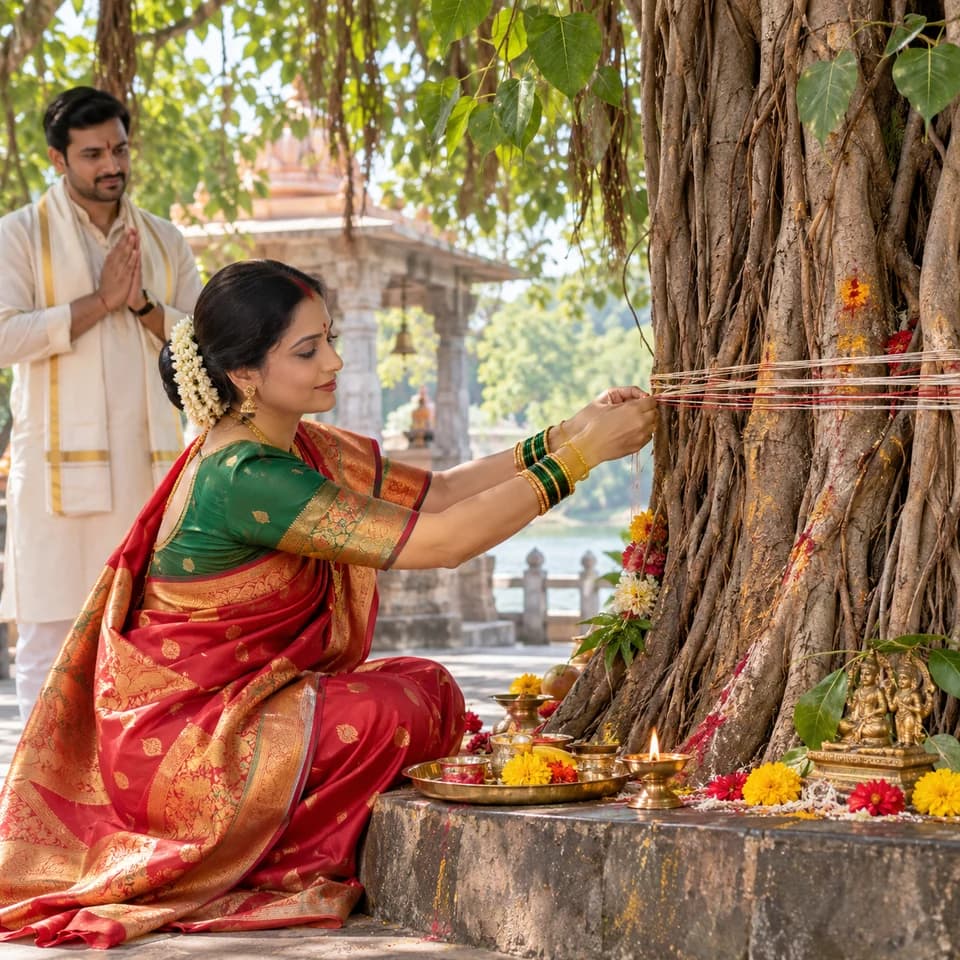
Married women fast and go to a banyan, wind a thread round the trunk in an odd number of turns, and walk round it while the story is told. Water is poured at the root. Gujarat and the north keep it on the amavasya that ends Vaishakh; Maharashtra keeps the same vow on the purnima of Jeth a fortnight later, as Vat Purnima.
Retold from the Gujarati household practice
Told differently elsewhere
Gujarat, Maharashtra and the north keep it on the Jyeshtha amavasya; much of the east and south on the purnima a fortnight later, as Vat Purnima. Both are in this calendar as separate entries for that reason. Bihar and Nepal keep it as one of the larger women's observances of the year.
This text has not been checked by a reviewer yet.

Tithi Calendar on your phone
The panchang for your own city, with the choghadiya, festivals and reminders. It works without the internet.