Hanami
FestivalEast Asia · Japan
No rule yet
Nobody has written a rule for this observance yet, so the calendar does not put it on a day. A name with a made-up date beside it would be worse than a name on its own.
In short
Sitting under the cherry blossom for the fortnight it lasts.
The story
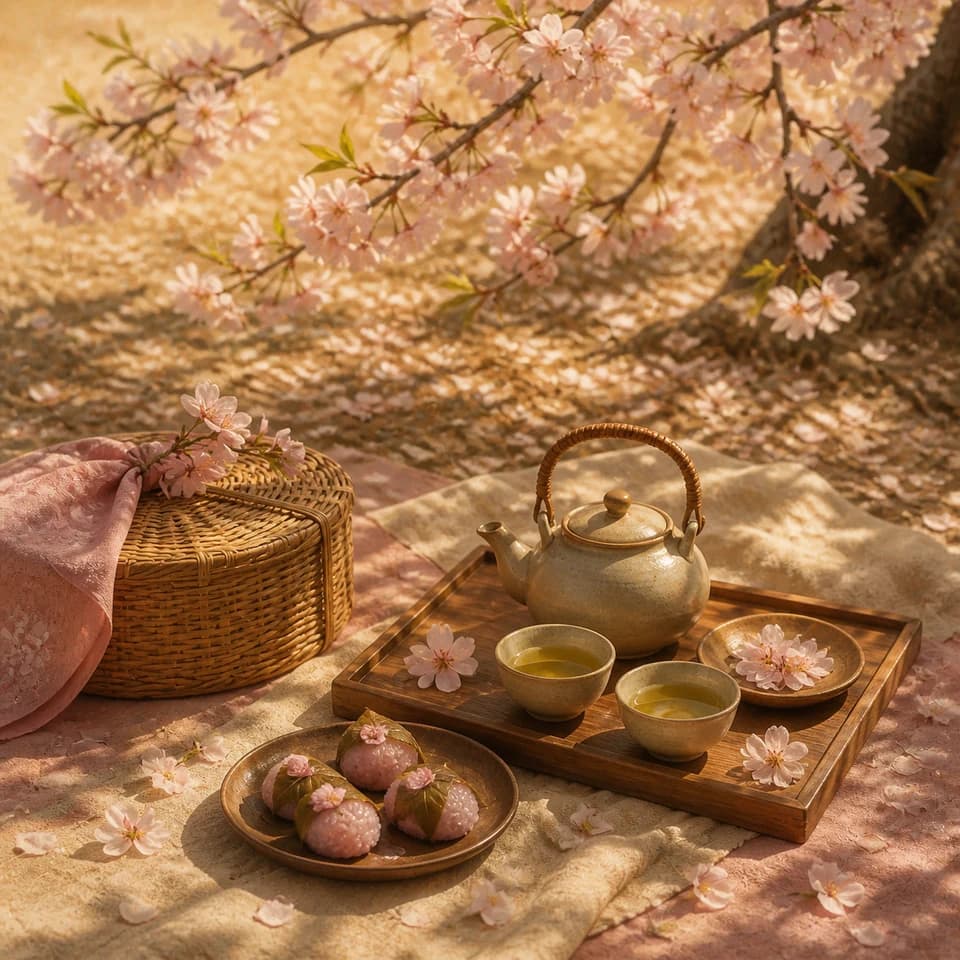
Hanami means viewing flowers, especially cherry blossoms, in Japan. Courtly blossom appreciation developed over centuries, and later public gatherings spread beyond elite circles. Families, friends and colleagues meet beneath flowering trees for picnics, photographs and seasonal food. The fleeting blossoms evoke impermanence, renewal and the passing of time; the tradition has no single sacred founding legend. Blossom forecasts track flowering from warmer to colder regions, and local weather can shorten the season. It is not a fixed-date holiday: location-specific bloom forecasts and park rules determine suitable visits.
Early Japanese court culture admired seasonal flowers, and by the Heian period cherry blossom poetry and gatherings had become important expressions of refinement. Over subsequent centuries flower-viewing spread among wider sections of society. The trees do not bloom together nationwide: Okinawa and southern regions generally flower earlier, while northern Japan follows later. Forecasts reflect temperature and local conditions, not a religious calendar.
People often reserve picnic spots, bring seasonal food and observe illuminated blossoms at night, called yozakura. Visitors should protect roots and branches and follow park guidance. Because bloom periods are short and increasingly sensitive to weather, any app date must be labelled an estimate for a named city, not a nationwide festival day.
Why it matters
Seasonal appreciation of Japan's fleeting cherry blossoms, shared time outdoors and reflection on impermanence.
What people do
Picnics beneath blossoms, seasonal bento, evening yozakura viewing and respect for park rules; never damage trees.
Told differently elsewhere
Across Japan, blooming varies by city, altitude and weather; forecasts generally progress northward through spring, so no single national date applies.